La Palmyre Zoo, a gem nestled in the heart of Charente-Maritime, is an animal park totally immersed in biodiversity. This kind of place where encounters with wildlife are marked by wonder and awareness. A must-see, it attracts hundreds of thousands of visitors every year, eager to spend an excellent day with our animal friends.
In this article, the Charente-Maritime Guide invites you to explore this extraordinary place. Whether you're a child or an adult, there's no doubt that this day at La Palmyre Zoo won't leave you indifferent. We're warning you right away: the only animal you might be able to take home with you will be a stuffed animal !
From dream to reality: the story of the Palmyre Zoo
The history of La Palmyre Zoo is inseparable from that of its founder, Claude Caillé. Coming from a family of newspaper sellers, he nurtured a devouring passion for animals from a very young age. It was in 1966 that his dream took shape, when he opened the doors of what would become one of the most renowned zoological parks in France.
His initial vision was clear and profoundly human: to create an animal park where visitors could approach the animals in conditions that respected their well-being, thus promoting a unique proximity and awareness of wildlife. Far from the menageries of yesteryear, Claude Caillé wanted to offer a space where observation would be facilitated, and where each visitor could marvel at the diversity of species.
And it is in La Palmyre, very close to Les Mathes, that the creator found his haven of peace to realize his wish, which his family is now pursuing. Nestled just a few kilometers from Royan, the zoo benefits from an exceptional natural setting. It extends into the heart of a vast maritime pine forest, the Coubre forest. This provides a shaded and airy environment, particularly appreciated on hot summer days. The proximity of the Atlantic Ocean, with its fine sandy beaches and sea breeze, gives the place a holiday and relaxing atmosphere, making the visit all the more pleasant and exotic. This strategic location, between forest and coastline, contributes greatly to the charm and attractiveness of La Palmyre Zoo.
Discovering spaces and their inhabitants
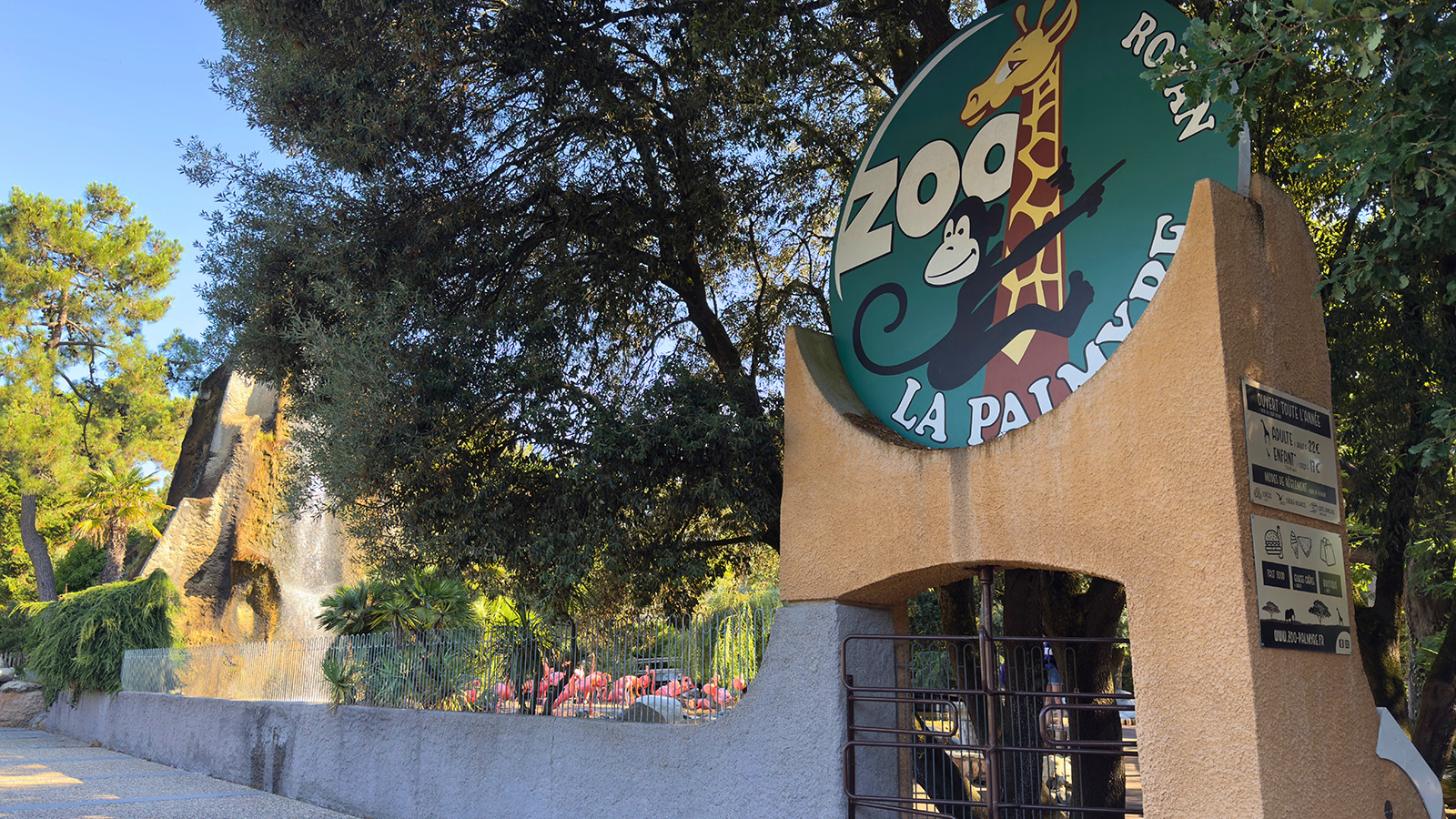
Once you've purchased your tickets at the ticket office, you'll be immersed in the world of animals. Our journey through La Palmyre Zoo takes you through varied landscapes designed to immerse visitors in a unique world and provide the animals with suitable environments. Every step is a new discovery, so keep an eye out for what's around you!
From the moment we entered, we didn't know where to look: flamingos on the left, parrots on the right, giraffes in front... Luckily, signs showed us the direction of the tour and we had the map in our hands. See you later, flamingos, we'll meet you at the exit!
Giraffes
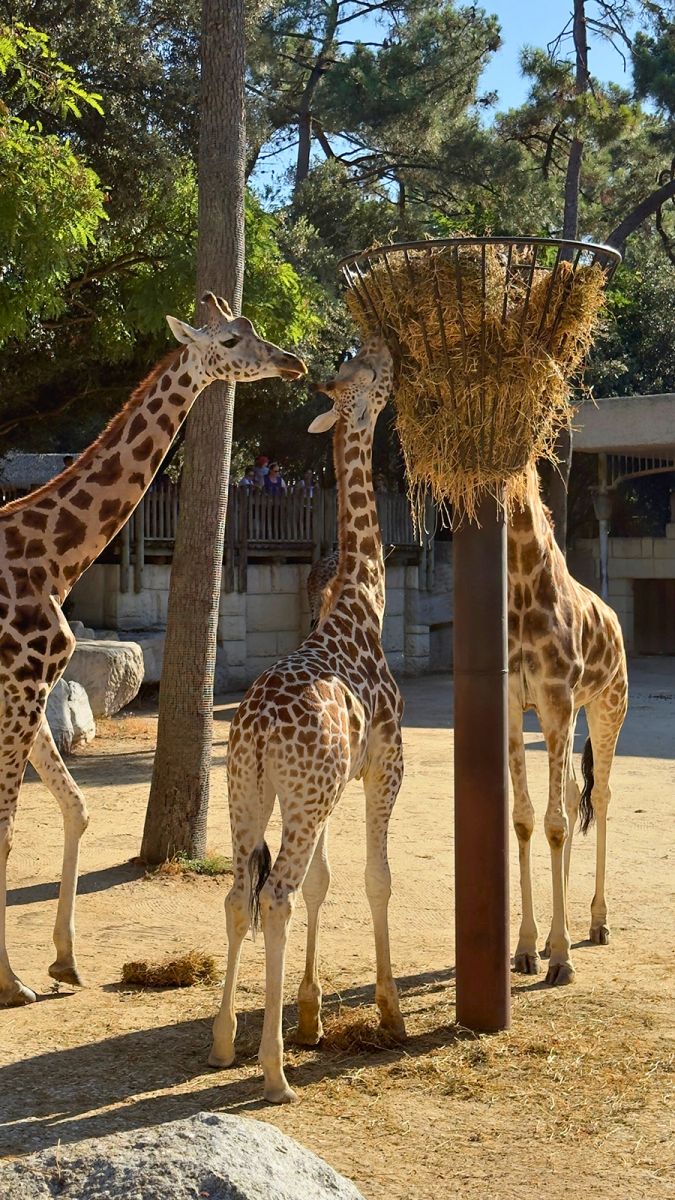
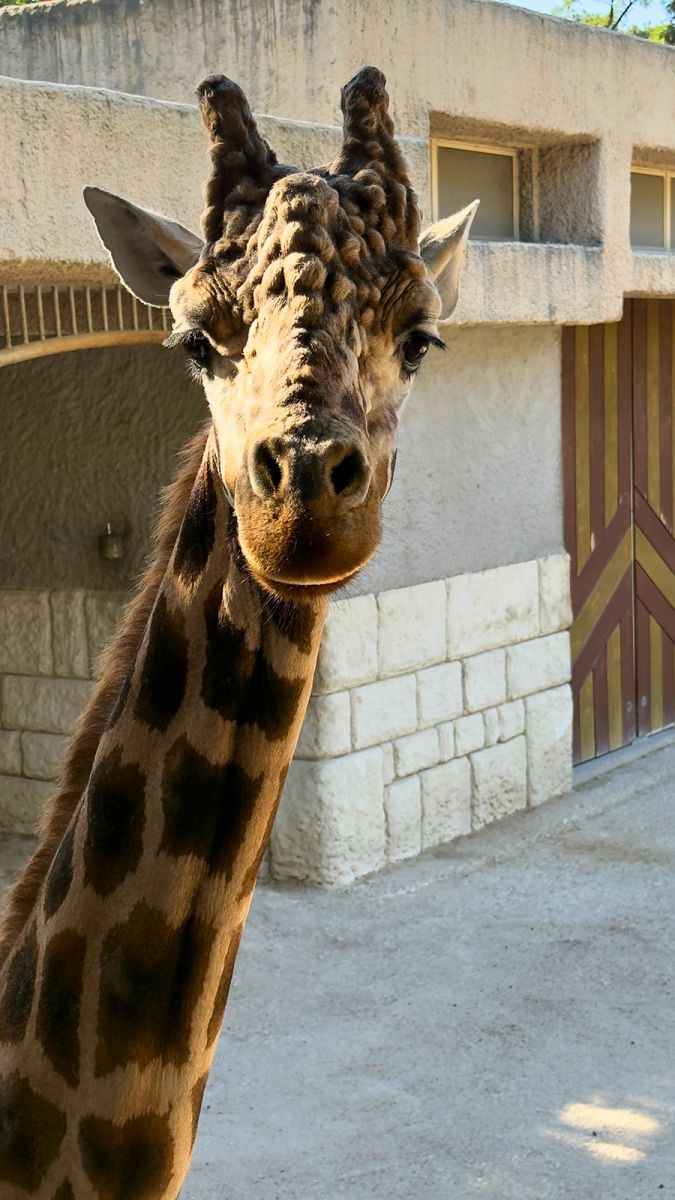
Giraffe passion, hello! These peaceful giants, with their endless necks and spotted coats, seem to observe visitors with amused curiosity. You'd swear they're playing models, posing with innate grace, but in reality, their visual acuity is flawless: they've especially spotted the visitors' popcorn. They approach with clumsy delicacy, hoping for a treat.
Along the way, La Palmyre Zoo offers an even more fascinating experience: an elevated observation platform allows you to get up close to them, admiring their long eyelashes and the complexity of their patterns up close. It's a truly special moment of connection with these magnificent animals, almost as if you were sharing an intimate moment in the savannah. Are we still in Charente-Maritime?
Otters, penguins and tigers
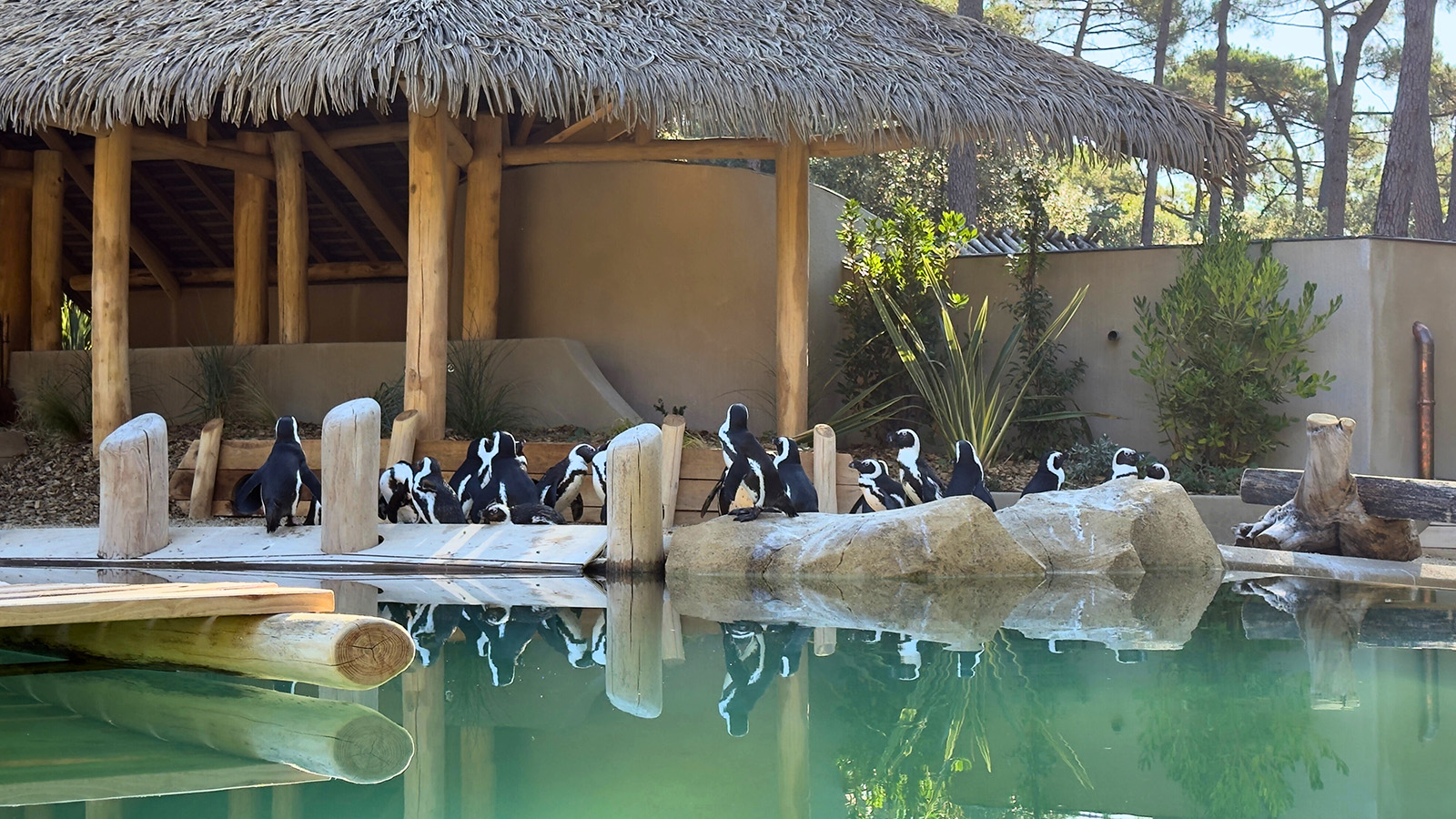
We continue the tour with, on the right, the Cape penguins. Far from the icy ice floes we often associate with their cousins, these seabirds are just as cute. Admiring their colony is a real delight. Thanks to their flippers transformed into powerful paddles, they glide through the water with astonishing agility and speed.
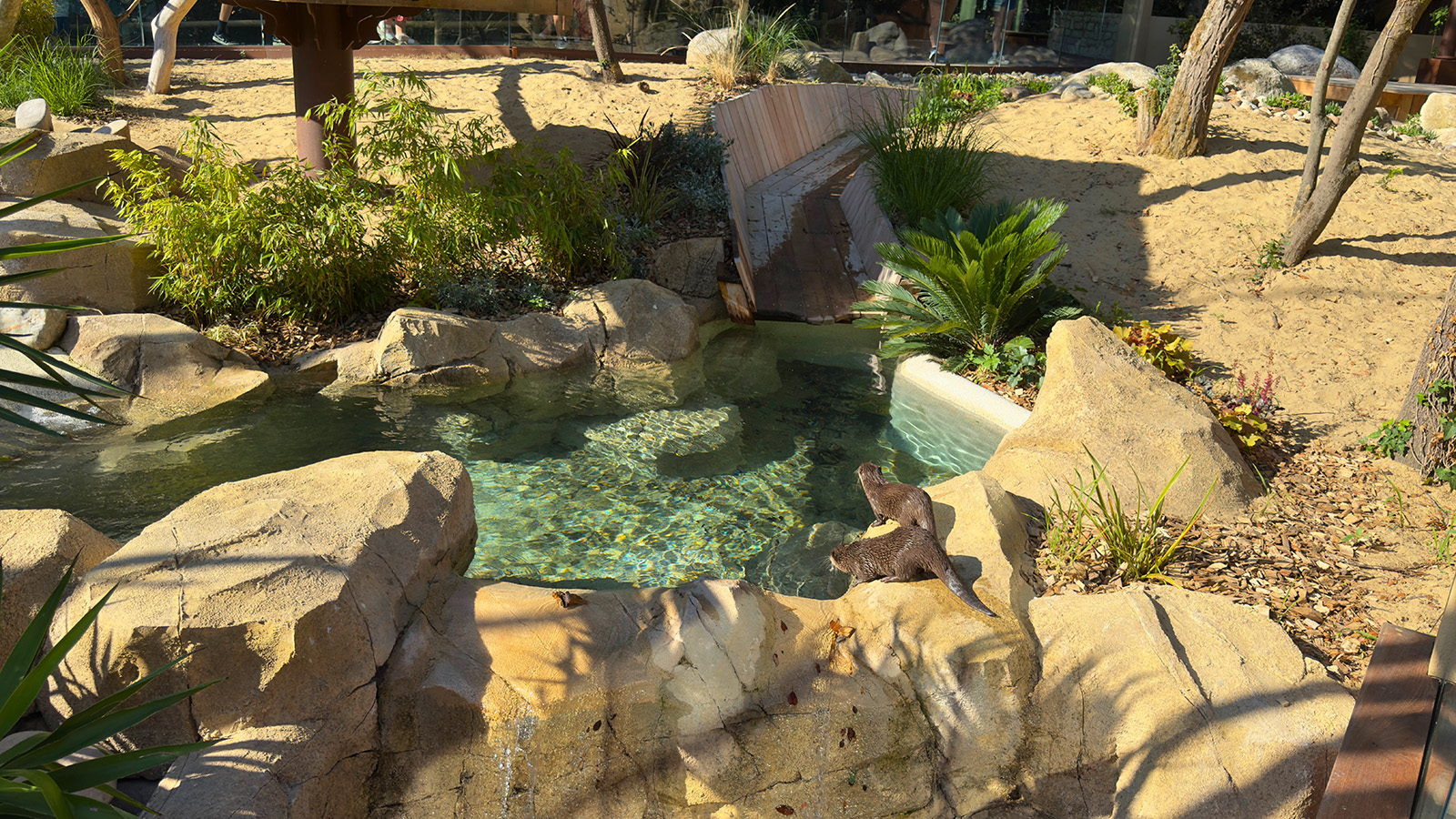
On the left, small Asian otters play before the amused gaze of visitors.
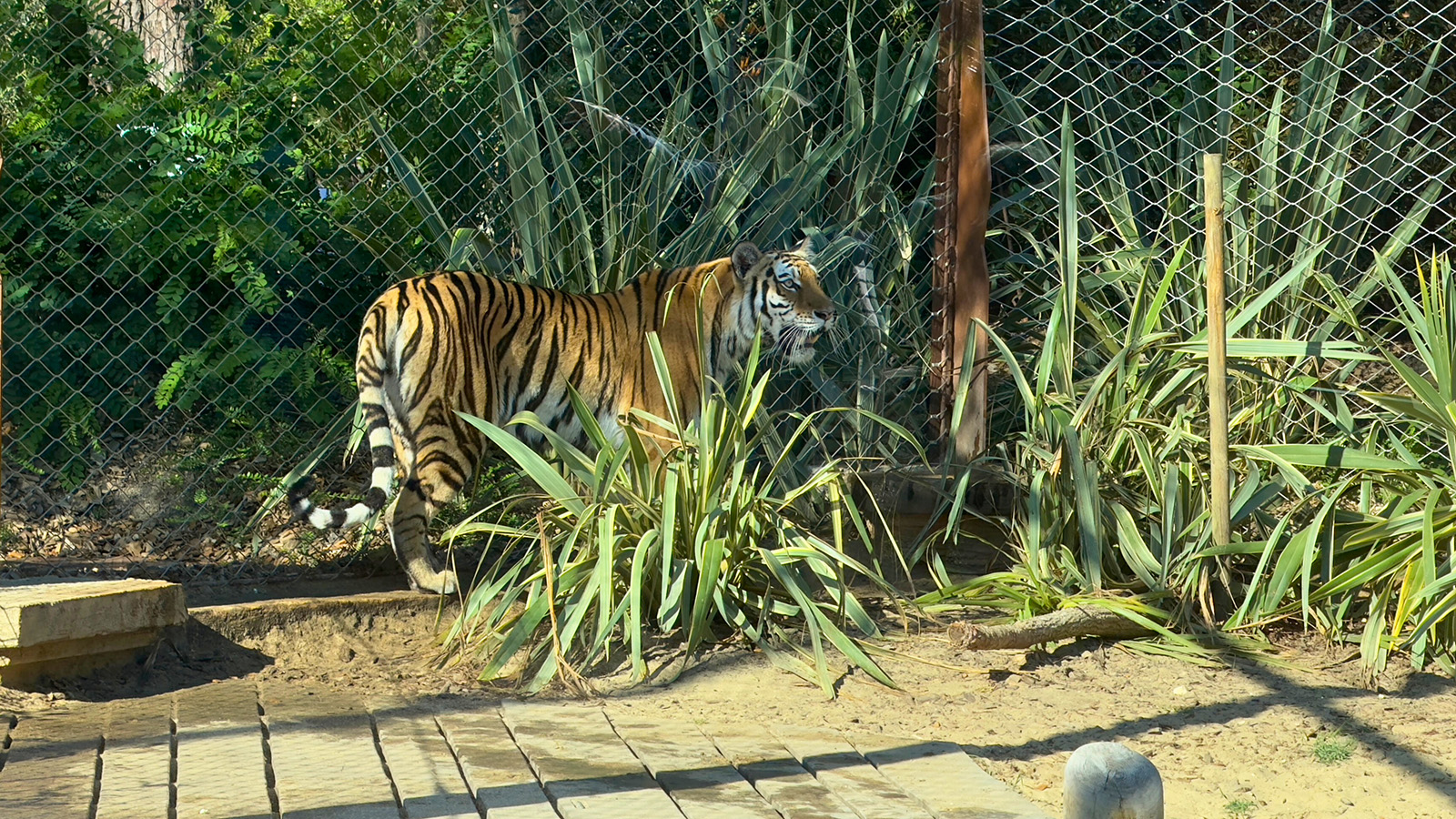
It must be admitted that the penguins and otters are quickly overshadowed by the tigers and their new space.
Amur tigers are back in 2025 with a brand new, more-real-than-life habitat. The Charente-Maritime Guide is as captivated by these ferocious beasts as the work done for this new environment. Their quiet power and wild beauty in this green setting is a powerful reminder of the urgency of protecting these lords of the forest. We will once again be able to find them at heights.
The lions
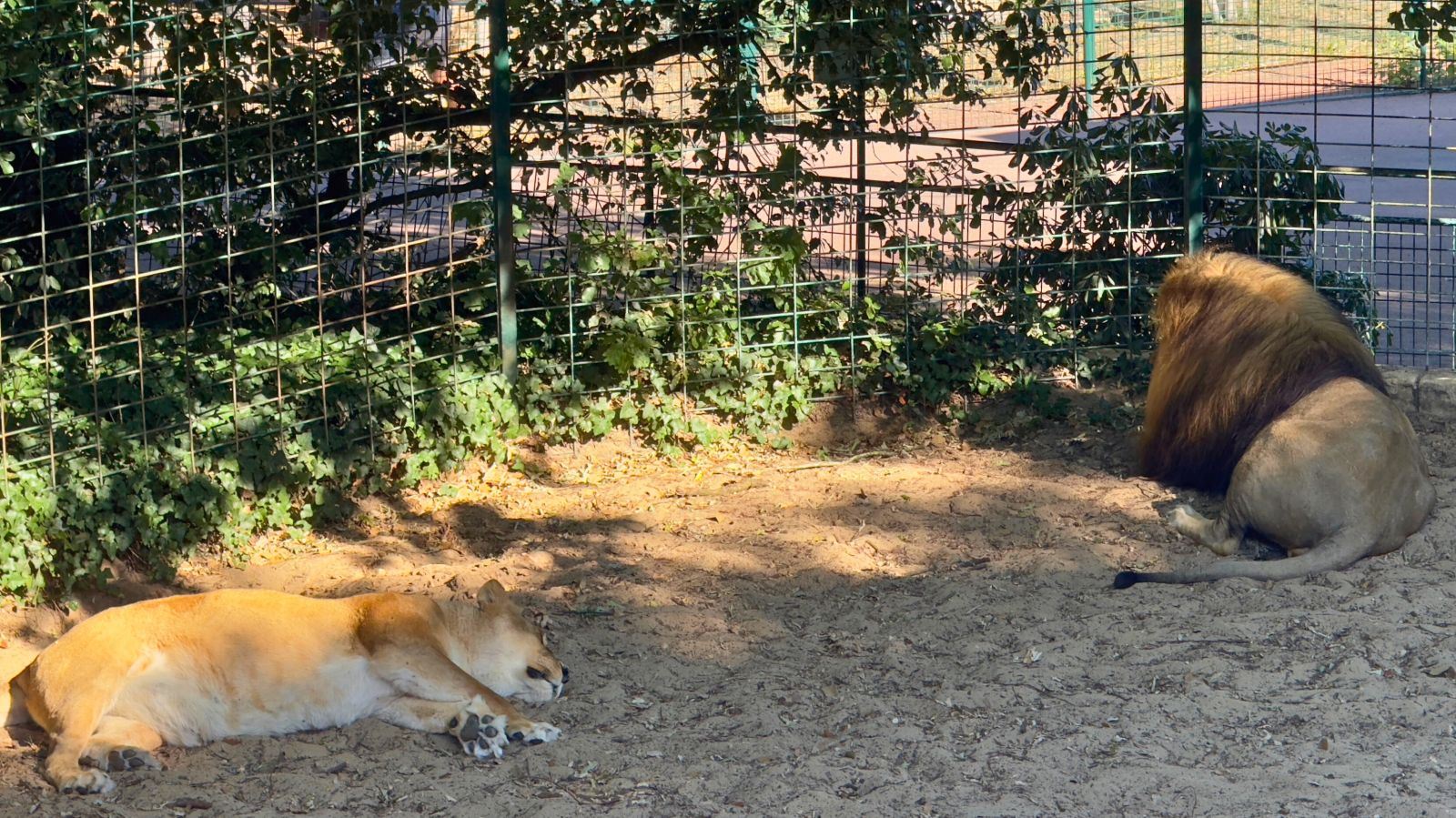
From tigers to lions, it's only a step away at La Palmyre Zoo. Their enclosure offers a privileged opportunity to contemplate these emblematic creatures, whose power and presence are unrivaled. When we pass by, it's time for a nap between sun and shade.
We let them rest and continue the visit.
Between primates and flamingos
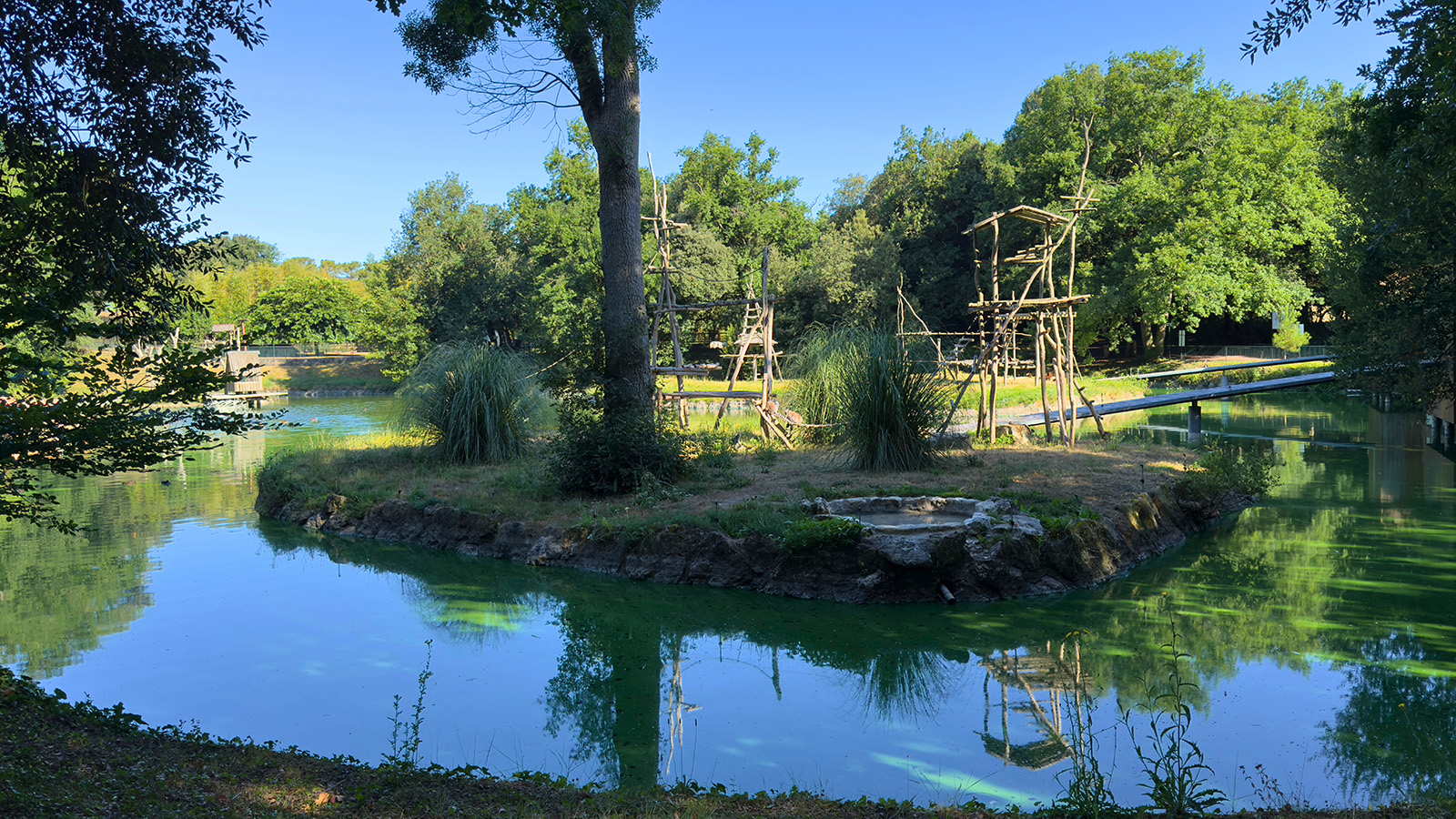
After climbing a small slope, we descend towards the island of primates. On this stretch of water, on the left, it is possible to see:
- White-handed gibbons ;
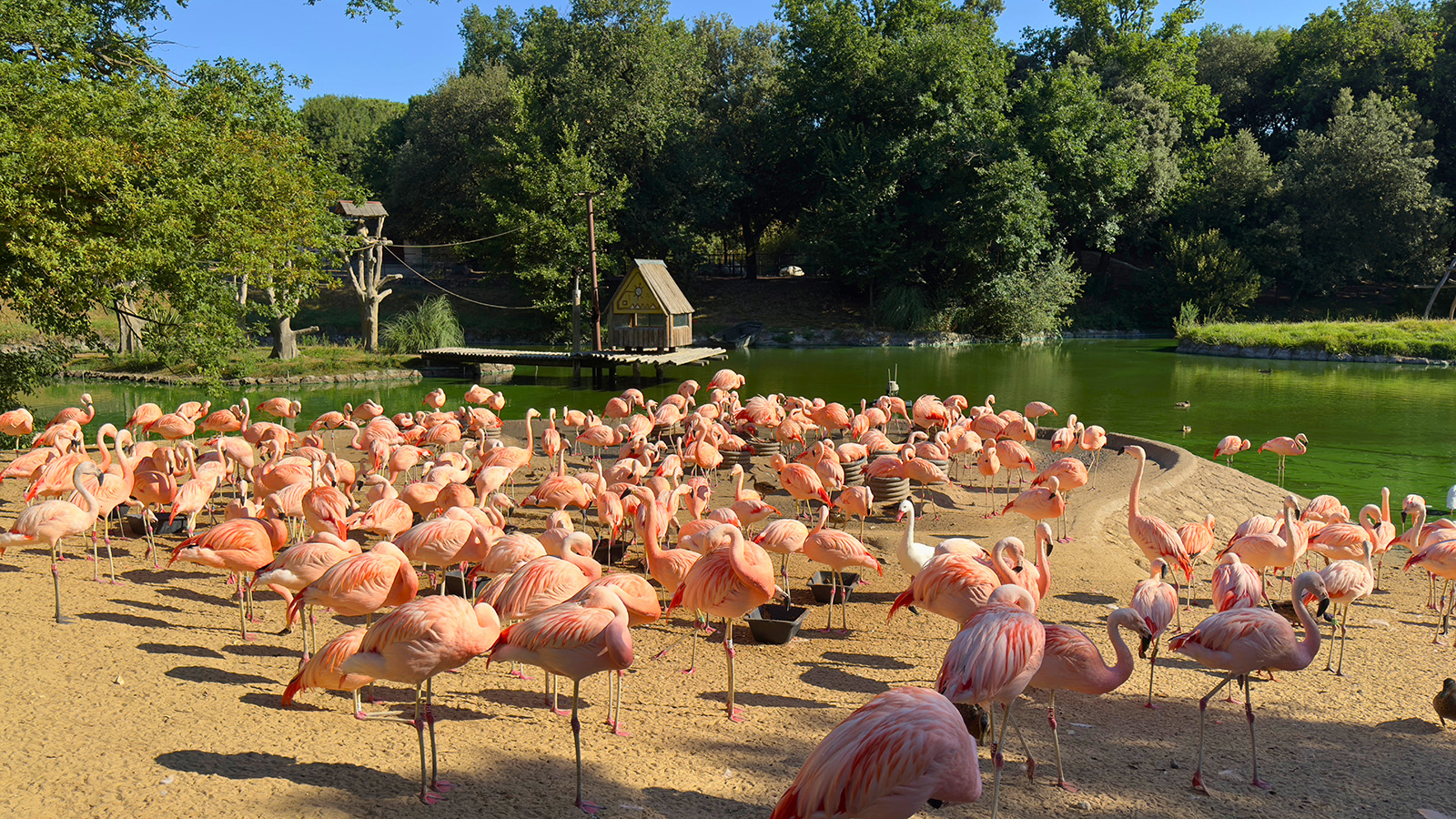
- Flamingos from Chile ;
- The island of primates ;
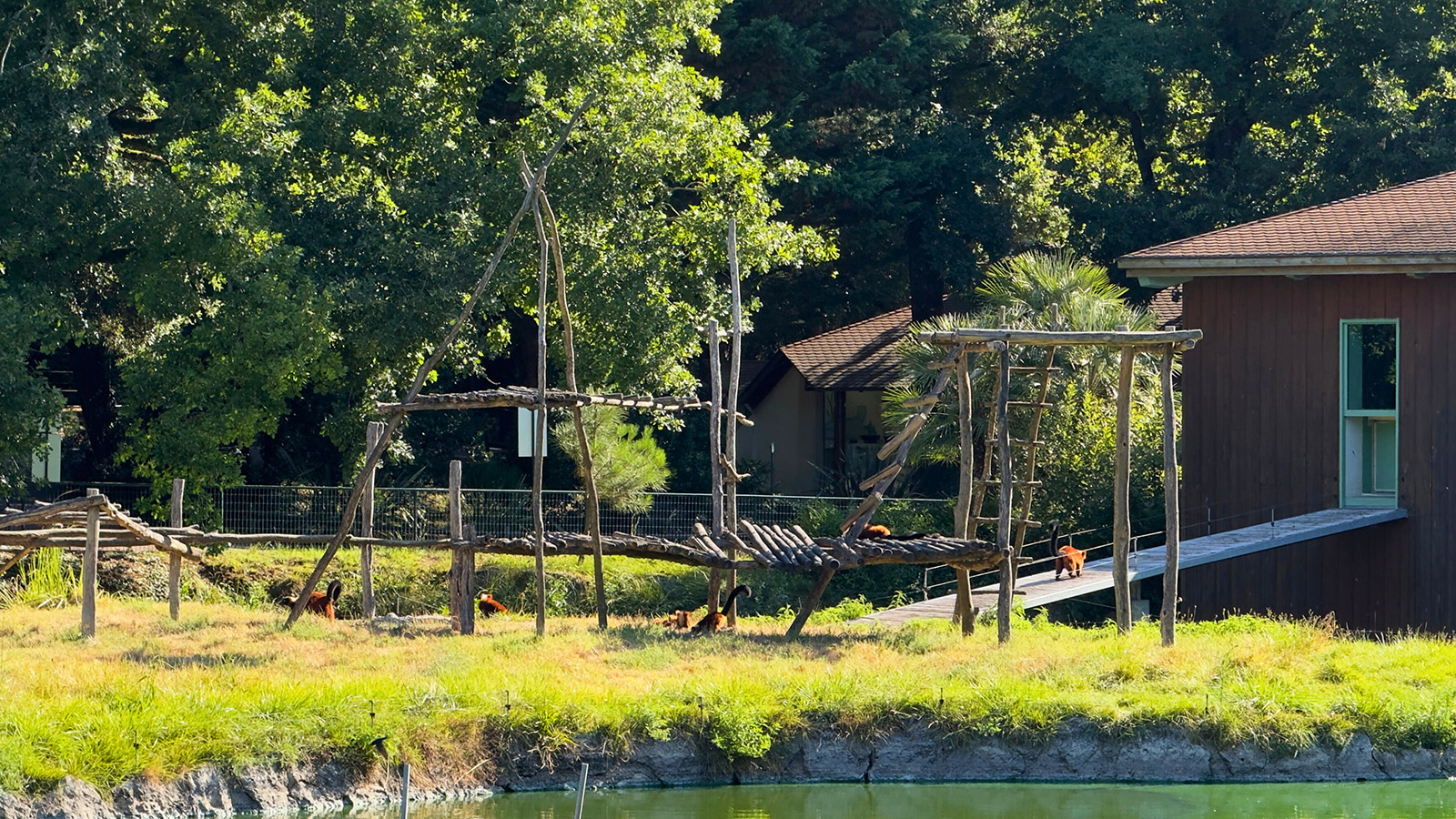
- The island of lemurs.
Everyone coexists in their own corner, without worrying about other species or curious visitors.
The Ambassadors of South America
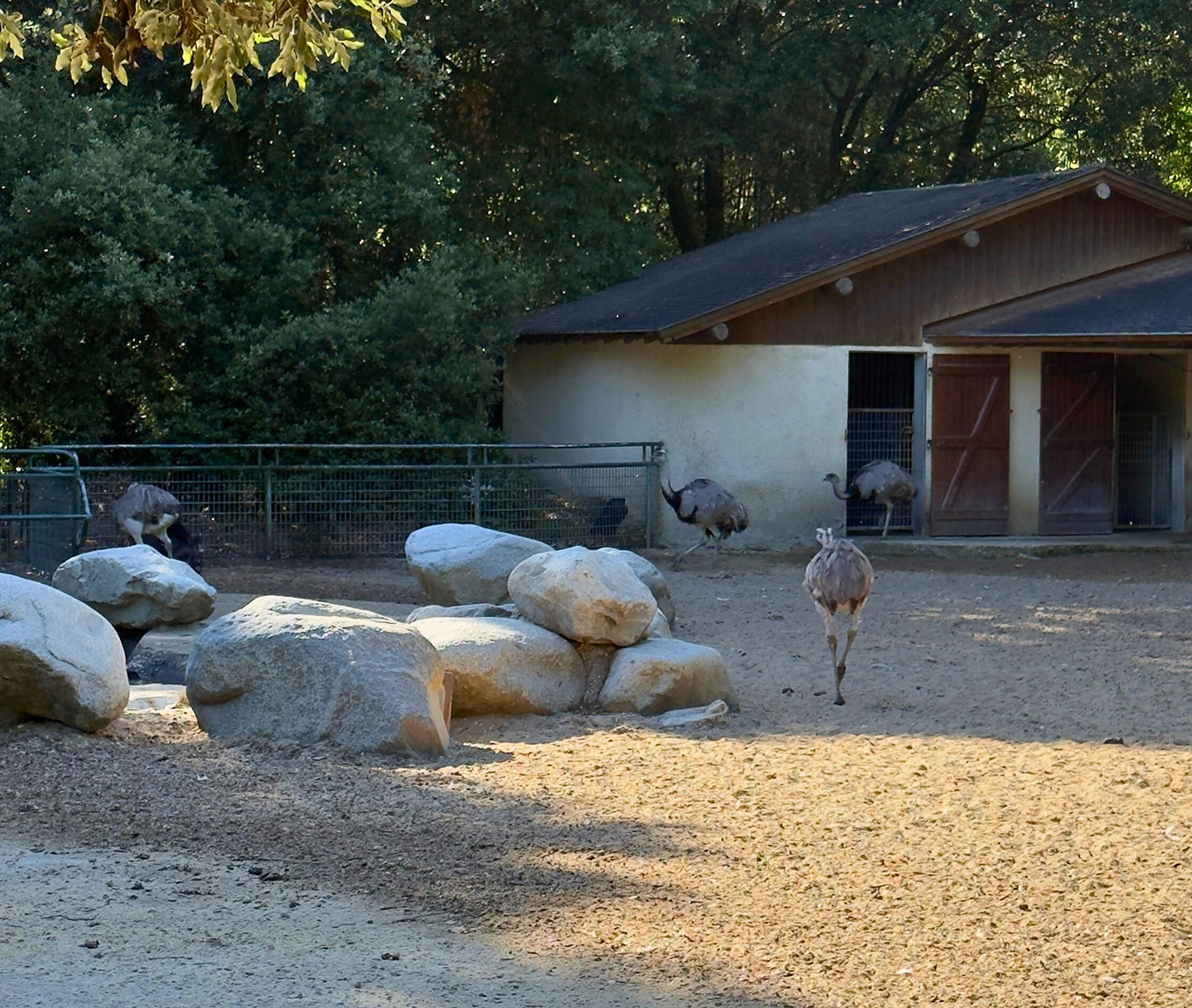
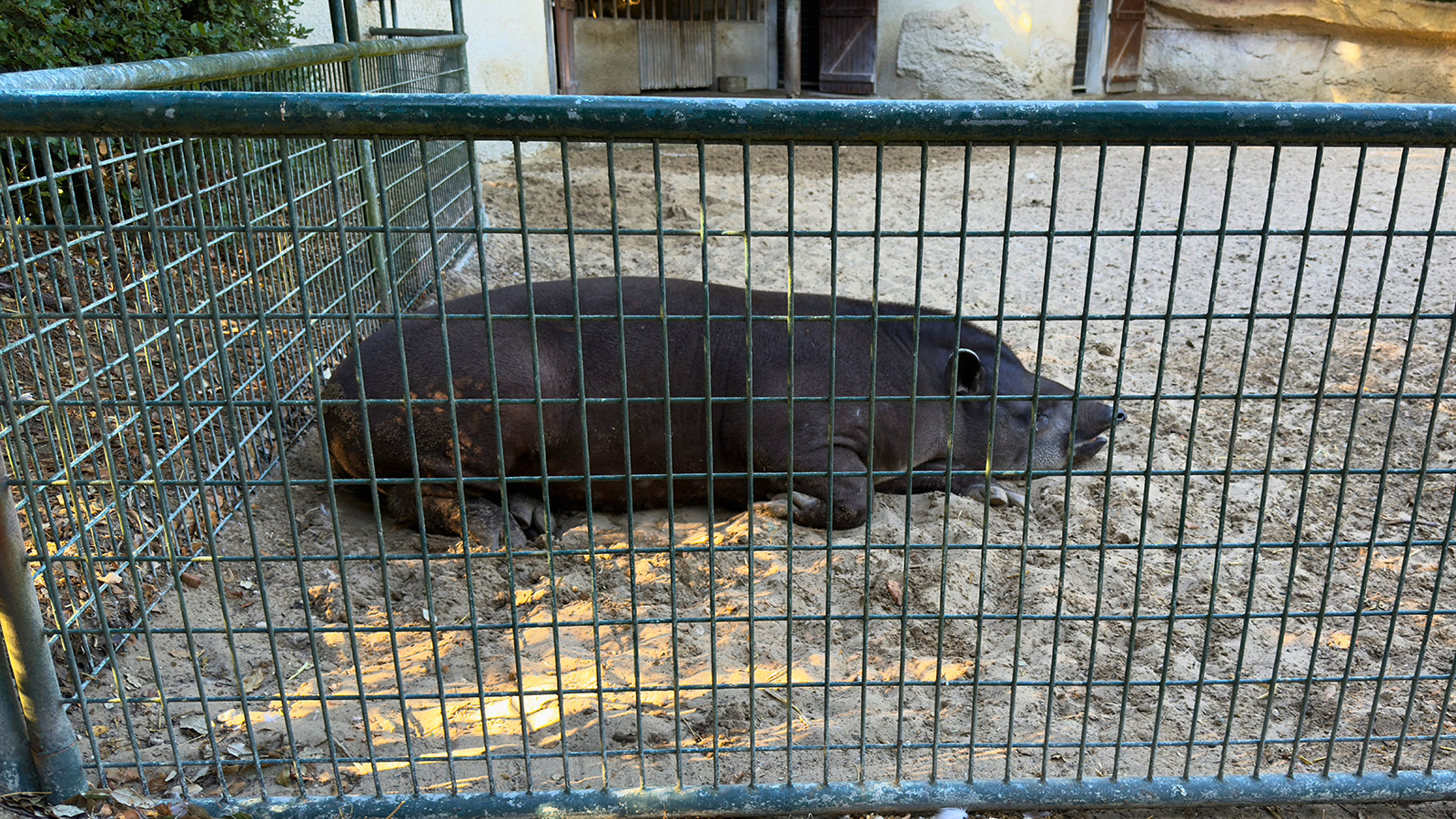
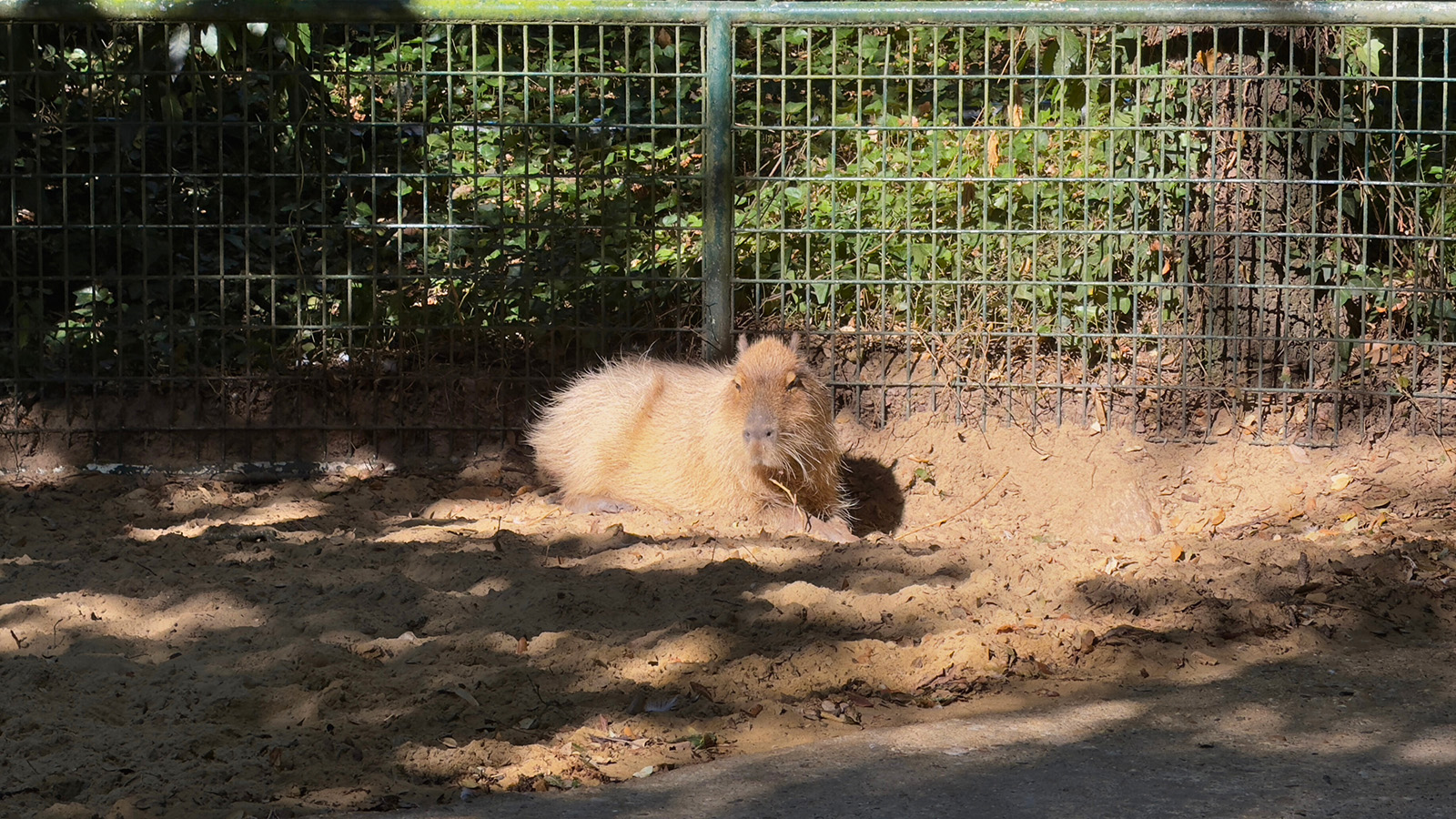
On the right, rheas, tapirs and capybaras await us.
- Rheas look like their cousins, the ostriches.
- Tapirs have a robust build and a distinctive fleshy trunk. You can't go wrong!
- Capybaras are giants among rodents. These semi-aquatic animals exude a contagious serenity.
Mackenzie's Wolves
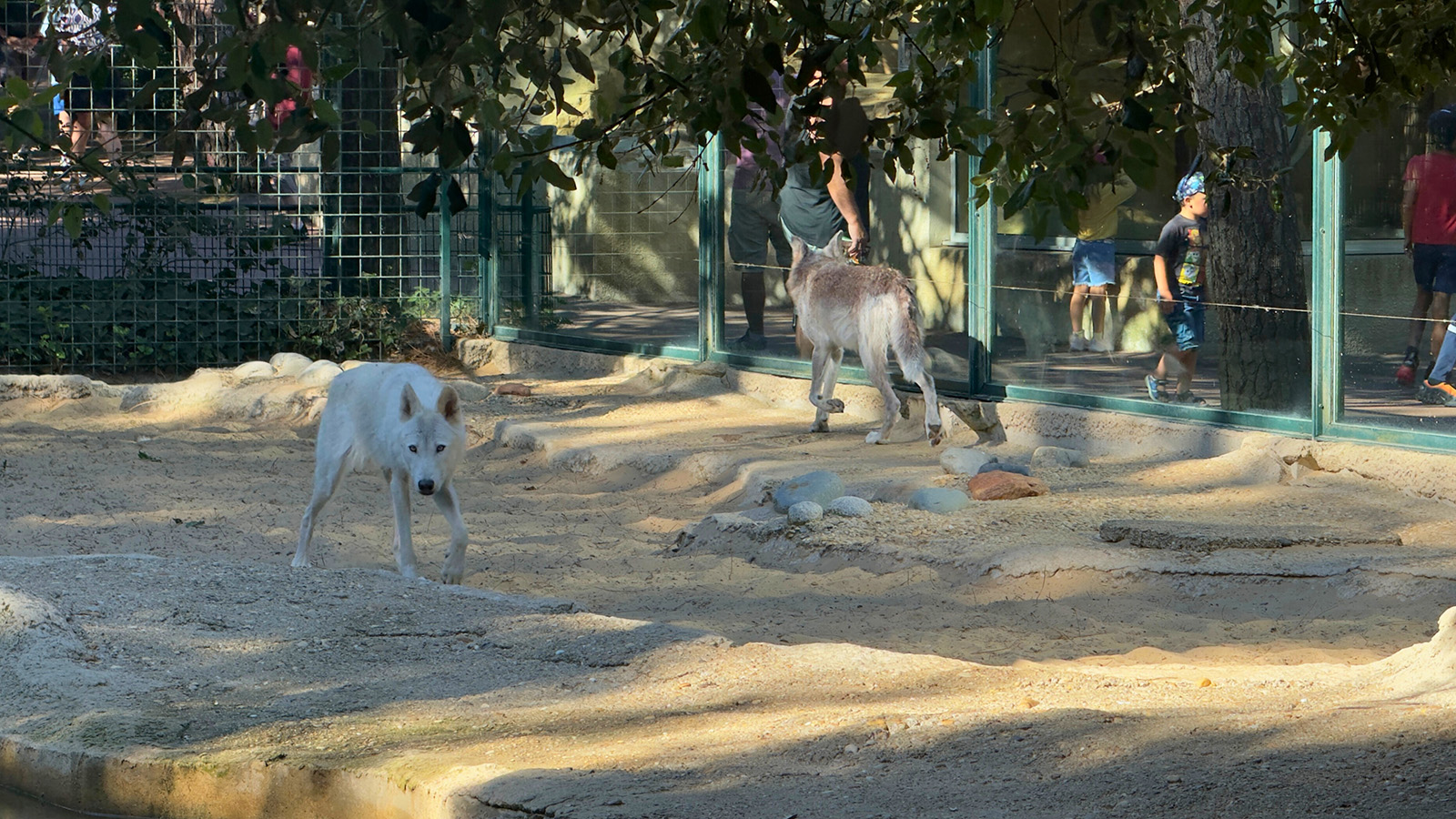
The shaded walk continues to the Mackenzie Wolf Enclosure. These impressive canines, native to the forests and tundra of North America, are among the largest wolves in the world. Their presence here is both imposing and captivating.
Sometimes, if you're lucky, you might even hear their howls. This iconic sound evokes wild, untamed nature. It echoes throughout the park, creating a special atmosphere.
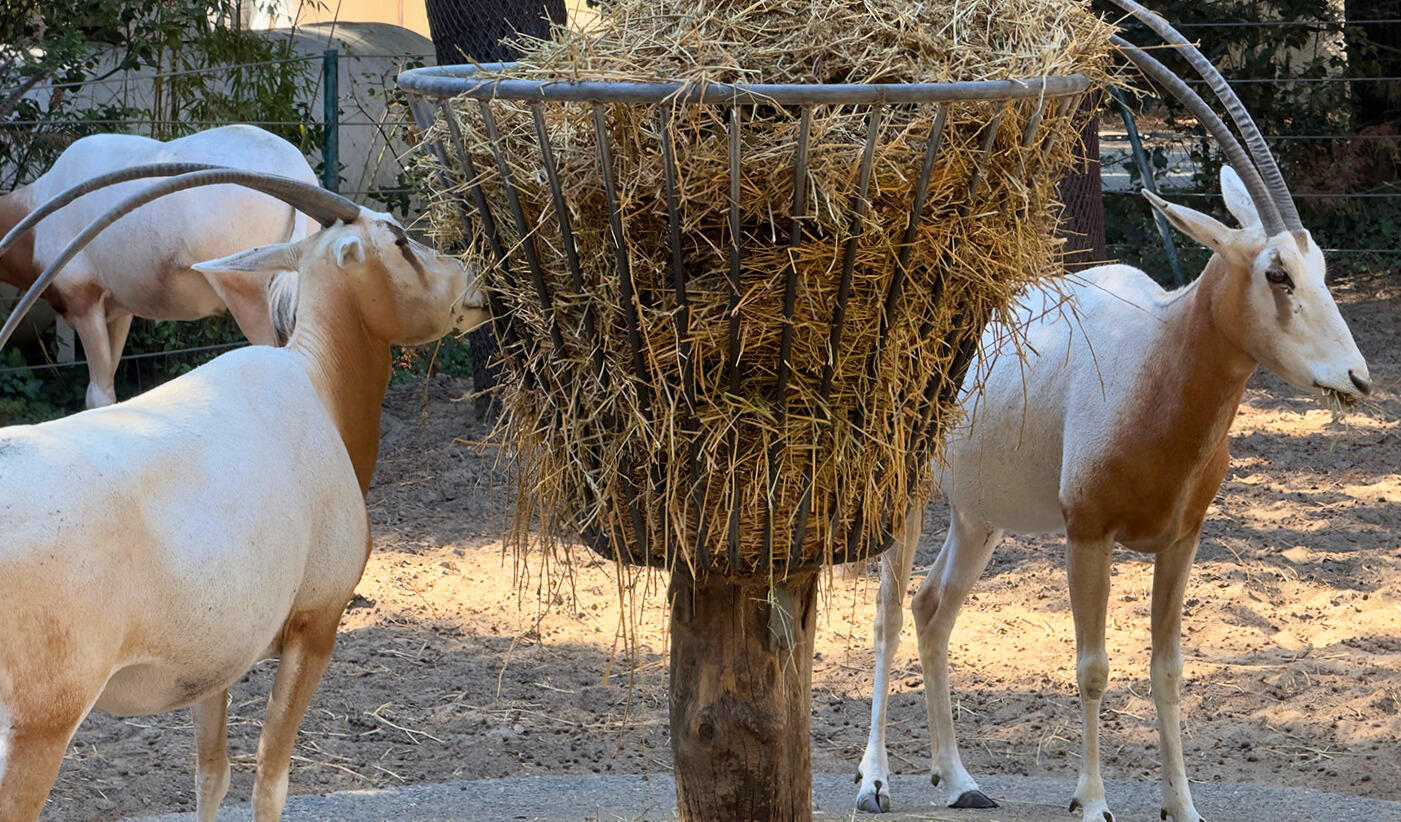
The scimitar-horned oryx
Our journey to La Palmyre Zoo now brings us face to face with a species of rare elegance and of vital importance for conservation: the scimitar-horned oryx. These magnificent antelopes are identifiable by their pure white coat and their long, saber-shaped horns that gracefully curve backward. They are ancient inhabitants of the deserts and steppes of North Africa.
Red pandas
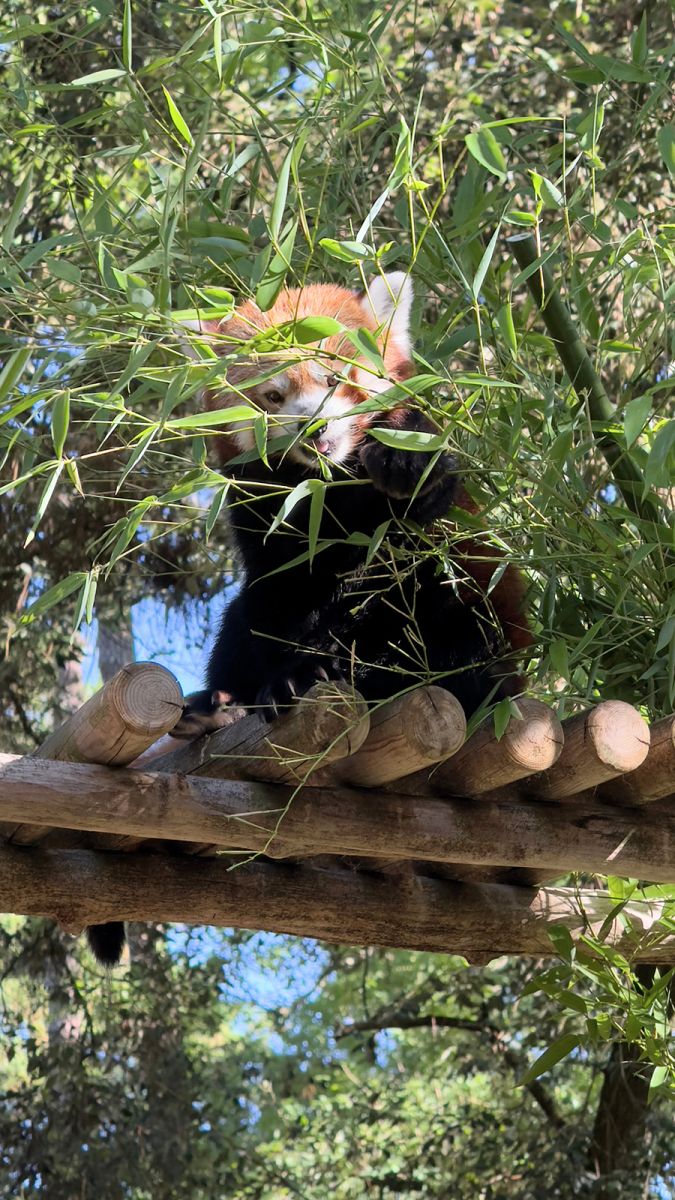
This is such a cute animal! You'll melt!
Native to the mountain forests of the Himalayas in Asia, red pandas are primarily arboreal creatures. At the zoo, their enclosure is designed to mimic their natural habitat: trees, branches, and tall structures. They enjoy resting, often curled up, or moving around with impressive dexterity. Their long, bushy tail serves as a balance and cover to help them maintain their balance and protect themselves from the cold.
Lemurs
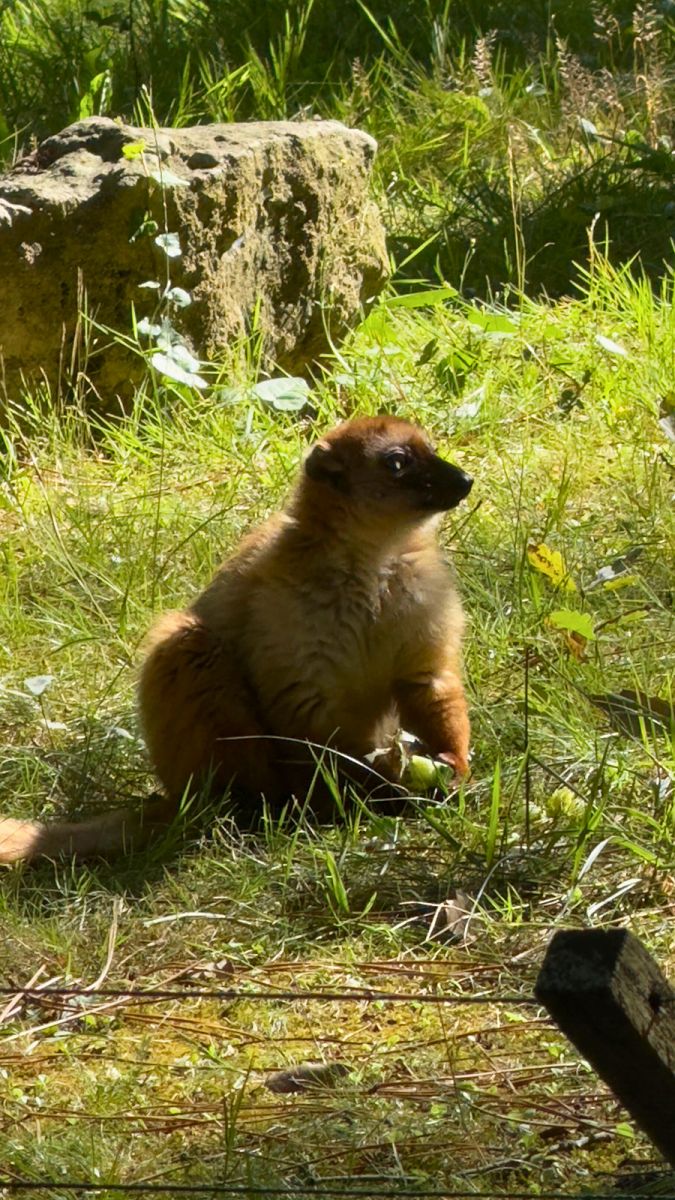
Hey, who's putting on a show? It's one of the lemurs at La Palmyre Zoo !
Originating exclusively from the island of Madagascar and a few small neighboring islands, lemurs represent exceptional biodiversity, both in the variety of their species and their behavior.
Here, it's a turquoise-eyed lemur. The zoo is home to a variety of species, each with its own unique characteristics: some are highly active, leaping from tree to tree with astonishing speed, while others are more discreet. Their agile hands and tail, often longer than their bodies, provide balance and outrigger support in their arboreal lives. Their natural curiosity and social interactions within their group are a captivating sight.
The universe of primates
After the lemurs, there are dozens of species that follow one after the other.
- Cercopithecus ;
- Yellow-breasted capuchins ;
- Marmosets ;
- Tamarinds ;
- Mandrills …
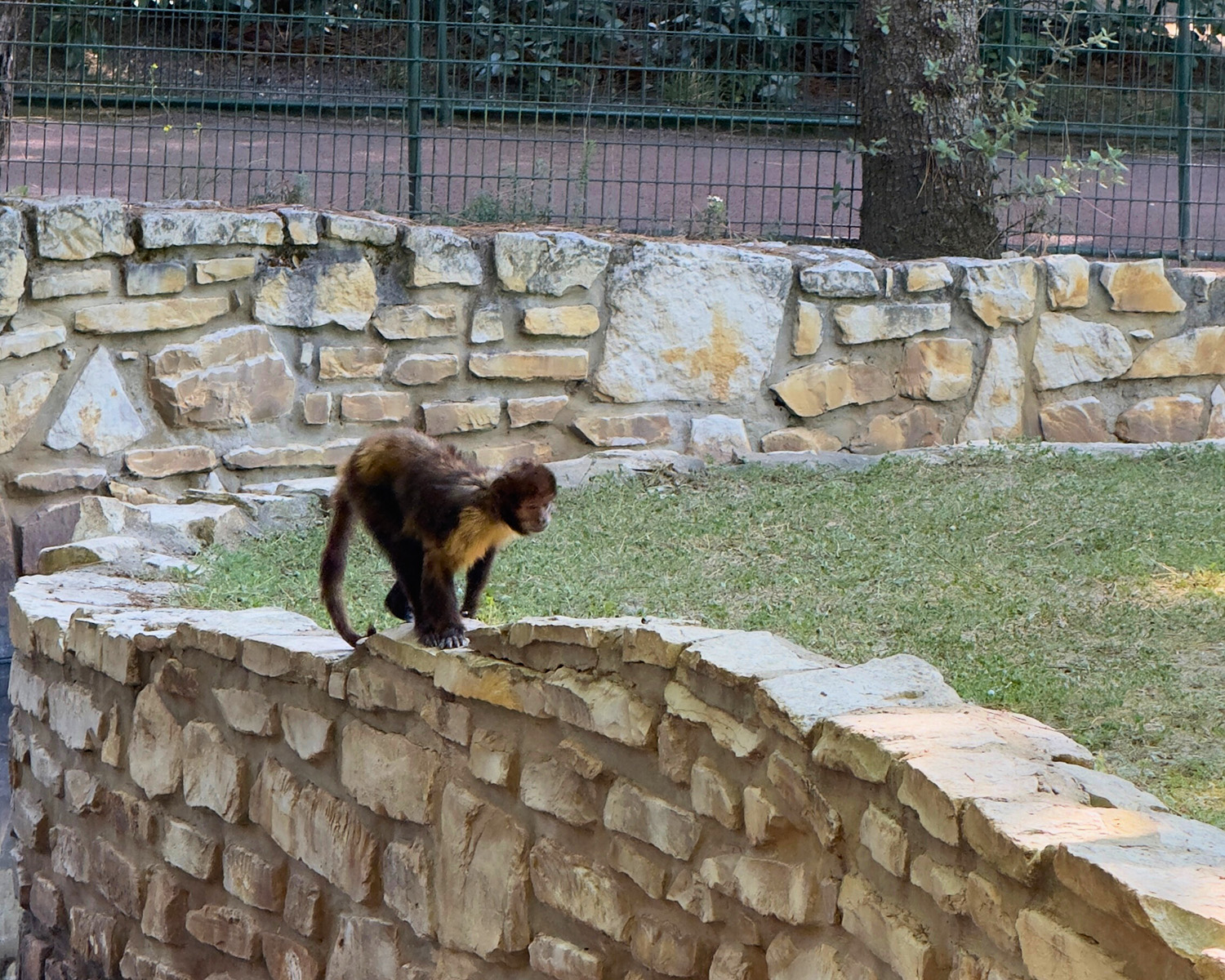
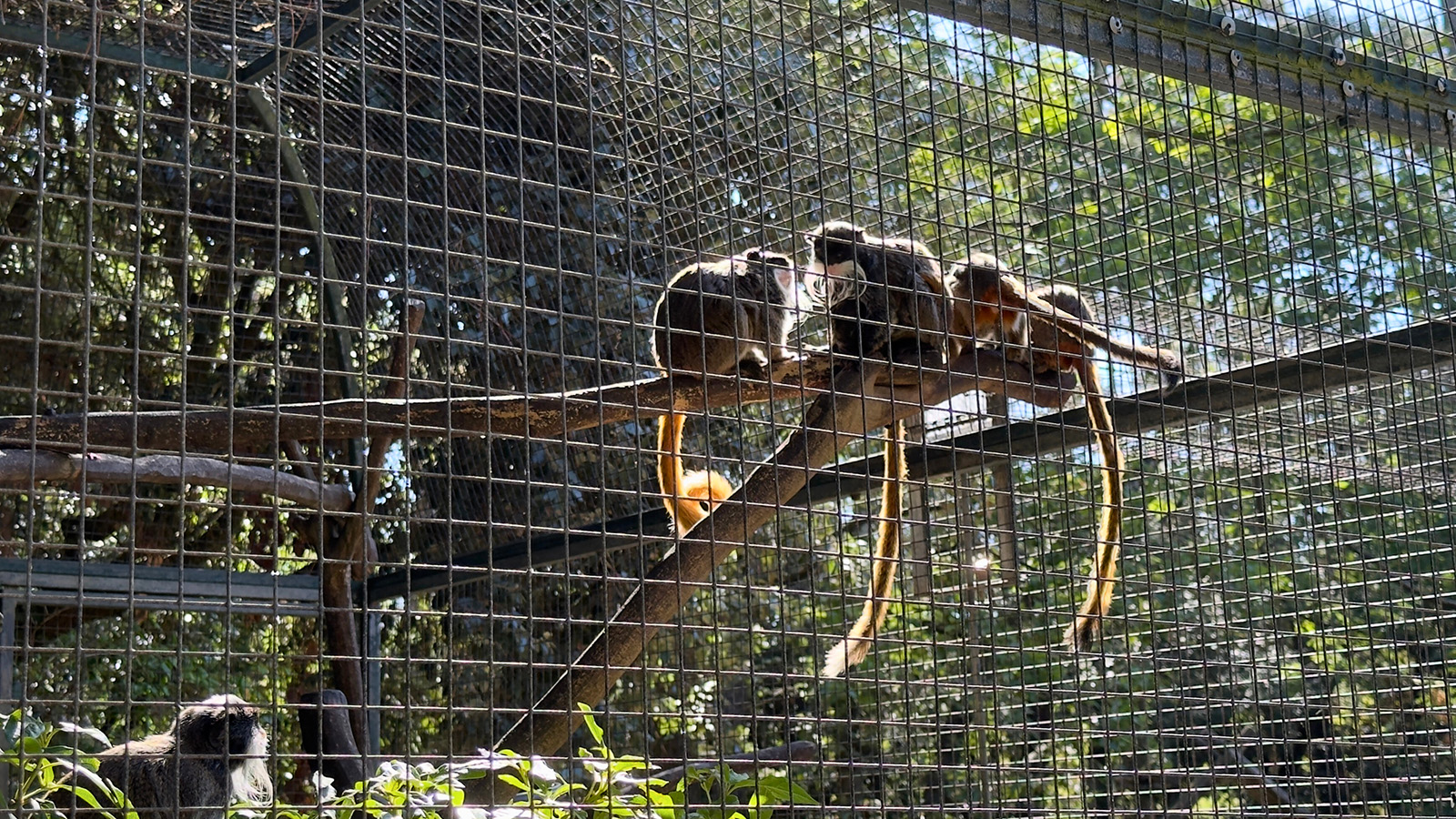
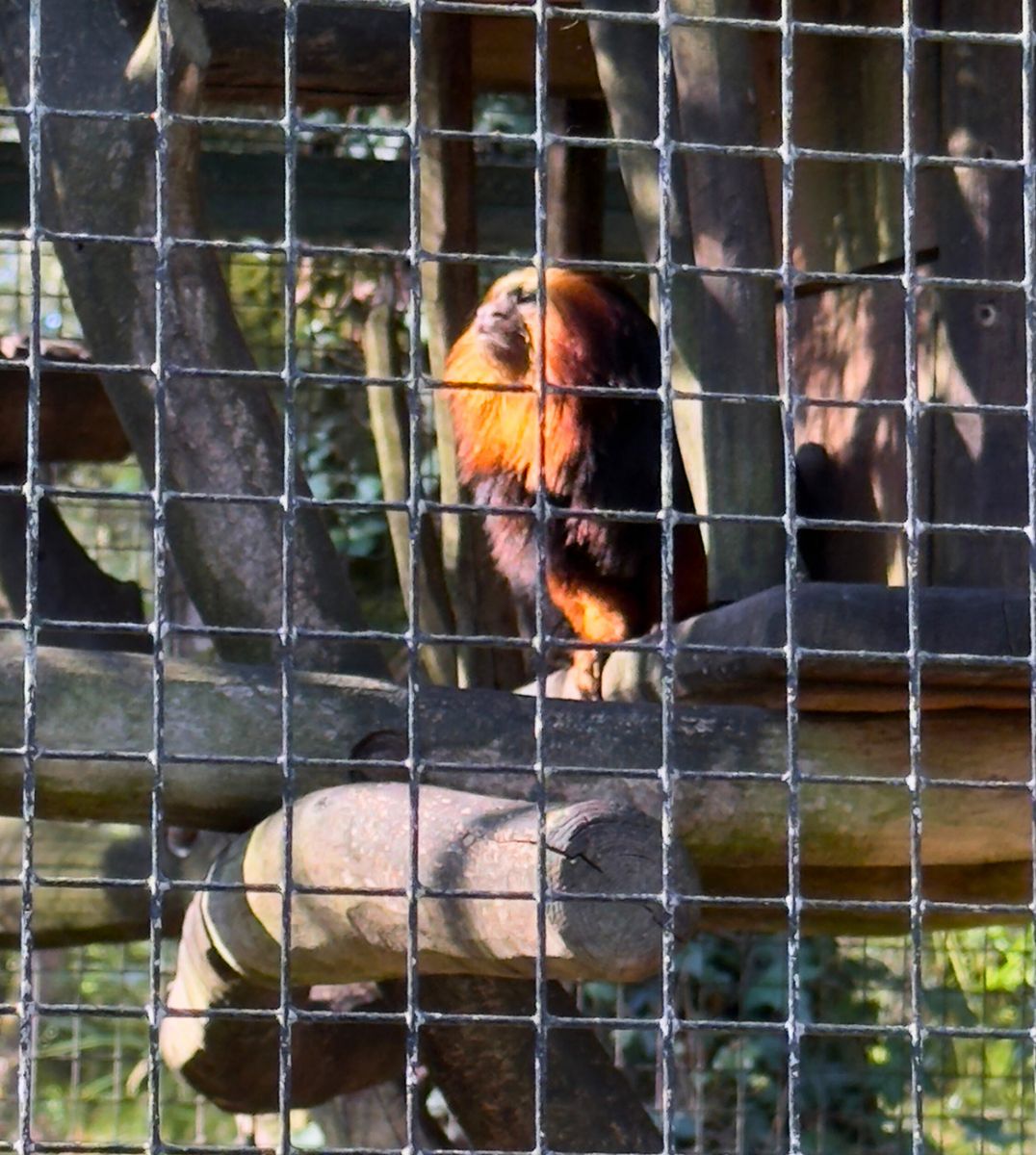
They're all equally cute, and they're very similar to us in the way they move around in their natural environment. Some watch us, others play with us. It's really fun to get to know them, despite the fences.
The cheetahs
These animals, true symbols of speed and grace, are recognizable by their slender bodies, their distinctive spotted coats and the black "tears" that run from their eyes to their snouts.
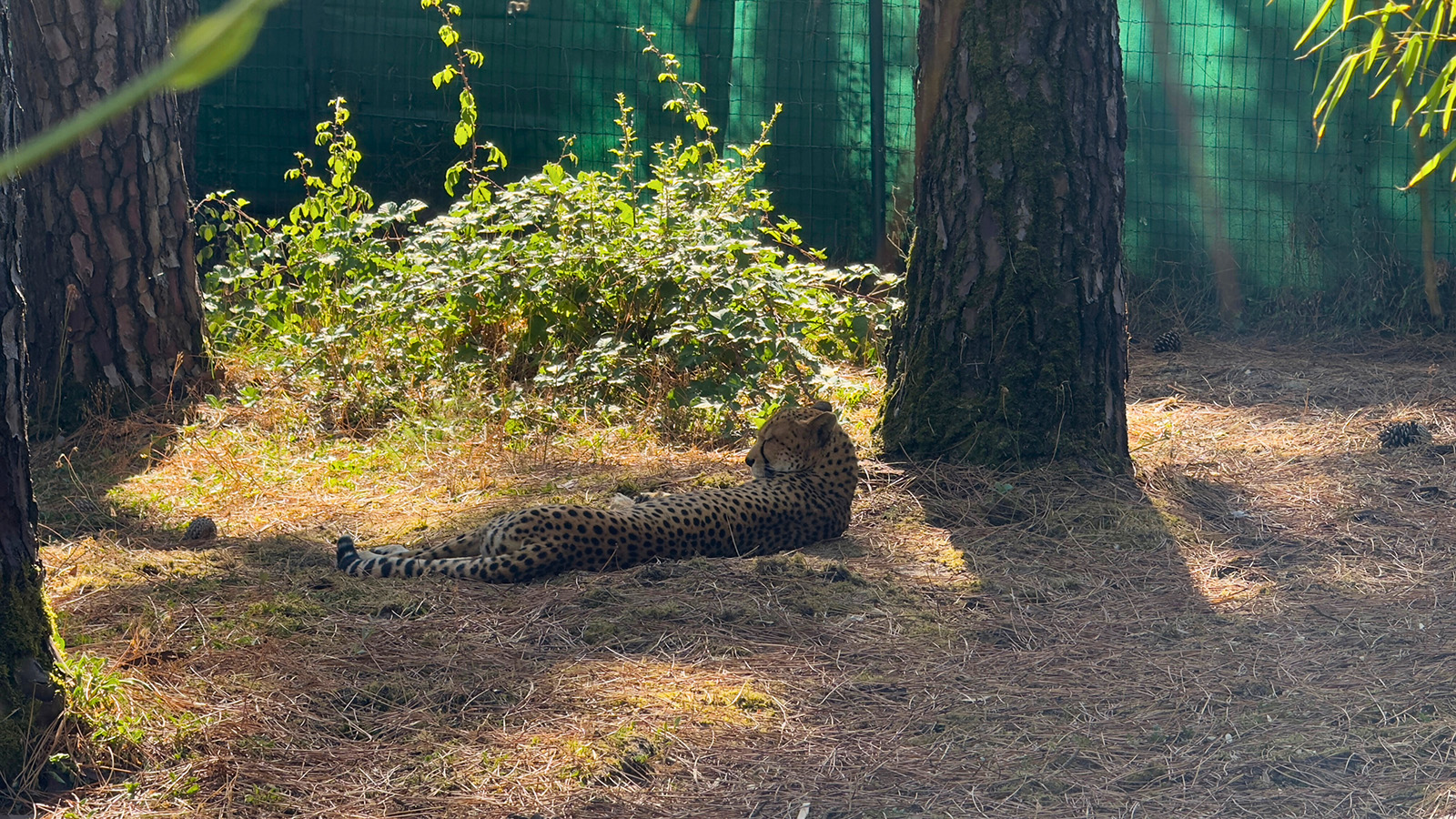
At the zoo, although they cannot fully express their speed, their agile gait and alertness can be observed. Their enclosures are designed to provide them with space, observation points, and resting areas, essential to their well-being. It is fascinating to watch them bask in the sun or monitor their surroundings with intense concentration.
Rhinoceroses, oryx and Grévy's zebras
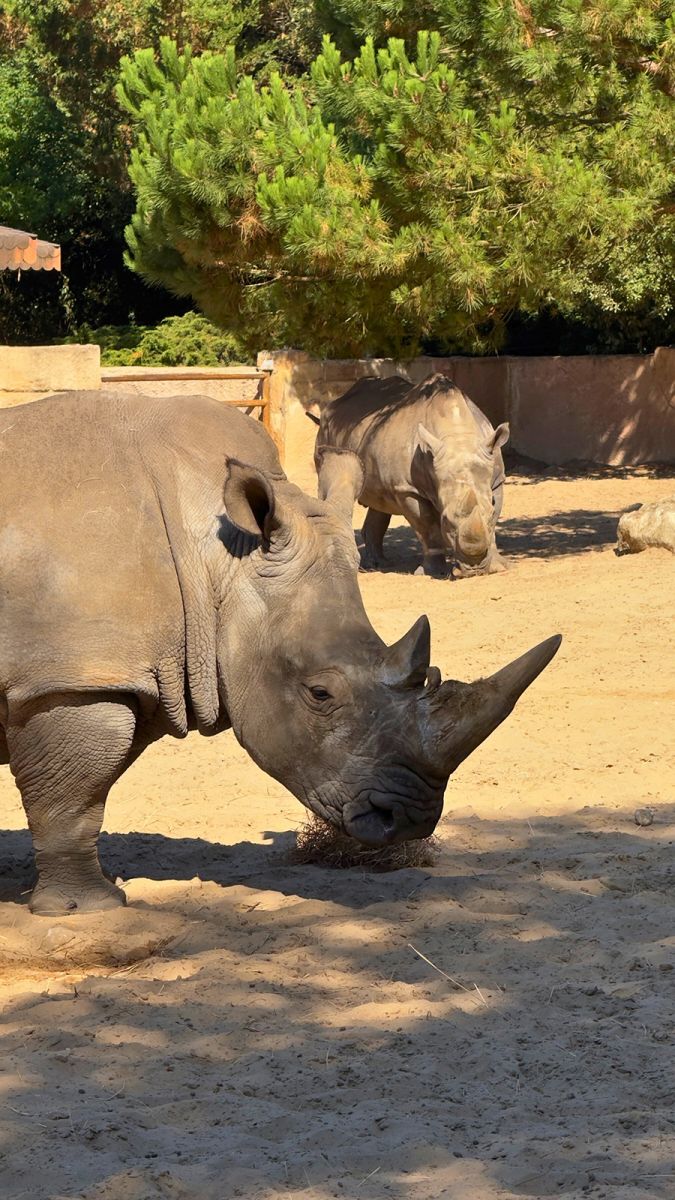
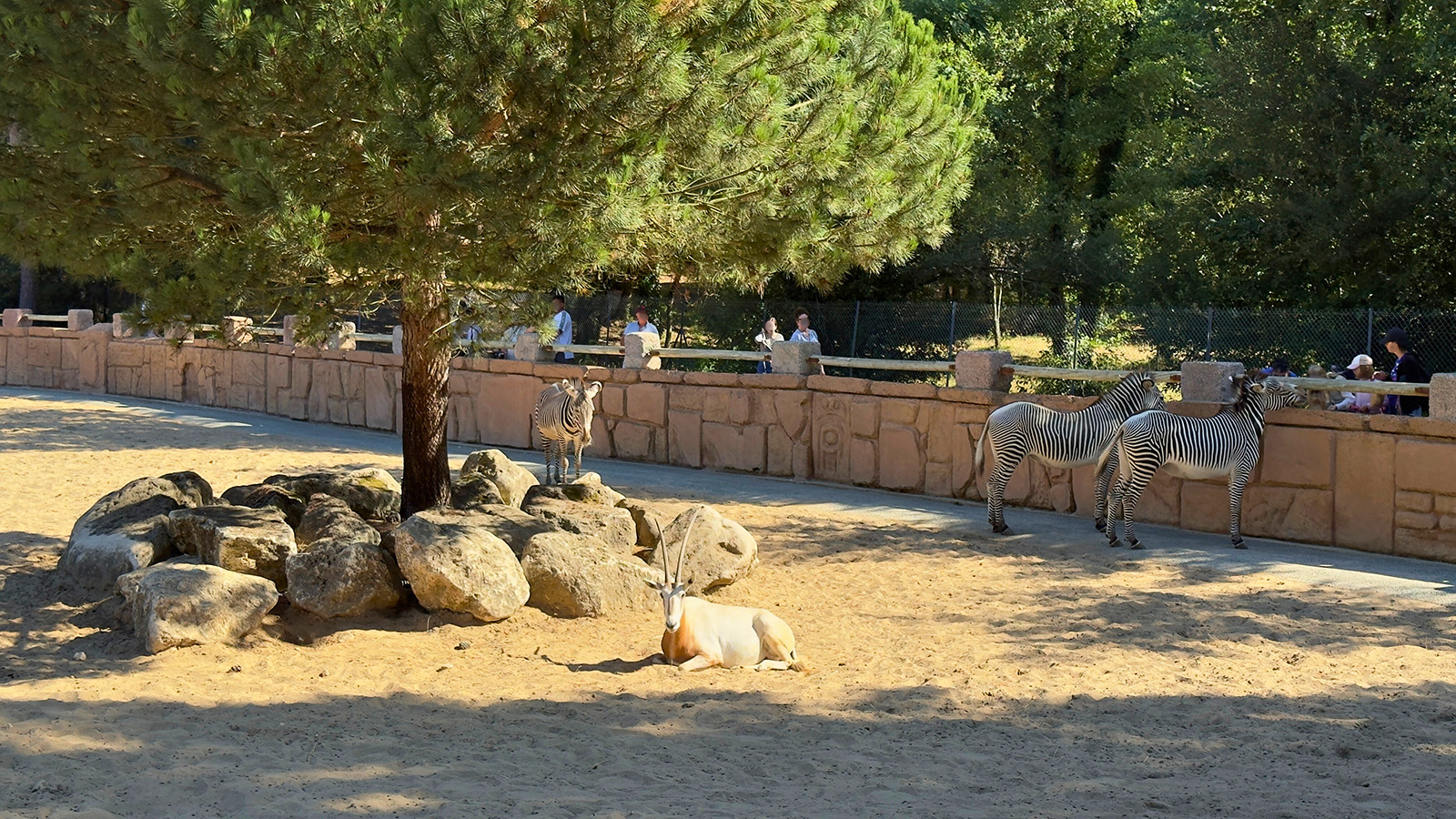
Let us now return to the heart of the African savannah to find the oryx, accompanied this time by rhinoceroses and zebras.
The imposing silhouette of rhinos commands attention. These peaceful giants move with quiet power, grazing on grass or basking in the sun. Their bulk and thick hide are a testament to their strength, but also a reminder of their vulnerability to the threats their species faces in the wild.
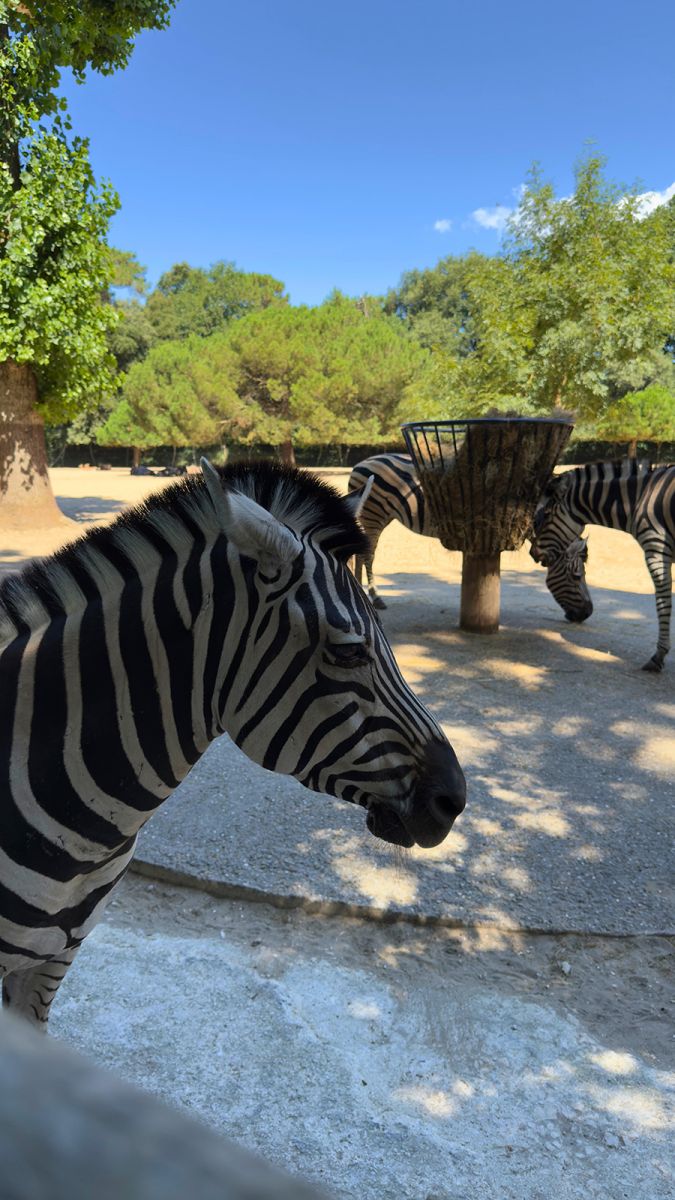
Alongside them, the graphic elegance of Grevy's zebras contrasts with the landscape. These zebras offer us a unique visual spectacle. Their interactions within the group and their constant vigilance towards each other are a glimpse into their social life. Unfortunately, Grevy's zebras are an endangered species, which makes their presence here all the more valuable for conservation programs and public awareness.
The scarlet ibis
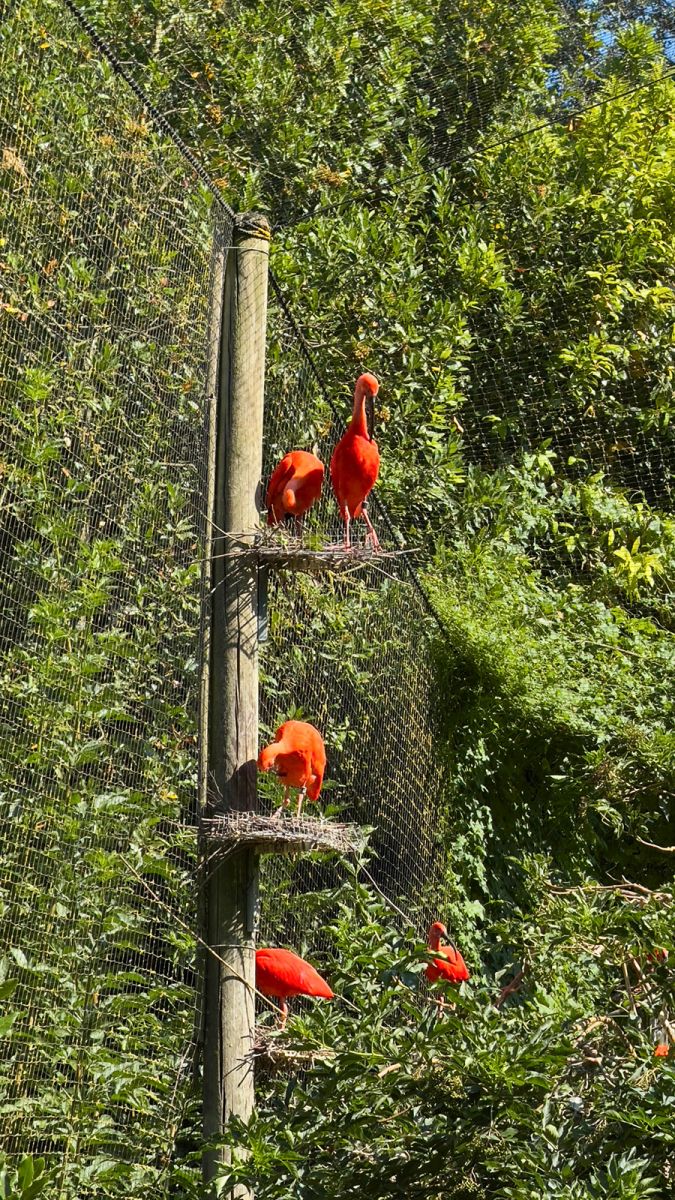
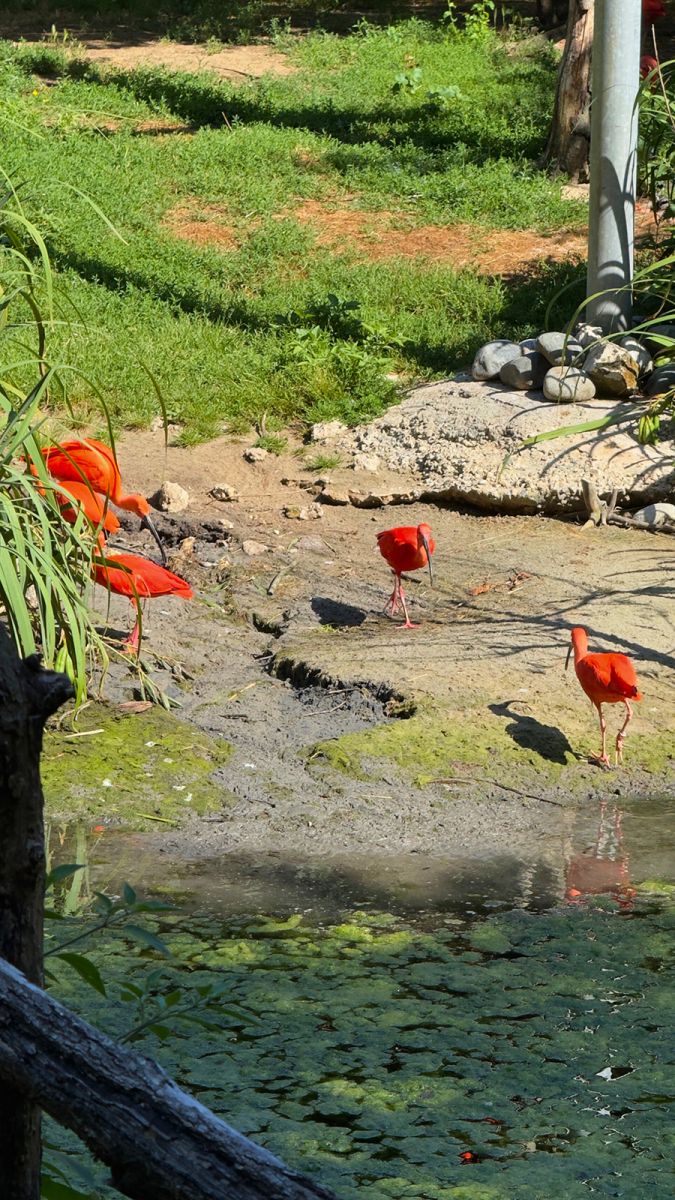
As we move forward, our eye is quickly drawn to the bright red of the next birds: the scarlet ibis. They are native to the mangroves and wetlands of South America and are breathtakingly beautiful. Their plumage, an intense, almost unreal scarlet red, stands out vividly against the green of the vegetation and the blue of the sky.
They live in a large, enclosed aviary. This space is designed to provide them with a safe and stimulating environment. The surrounding mesh structure gives the impression of entering their own world. Inside, the scarlet ibises move elegantly, wading in the watering holes or perching gracefully on the branches. They have a unique appearance, with their characteristic long, curved beak that they use to dig through the mud.
Short break with a view of the island of Lemurs
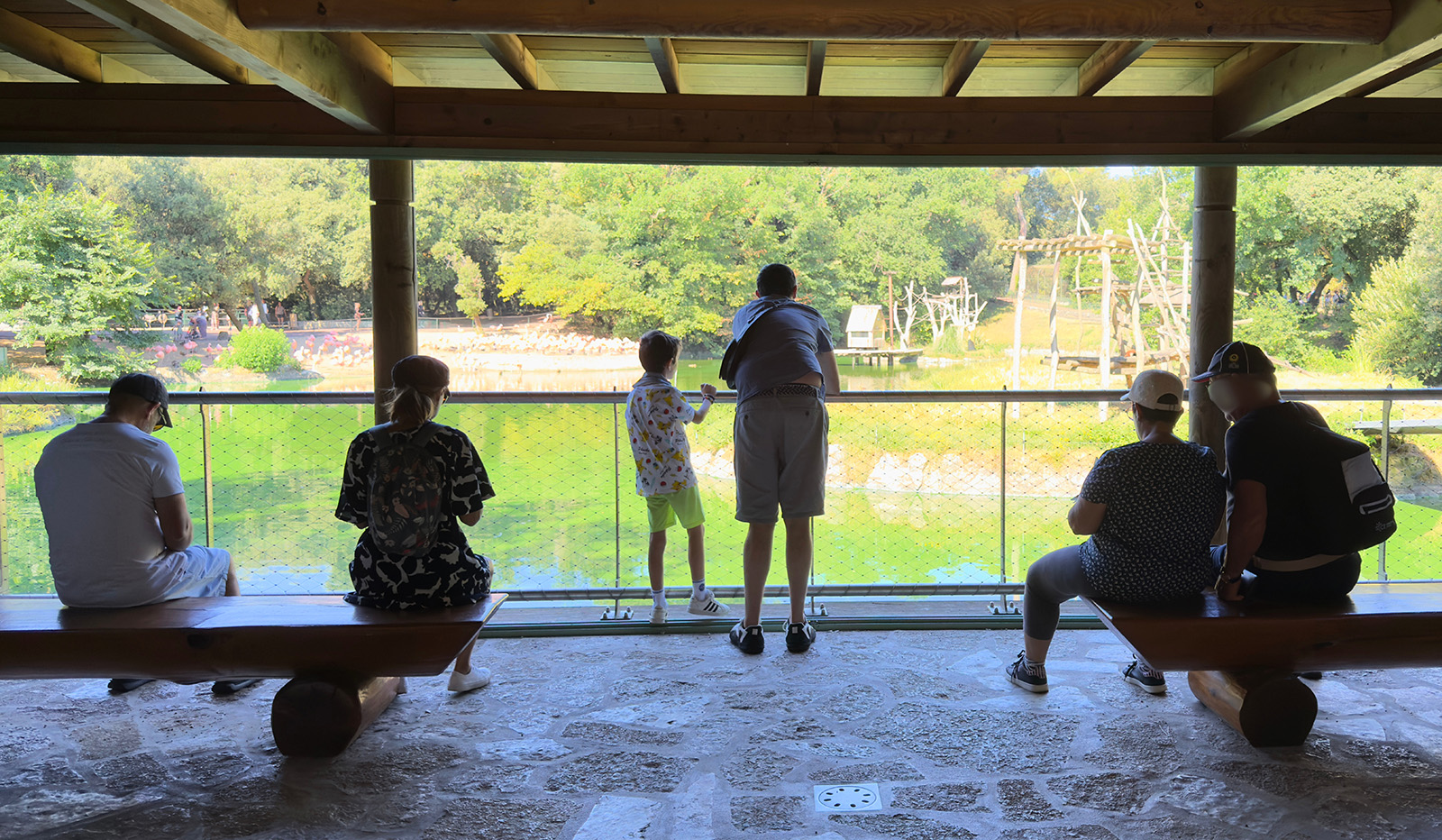
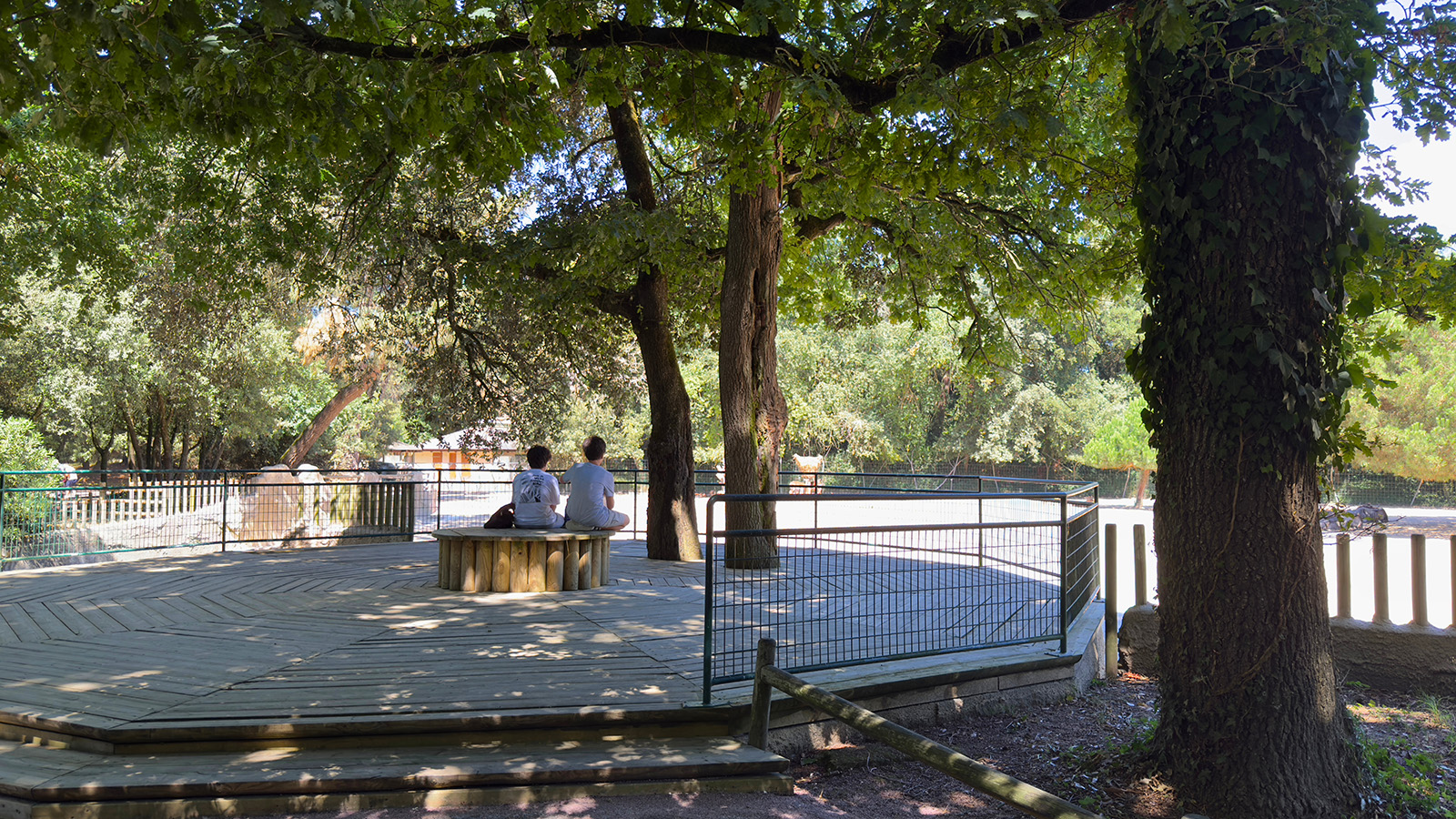
La Palmyre Zoo is so beautiful that you can forget how many miles you've traveled. However, when a shady spot or rest area presents itself, we're delighted to take a break there to recharge our batteries.
This observatory is perfect for watching the lemurs we saw earlier below.
The bird nursery
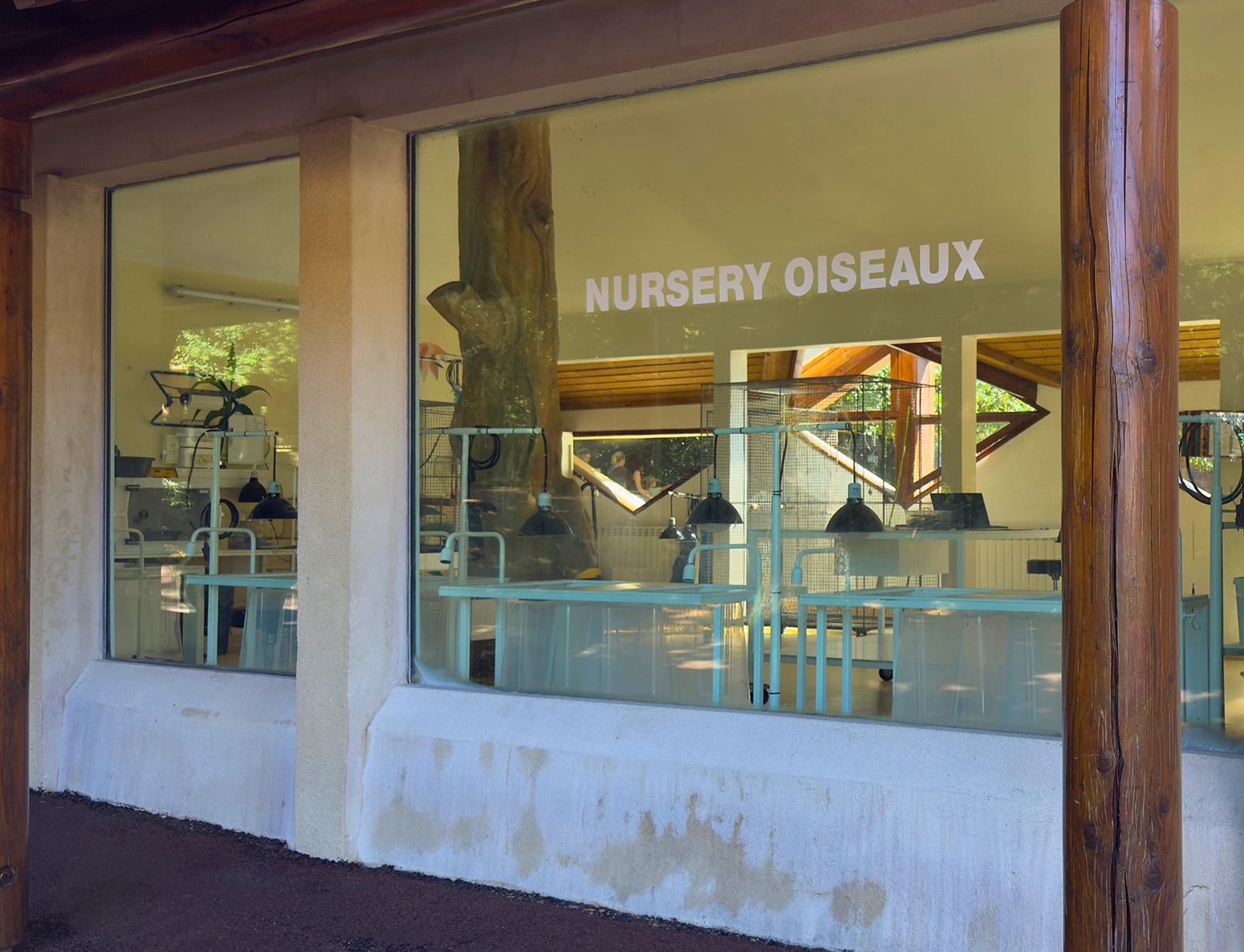
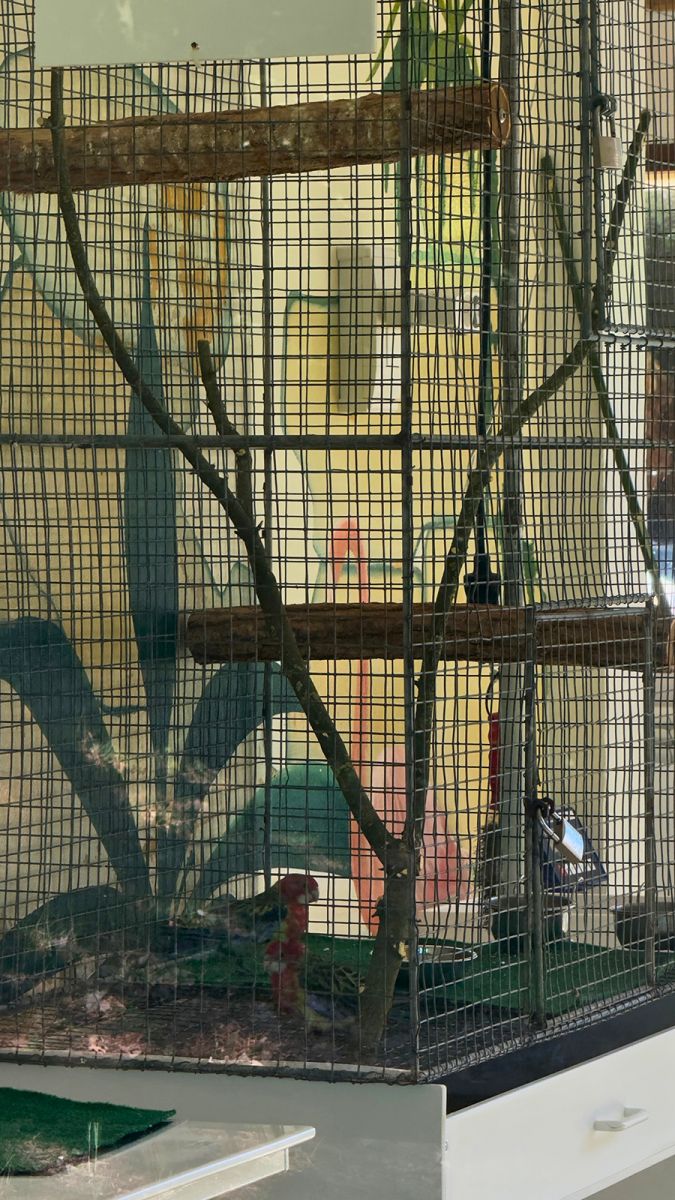
As we resume our excursion, the Charente-Maritime Guide discovers this unique place: the bird nursery. The place is peaceful. Through the window, we see a small bird in a cage.
This is where the zoo's youngest and most vulnerable winged residents receive attentive care.
This nursery plays a vital role in breeding programs for species, especially those that are endangered or whose reproduction is delicate. It cares for eggs or young chicks and fledglings that require special attention. They may have been rejected by their parents, or it is simply to maximize their chances of survival in a controlled environment. The keepers then become surrogate parents, feeding, monitoring and ensuring the harmonious development of these fragile little lives.
American bison
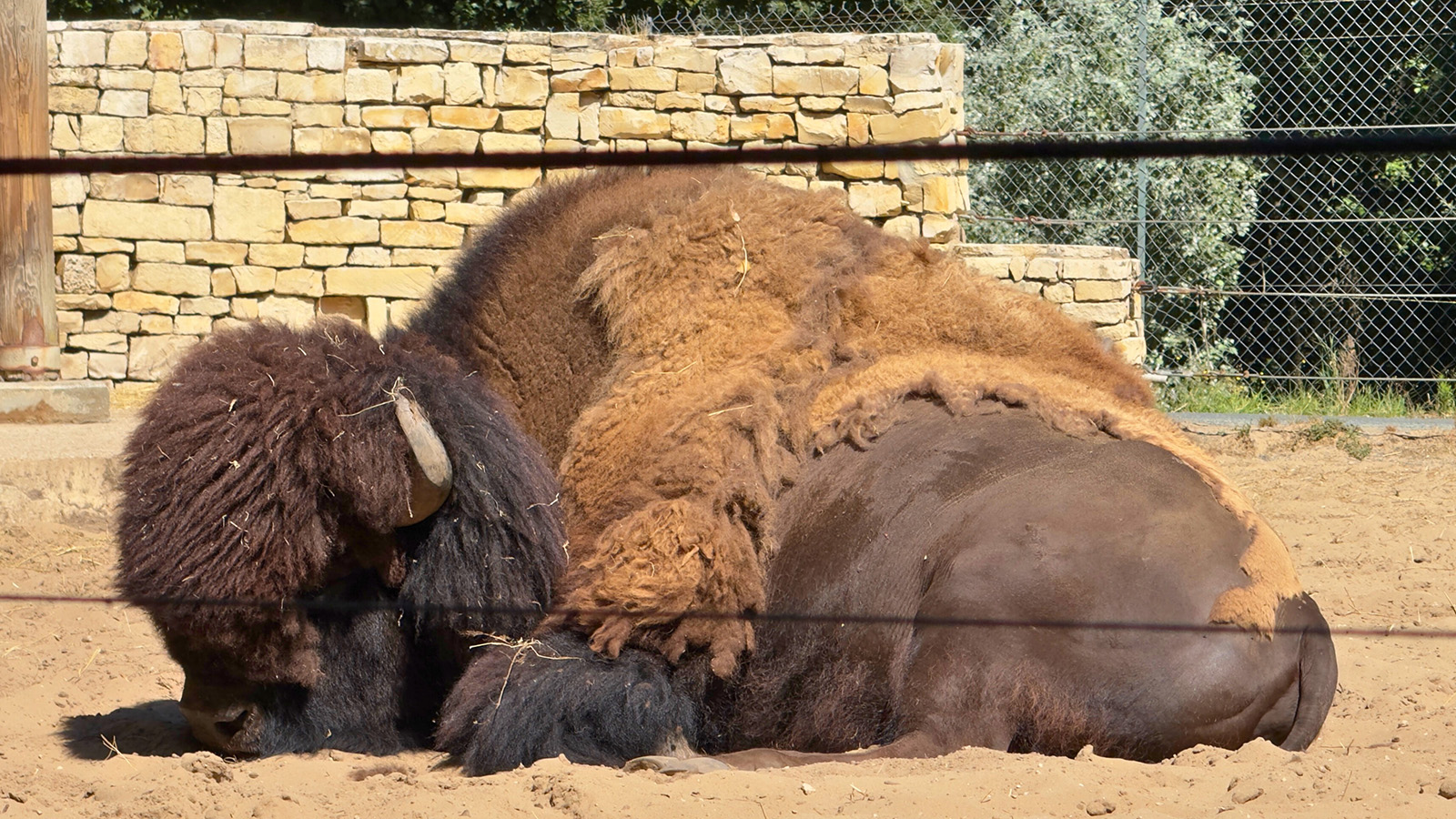
Bison are massive animals, recognizable by their hump on their backs and their thick coats. They are iconic symbols of the North American Great Plains.
Watching these powerful creatures in their enclosure is an experience reminiscent of the grand landscapes of the Wild West. They move with quiet strength and roll in the dust to protect themselves from insects. It's a wonderful glimpse into their natural behavior. Despite their impressive size, they exude a certain serenity.
Hippopotamuses
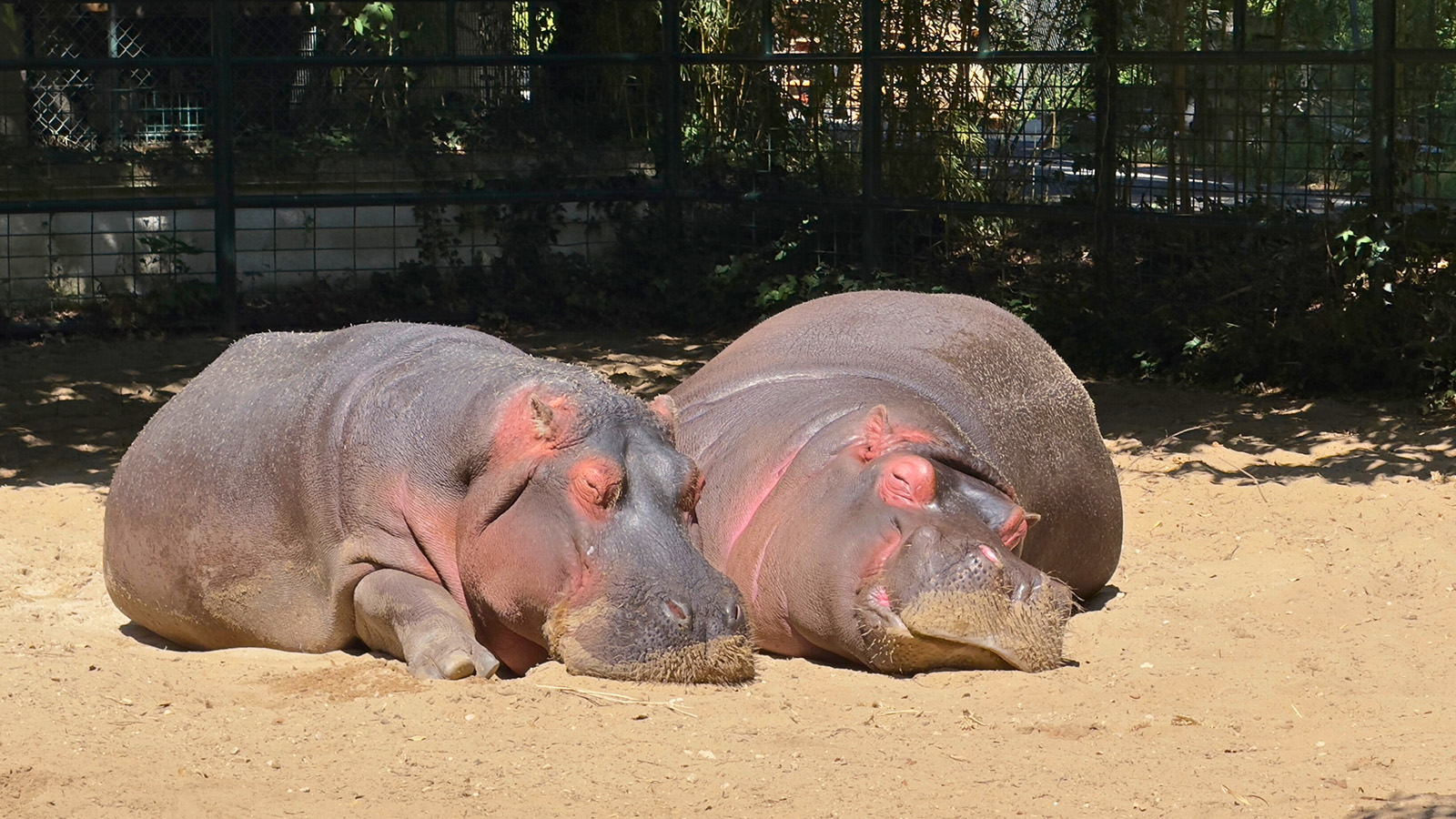
As we skirt the island of lemurs, we come face to face with these behemoths: the hippos. We wouldn't want them to walk all over us!
What's most striking about hippos is their semi-aquatic lifestyle. Most of their day is spent submerged in the water, where they cool off and protect themselves from the sun. Often motionless, they only let their nostrils, eyes, and ears emerge from the surface, creating the illusion of floating rocks. From time to time, they move heavily along the bottom of the pool or rise to the surface to take a deep breath. Seeing them yawn, opening their enormous mouths, is a surprising sight that reveals the extent of their powerful defenses. As for us, they had decided to sunbathe. After all, why should we be the only ones playing at being lizards?
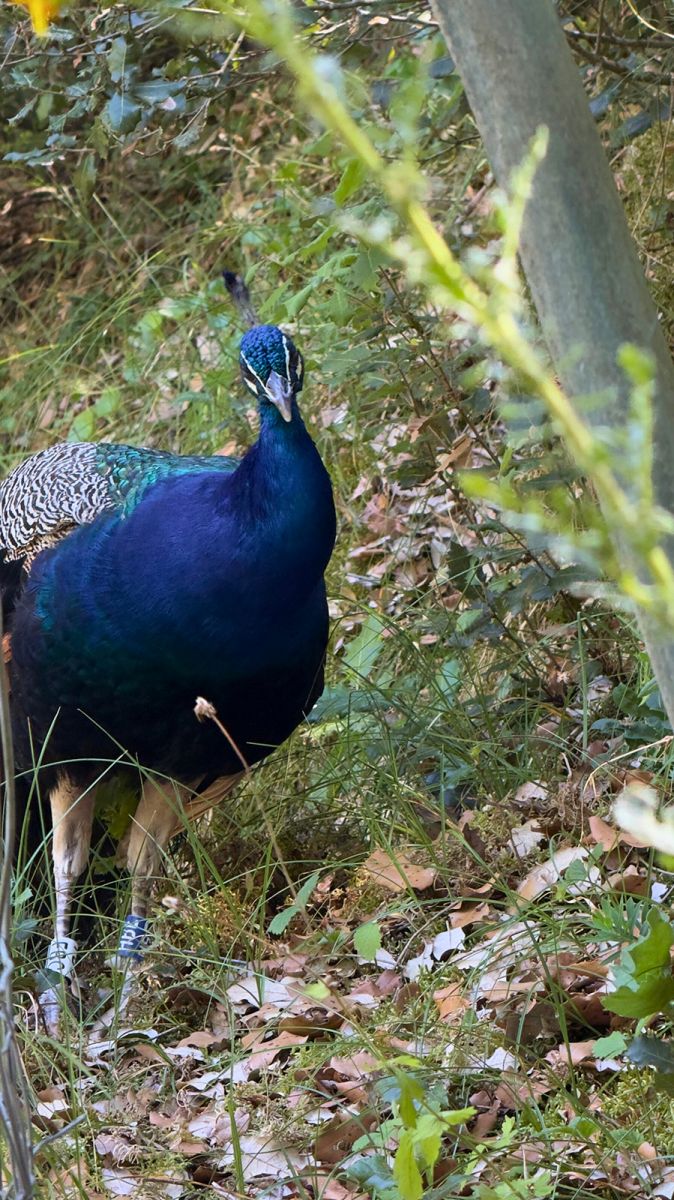
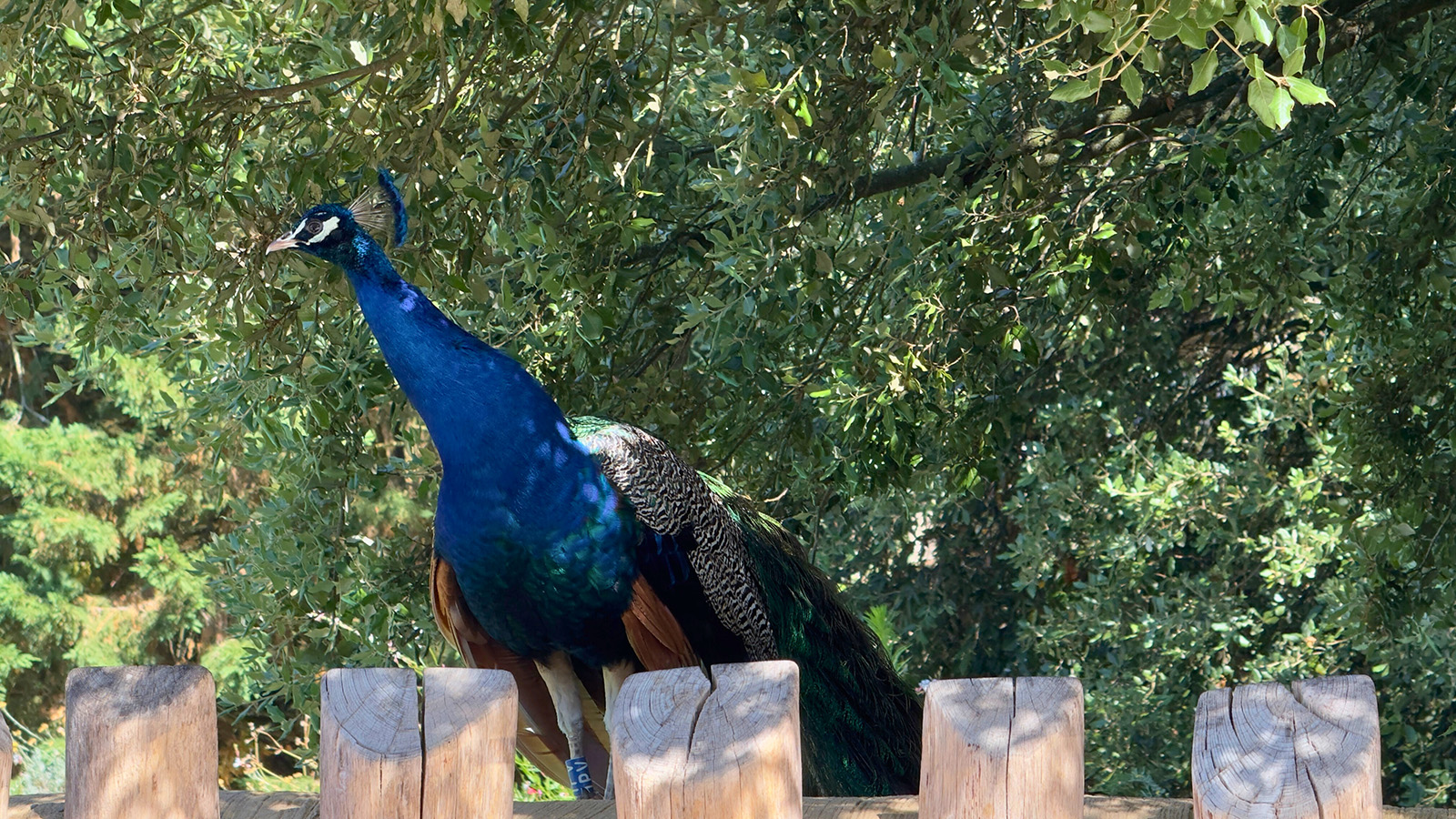
The walk continues and we see the lions again. Likewise, a blue peacock follows us to show us its beautiful plumage.
Asian elephants
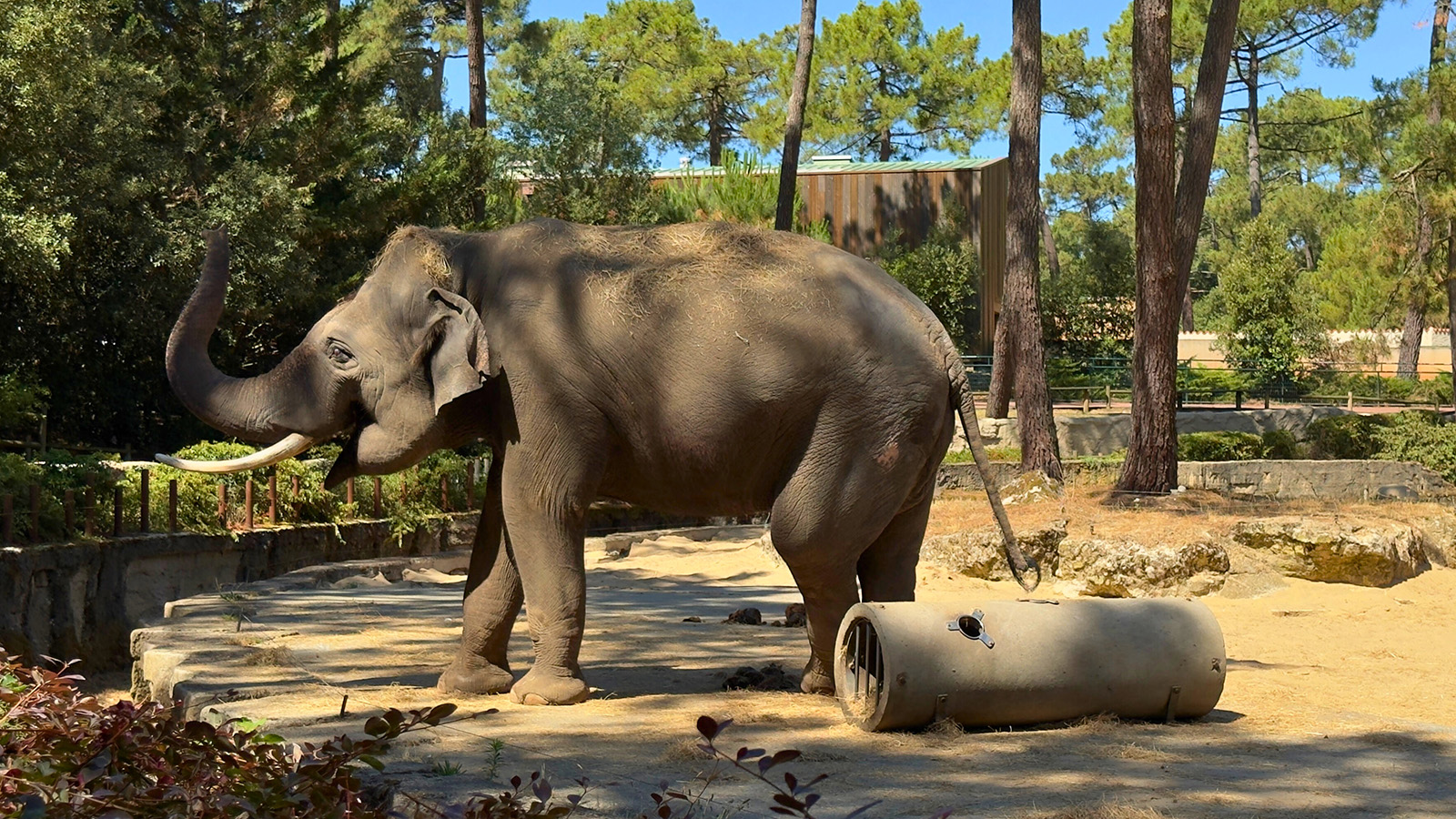
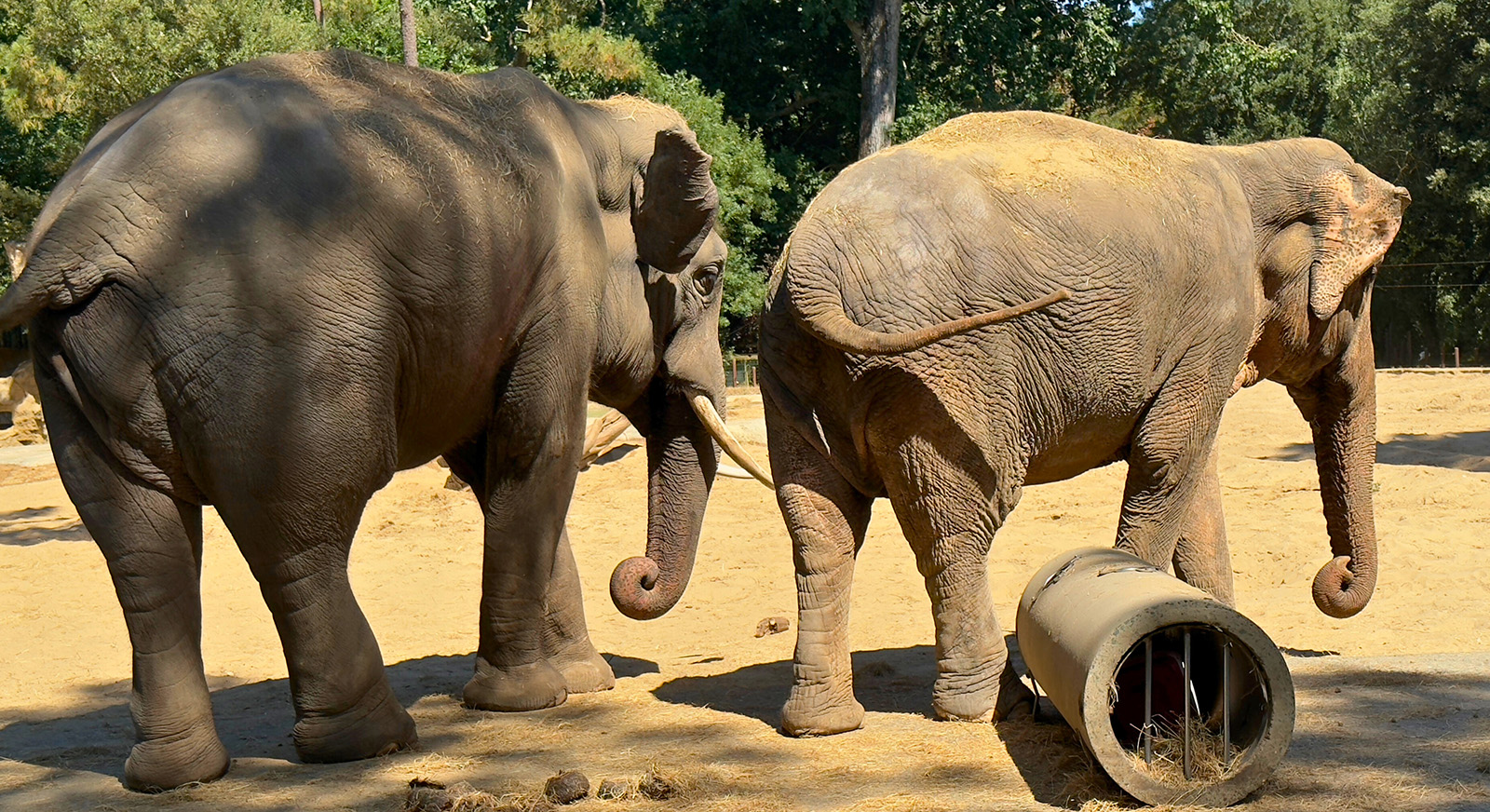
Here we are at one of the highlights of the visit. These elephants, which are unmistakable, exude a majestic presence and great intelligence. Observing them in their daily lives is a captivating spectacle. They move with a heavy but elegant gait and use their trunks with incredible dexterity to grab food or interact with each other.
A wide moat separates the elephant enclosure from the public. This moat is an essential and ingenious safety barrier, very often used in zoos. Unlike bars or high walls that can break the aesthetics of the landscape and hinder visibility, the moat allows for unobstructed and natural observation in complete safety for both humans and animals.
Pelicans and storks
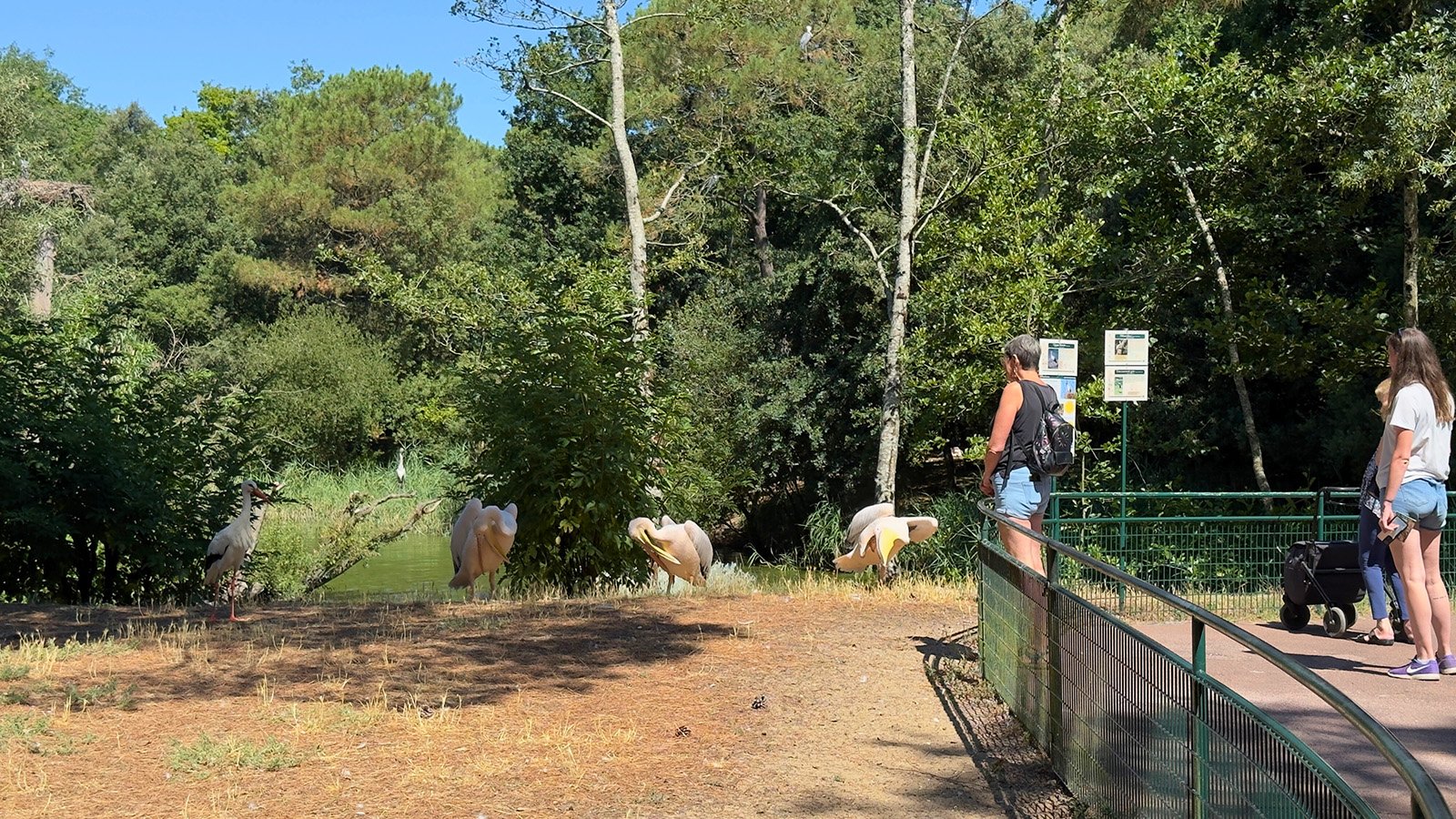
In the next enclosure, pelicans and storks live together in harmony. The coexistence of these two species, one more aquatic and the other more terrestrial, illustrates the richness of ecosystems. Their vast domain provides them with the space they need to swim, walk, and fly. It's also ideal for admiring their beauty and natural behaviors.
The African savannah
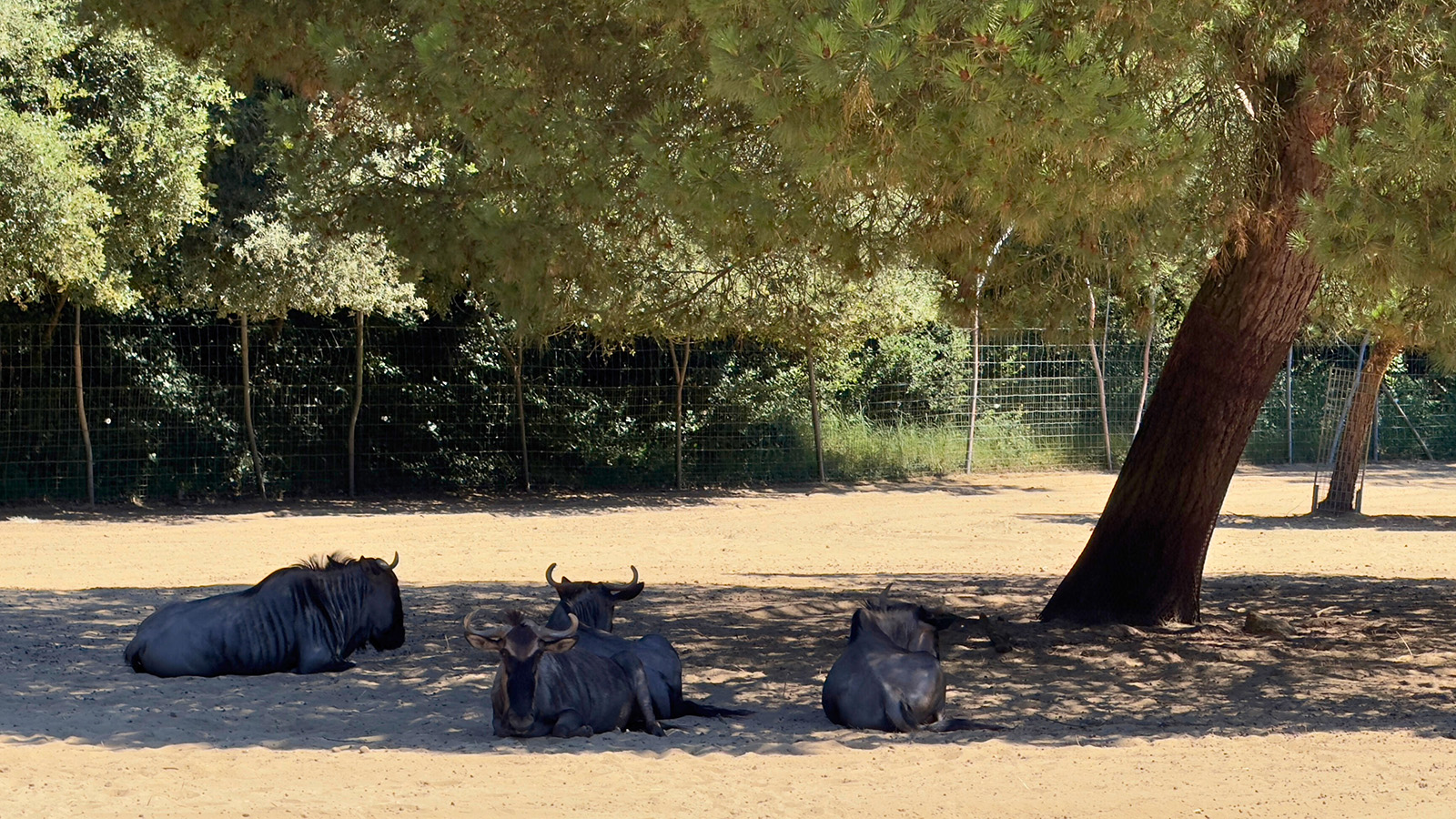
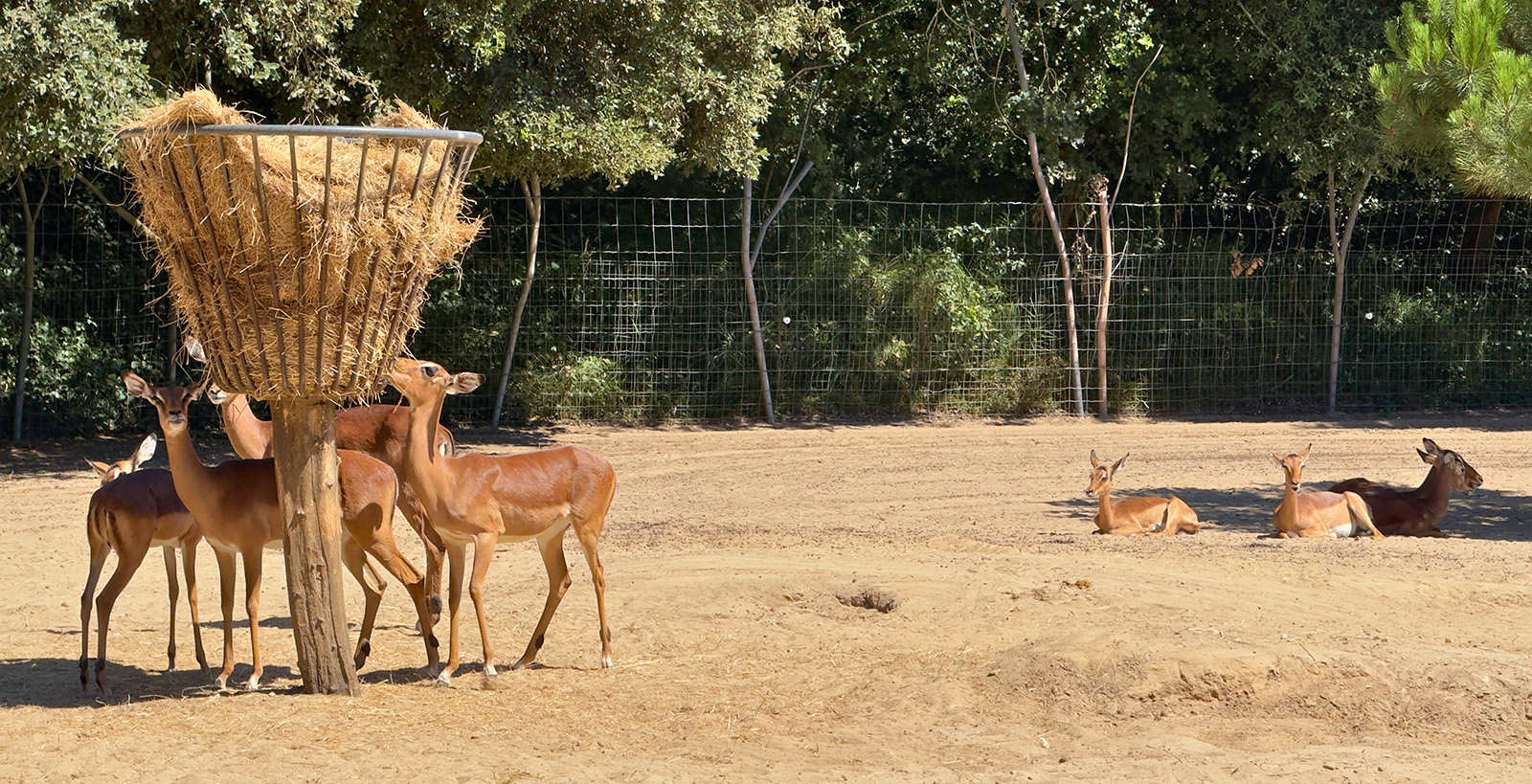
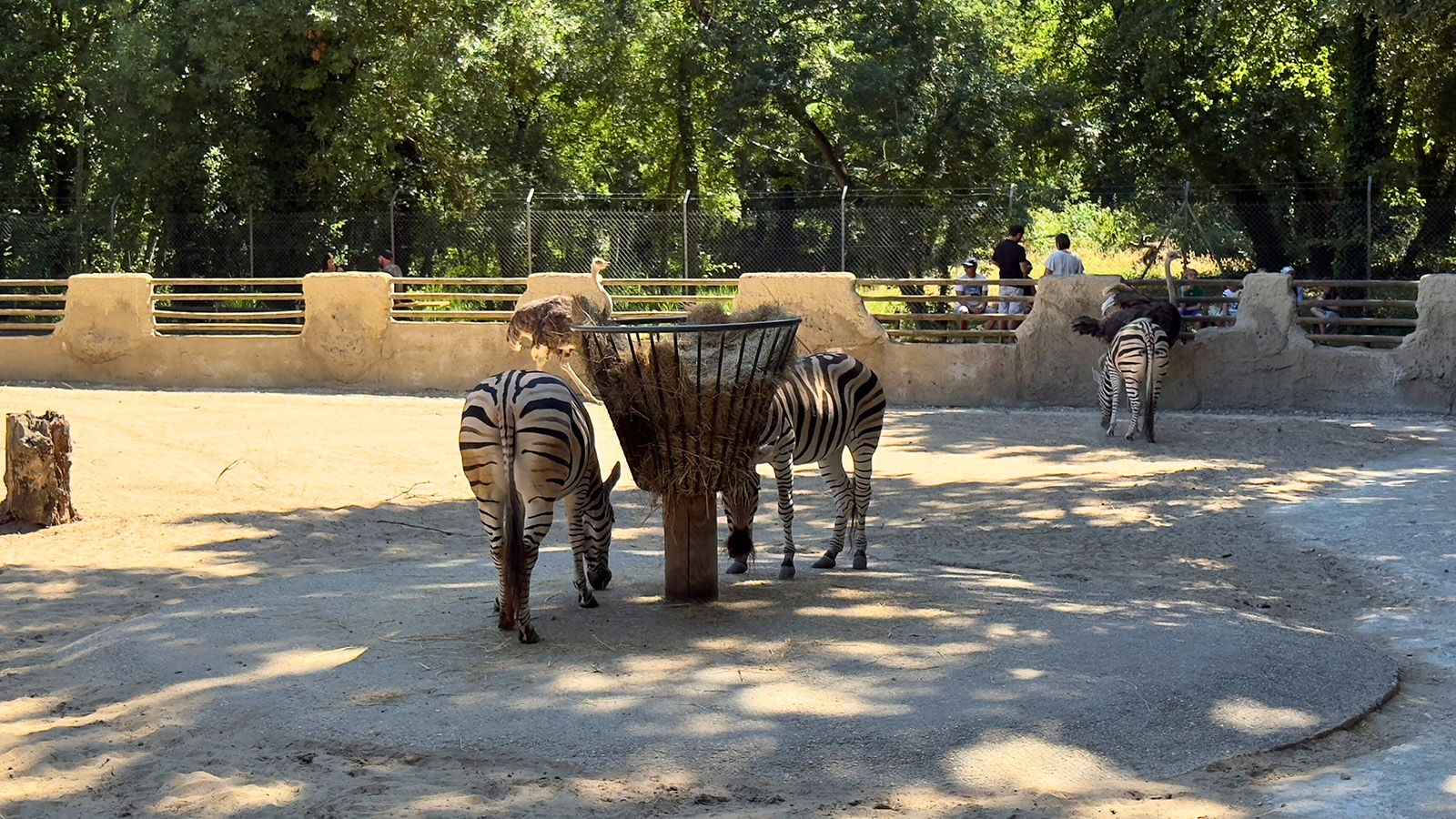
Once again, we are immersed in the hot countries of Africa, thanks to this immense space shared by wildebeest, plains zebras, impalas, ostriches and blesboks. There are shaded benches to sit on and take the time to observe each species.
This vast, open space is a magnificent recreation of the continent's vast savannahs, where life abounds and interactions are constant. As soon as you approach, you are transported: the horizon opens onto a landscape that seems to stretch into the distance, dotted with rocks and adapted vegetation, under the watchful eye of different species.
This gives the Charente-Maritime Guide some safari ideas!
The Dwarf Goat Park
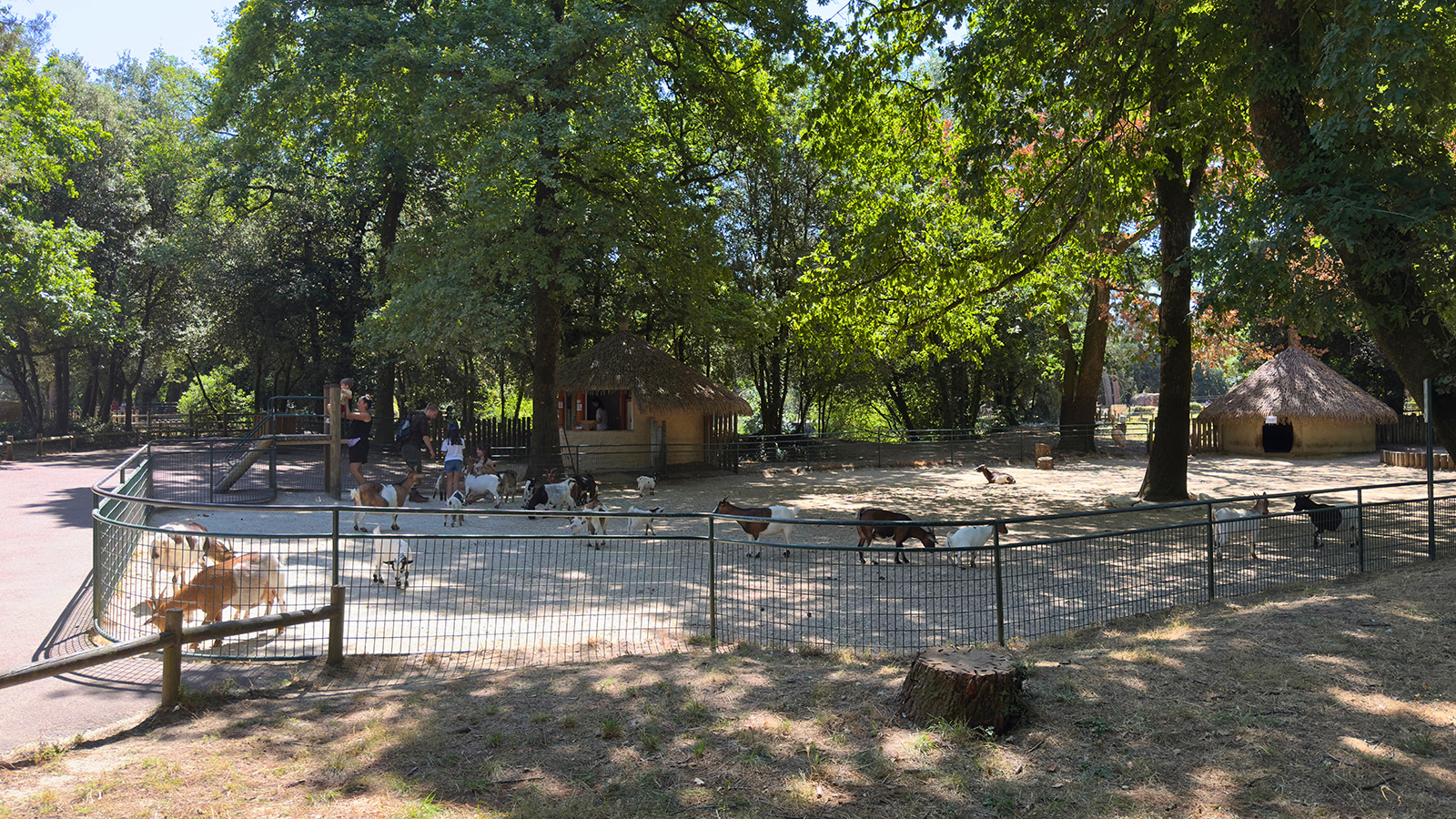
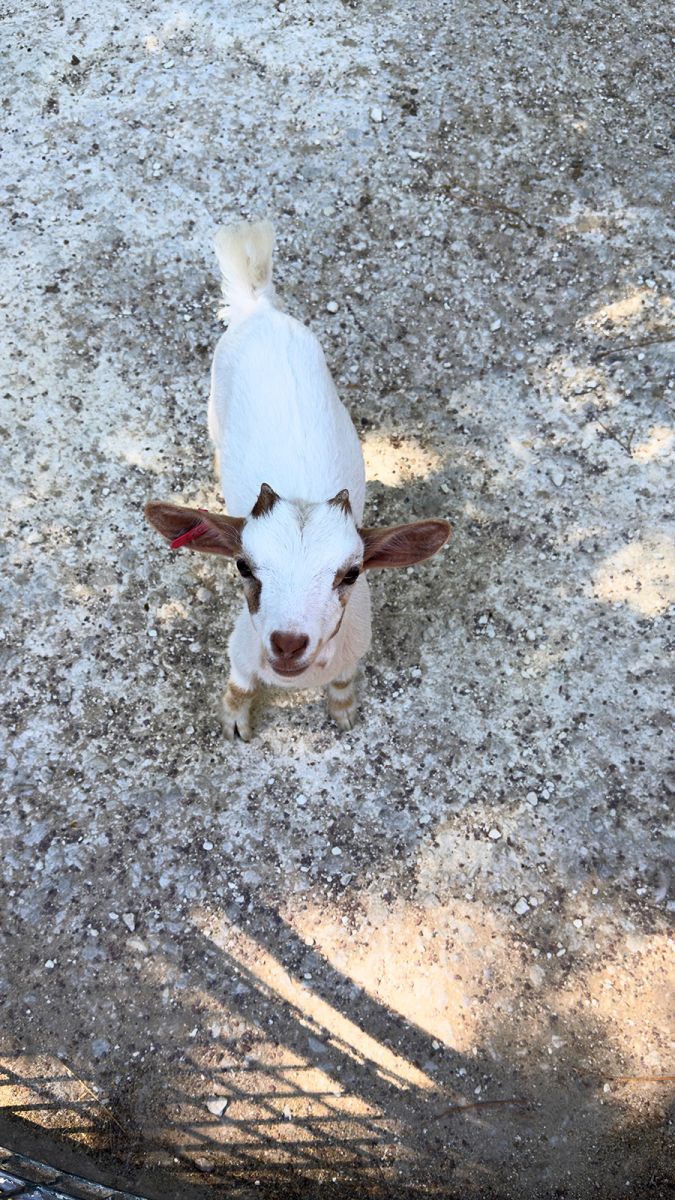
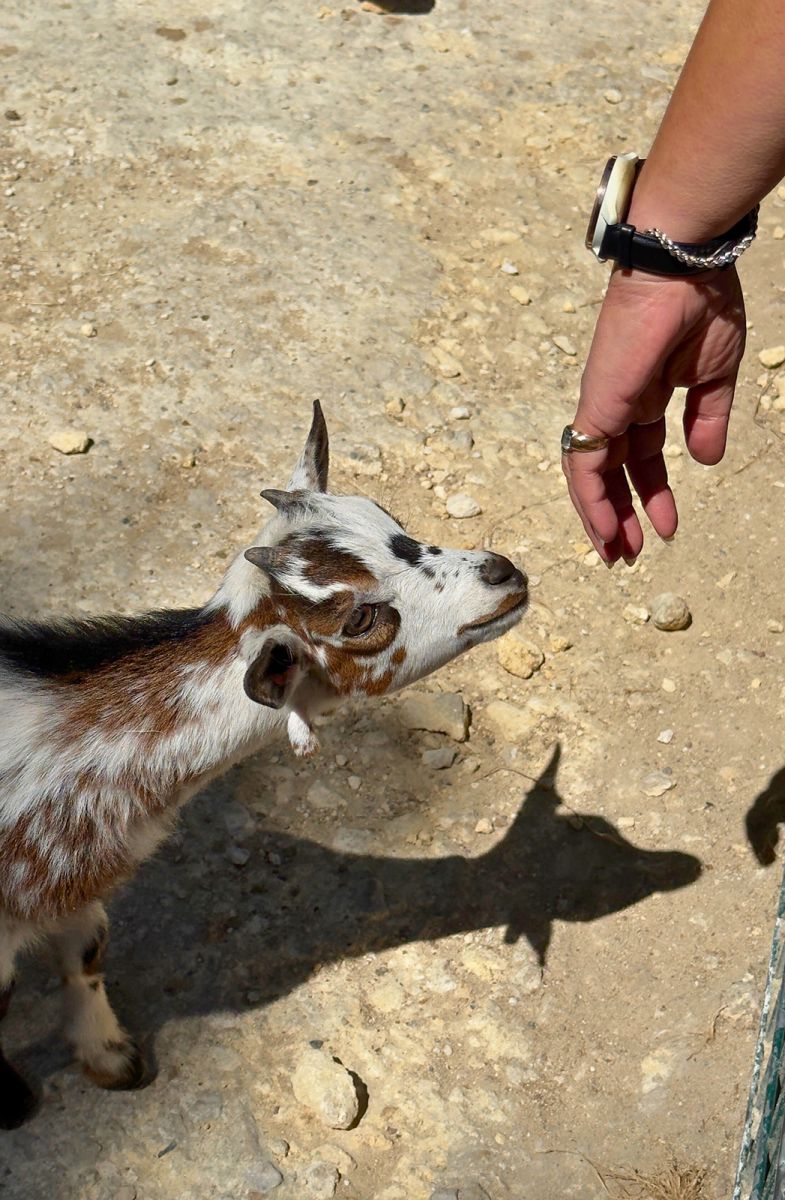
A few more steps and we find ourselves in a completely different world. This pygmy goat park is specially designed so that visitors, especially children, can enter directly into the enclosure of these small ungulates. Pygmy goats, with their sociable temperament, small size, and curious looks, are adorable playmates.
We see them wandering freely between our legs, willingly accepting a few strokes. It's a special moment for everyone. Reach out to feel the texture of their fur and connect with the animal world in a simple and joyful way.
Here again, you are strictly not allowed to go home with one of them...
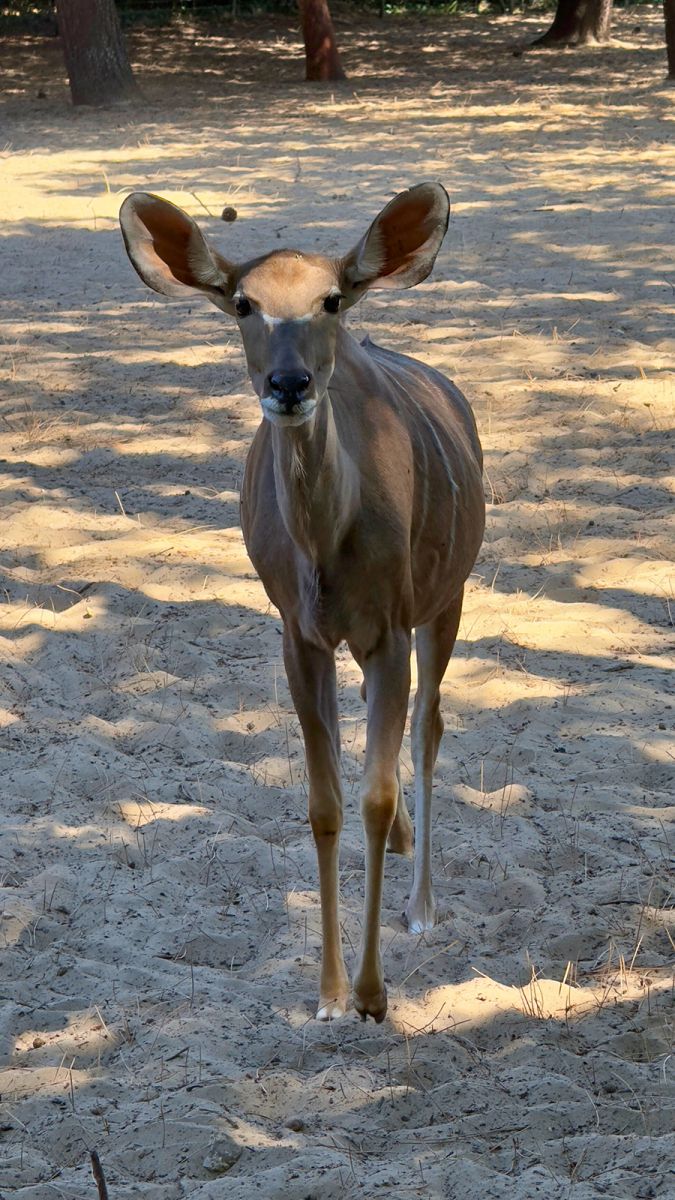
Greater Kudus
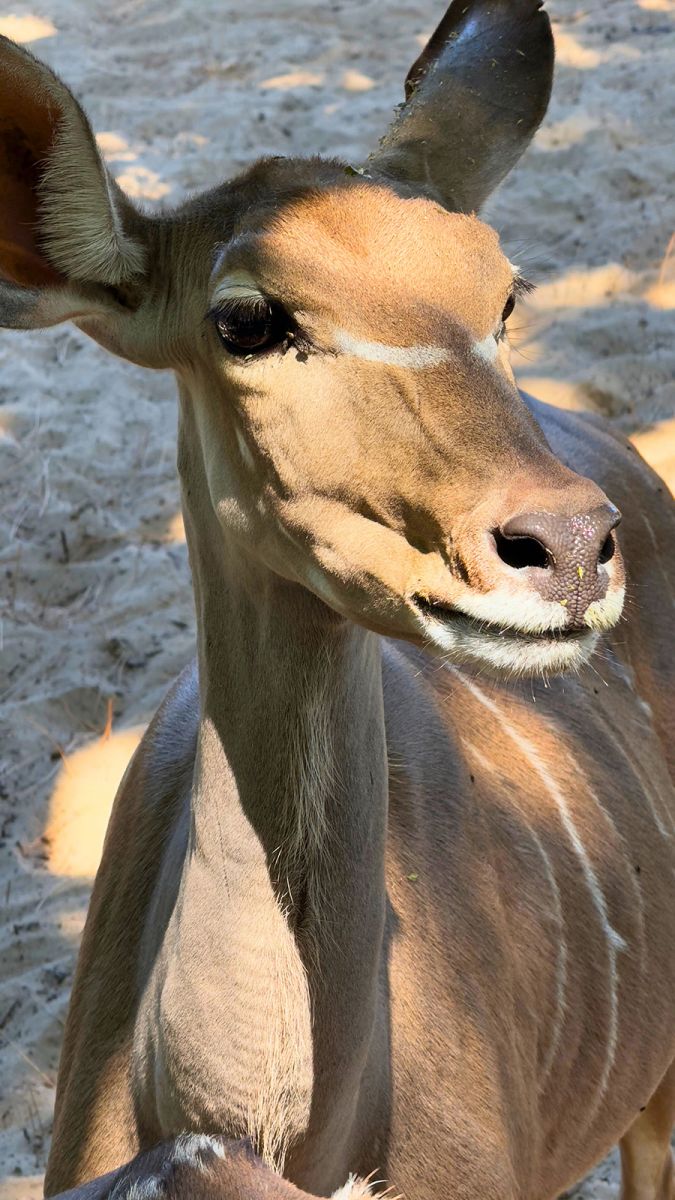
Our gaze is quickly drawn to the graceful silhouette of the Greater Kudu, a remarkably beautiful African antelope. While females, like the one we see here, are distinguished by their large, alert ears and a brown-grey coat often streaked with fine white vertical stripes, it is the males that display spectacular ornaments. They have immense spiral horns that can reach impressive dimensions.
The Great Apes area
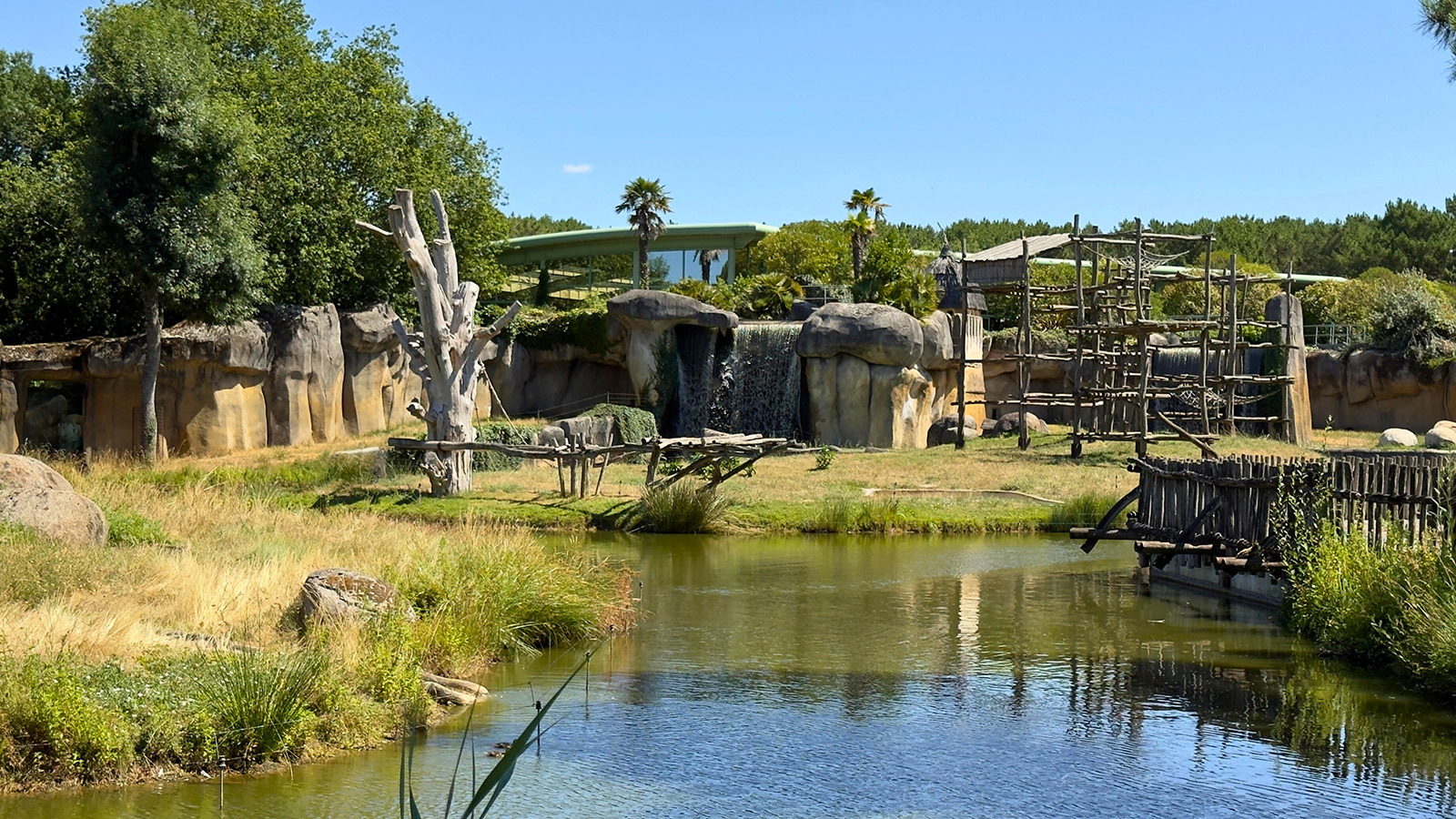
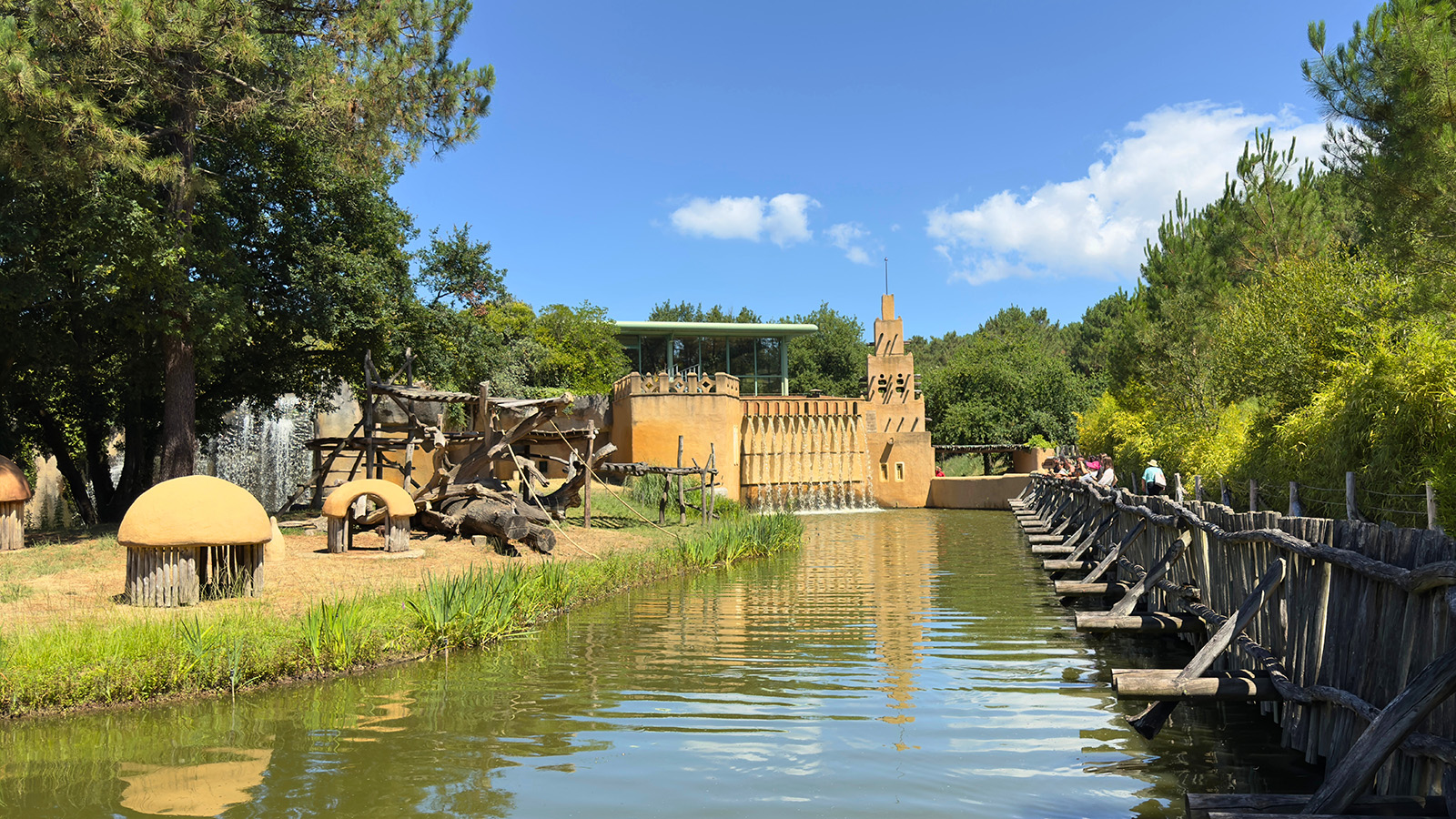
As we visit La Palmyre Zoo, one section stands out for its power of emotion and reflection: the Great Apes Area. This space is dedicated to our closest cousins in the animal kingdom: gorillas, orangutans and chimpanzees. Entering this area is a privileged immersion into the world of these beings endowed with remarkable intelligence and social complexity.
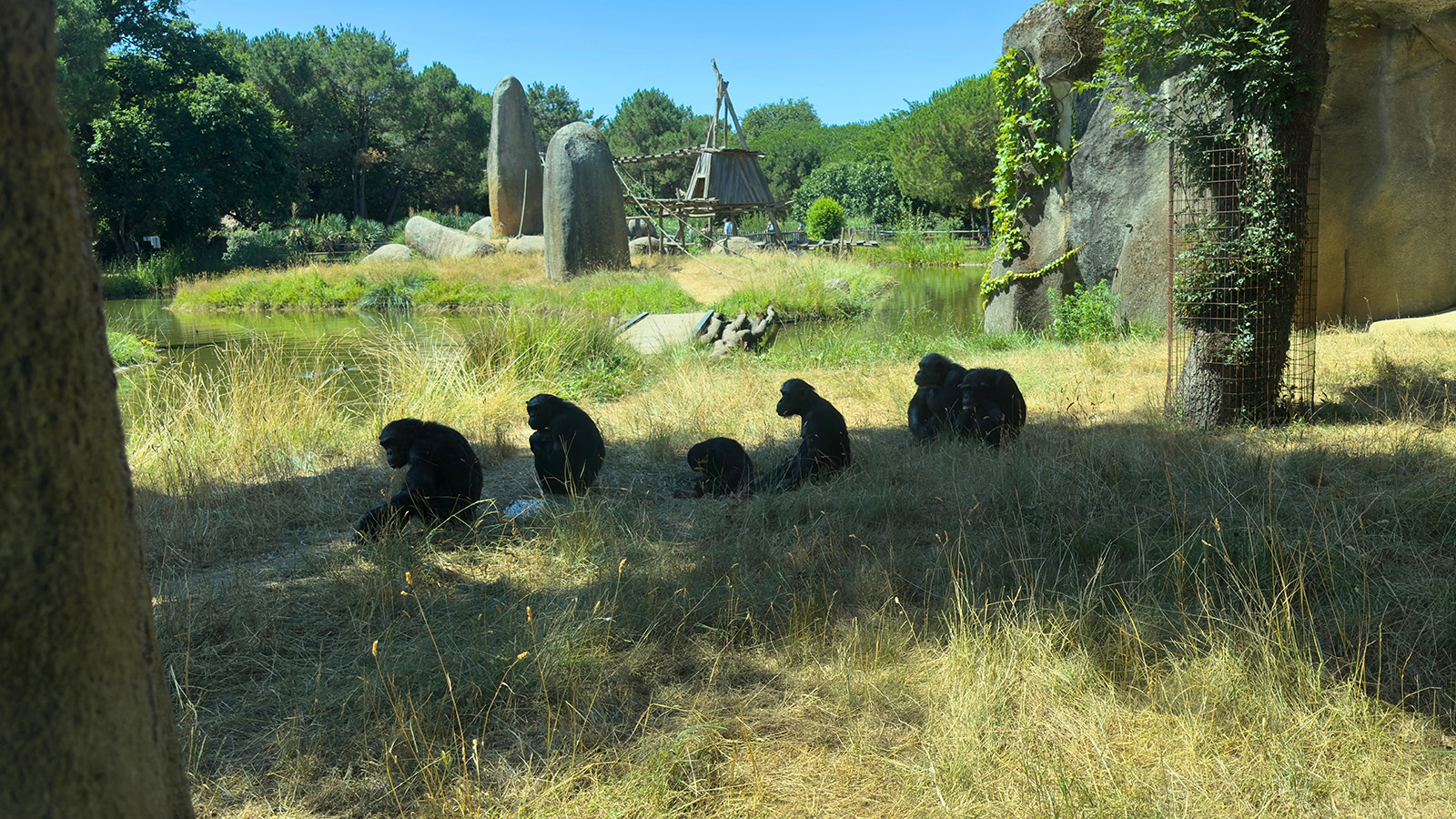
Chimpanzees possess undeniable energy and curiosity. Their social interactions, play, and use of their environment are an inexhaustible source of observation. Their liveliness and expressiveness are a constant reminder of their incredible closeness to humans.
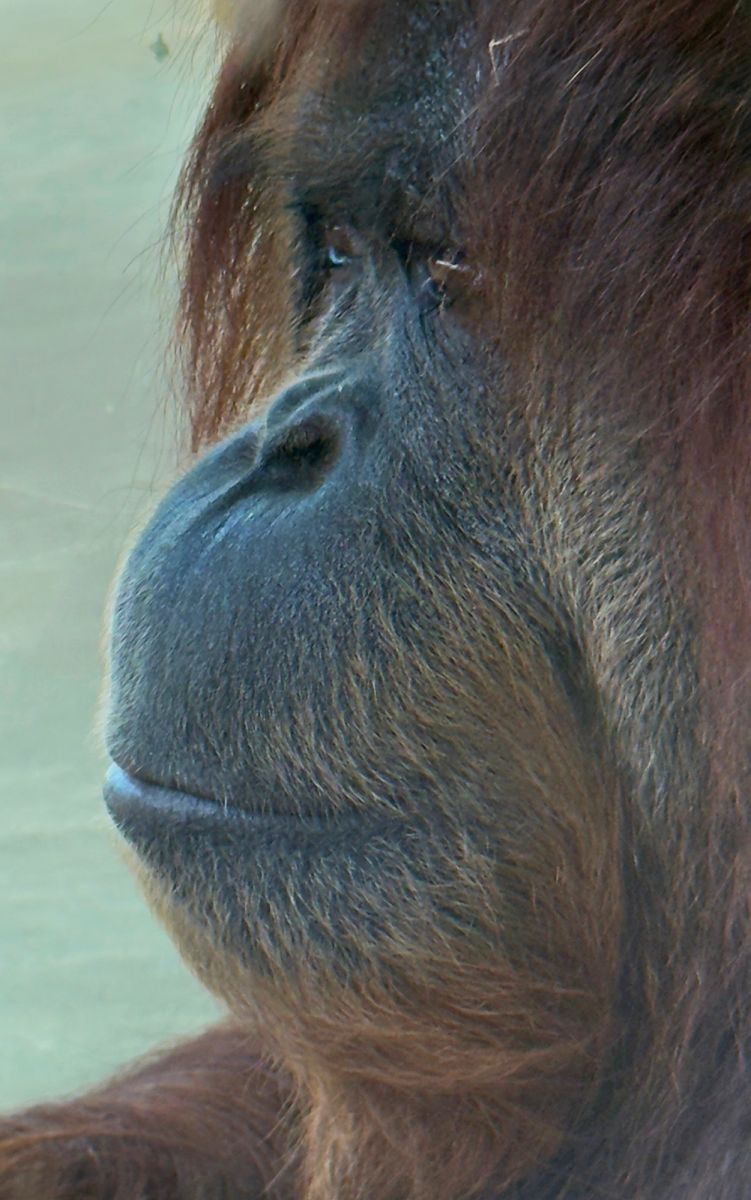
The presence of orangutans brings a touch of serenity. Arboreal par excellence, they move with astonishing agility between the branches and structures of their enclosure, sometimes with contemplative slowness. Their deep and pensive gaze invites meditation on the fragility of their species, victim of the massive deforestation of Borneo and Sumatra.
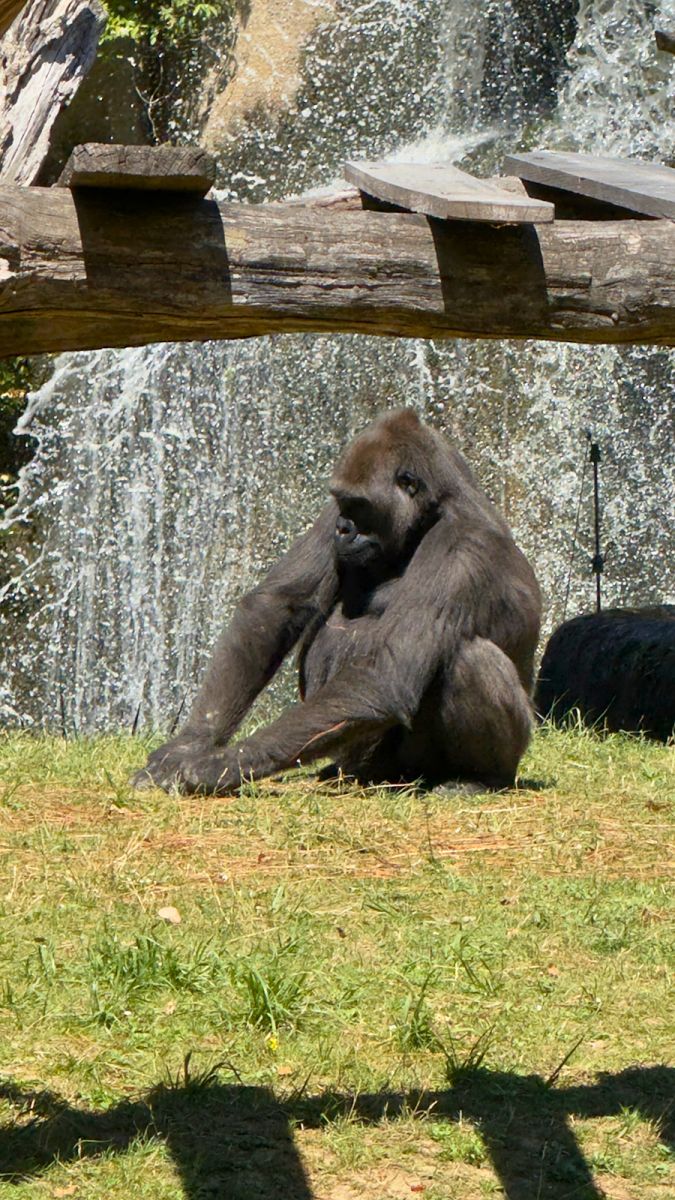
Finally, the imposing gorillas command respect. We have arrived at nap time. Their quiet strength, the complex structure of their family group around a dominant male, and the attentive care they give to their young are scenes of great beauty. We could watch them for hours.
The Vivarium
In contrast to the vast plains and large enclosures, the Vivarium at La Palmyre Zoo is a more intimate and equally captivating experience.
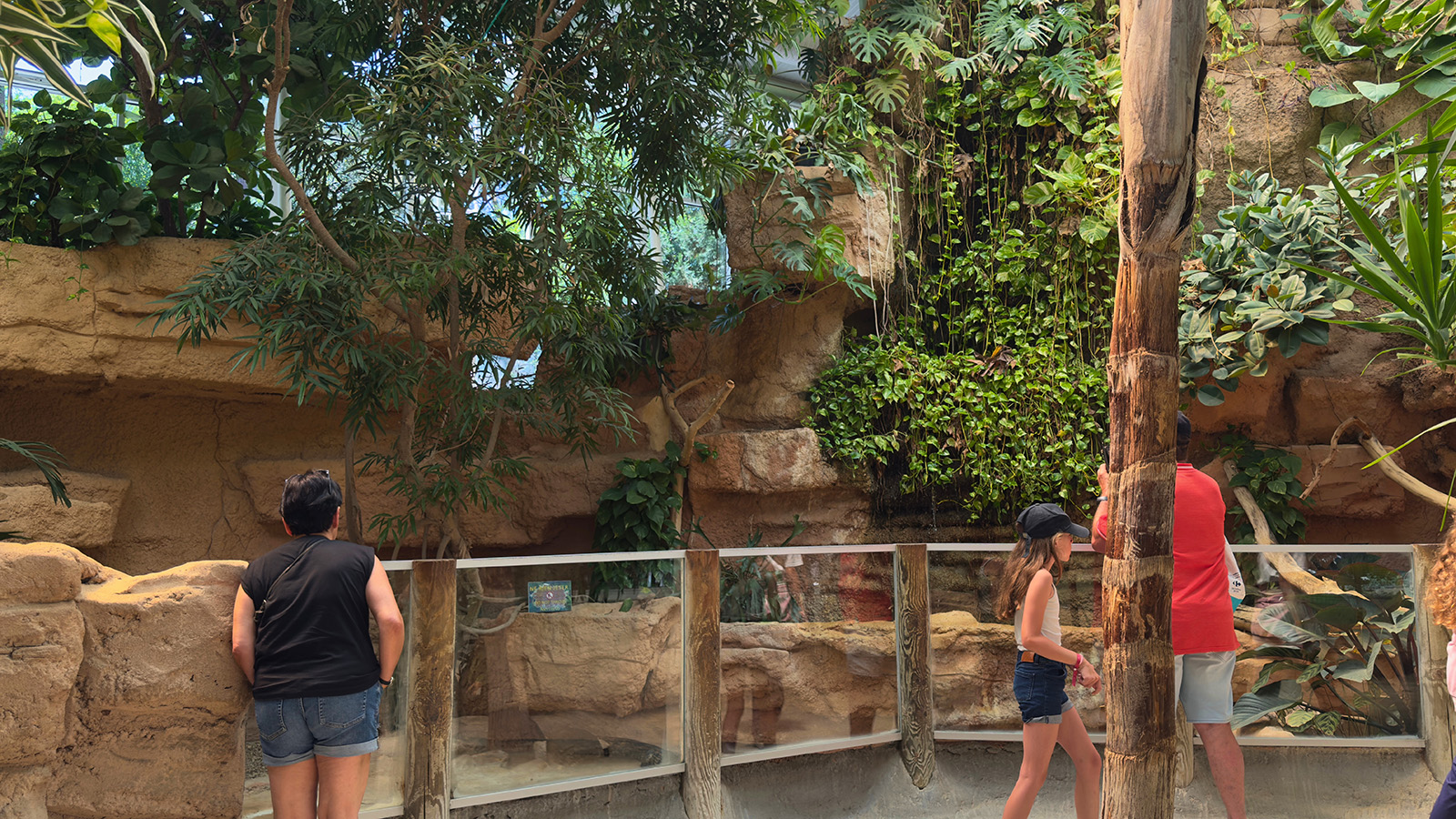
Nestled in a dedicated building, this dark yet warm space is reminiscent of tropical forests. Behind the glass, you can observe a variety of snakes with hypnotic patterns and even crocodiles that don't look very comfortable...
Nevertheless, the Vivarium is an ideal place to appreciate the singular beauty of these species, understand their role in ecosystems and learn about the complexity of their biology, often threatened by habitat destruction and illegal trafficking.
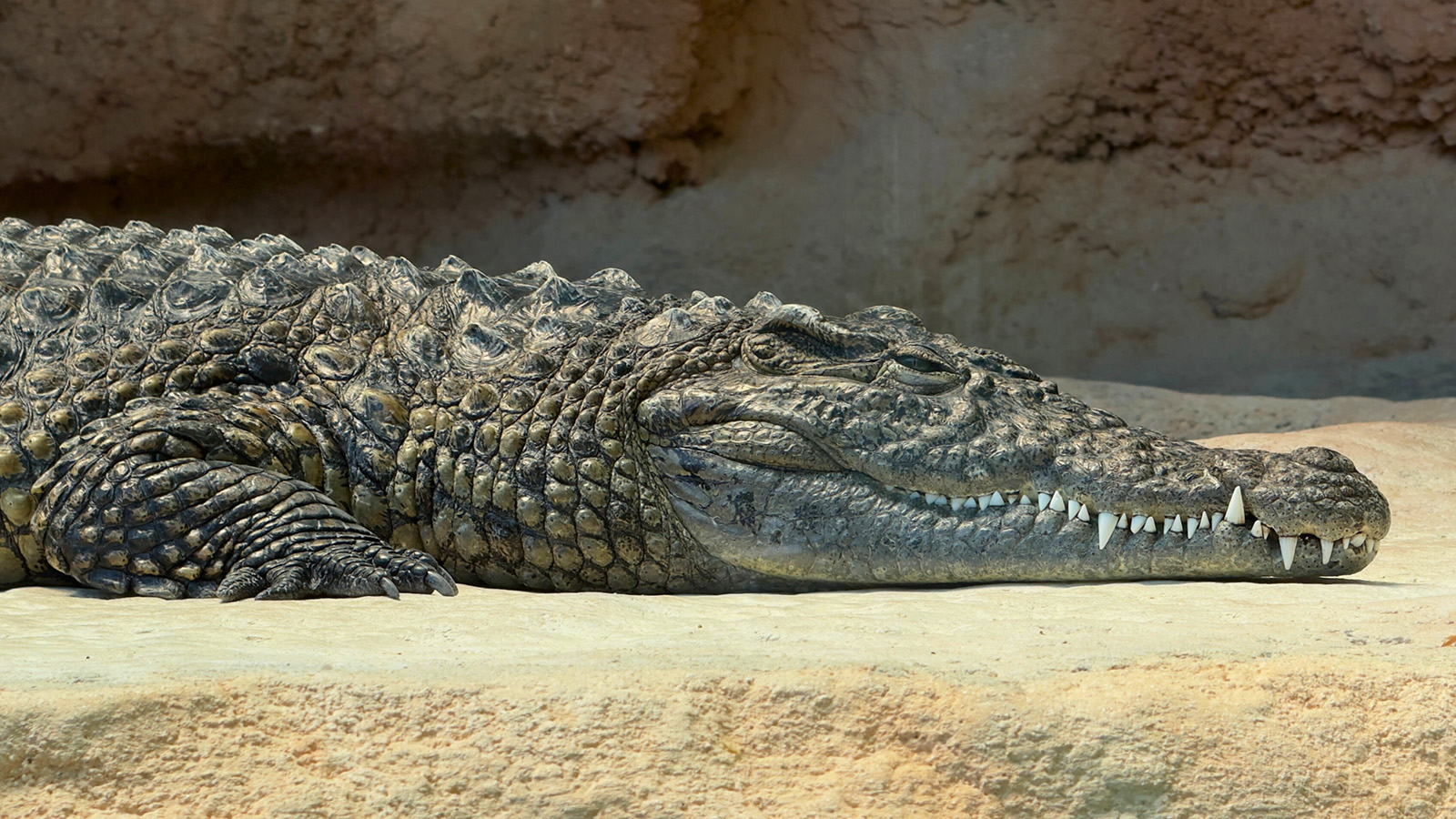
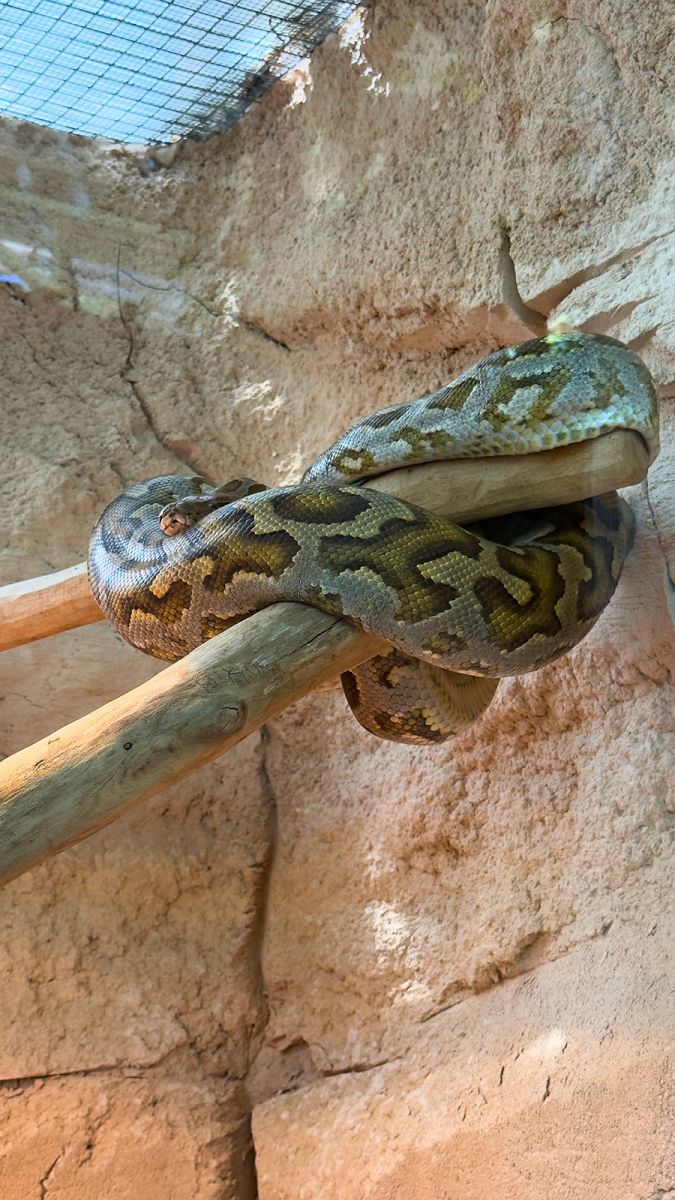
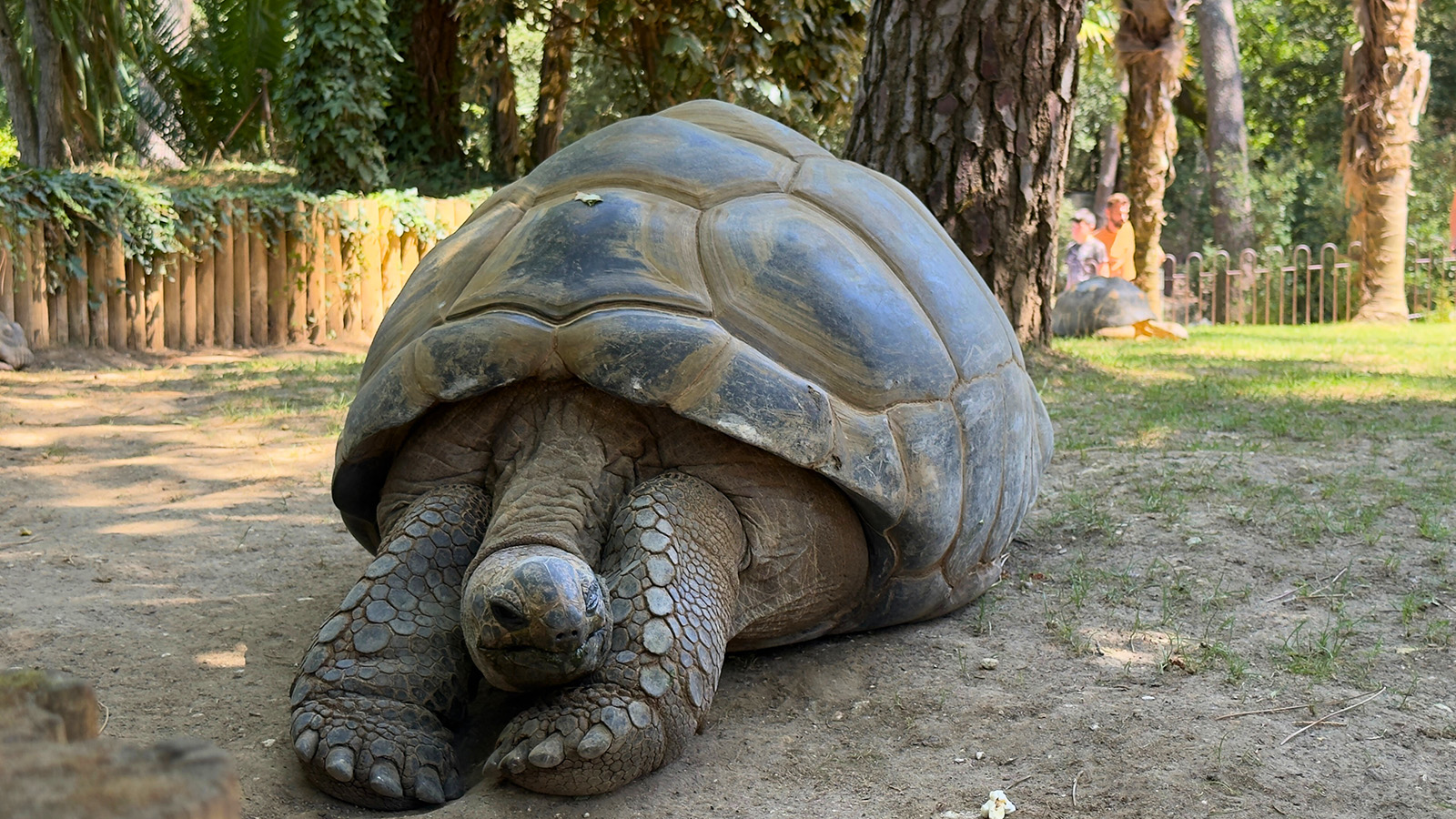
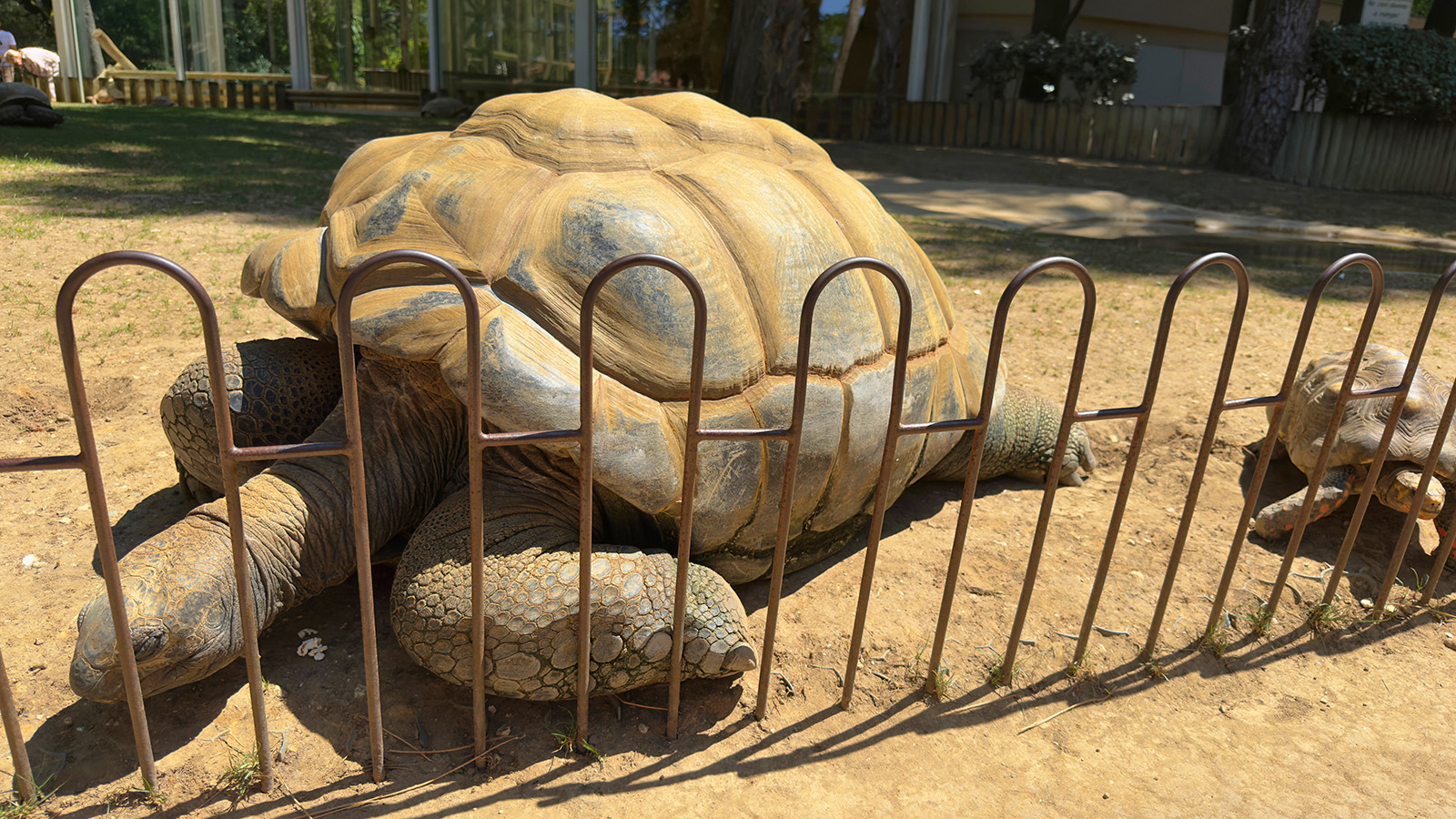
Outside, find the turtles : small ones, large ones, young ones, older ones... Opposite them, the macaws attract with their bright colors.
Alpacas
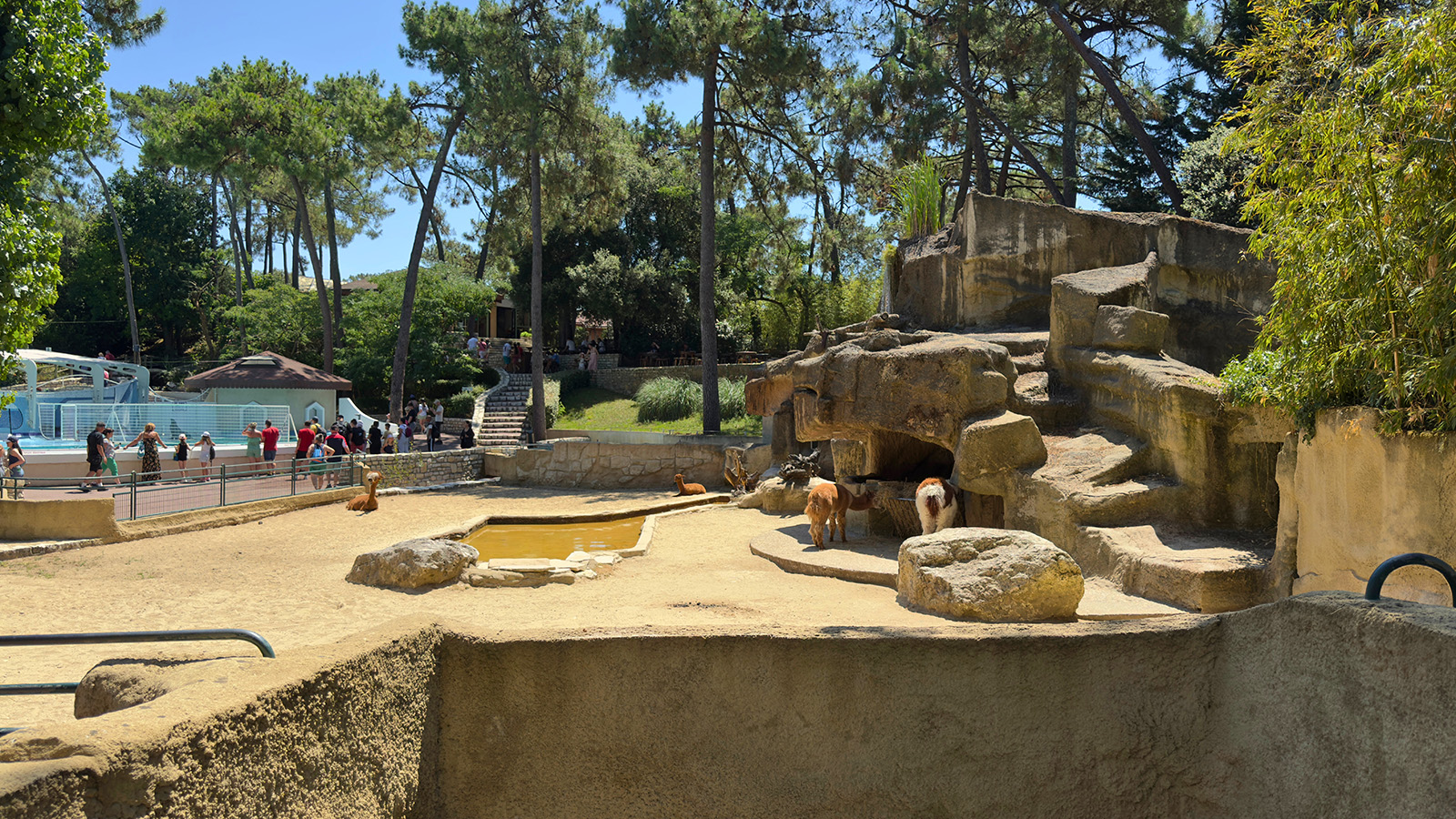
A little further on, the alpacas are eating peacefully with their backs to us. They are located just behind the sea lion pool (we will return to the spectacle we witnessed later).
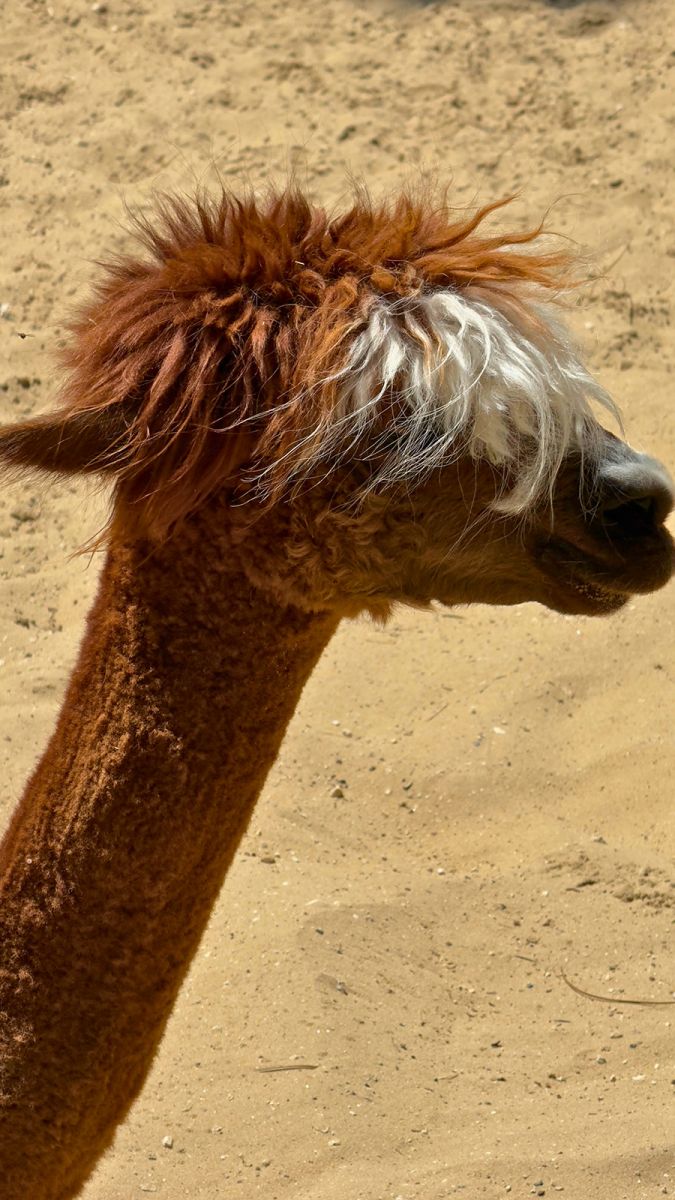
These charming camelids, native to the high plains of the Andes in South America, are instantly recognizable by their slender silhouette. Their incredible woolly coat is so dense that it sometimes seems to completely cover their eyes.
It's true that when you see them, with their drooping locks, you get the impression that they could really use a visit to the hairdresser! But this particularity is not the result of chance: this thick wool is an essential adaptation to their native environment, effectively protecting them from the freezing cold and strong mountain winds, but also from the burning rays of the sun. It acts as a real natural insulation. Don't tell that to the children, they would have an excuse not to cut their hair anymore...
Cuba's Flamingo Waterfall
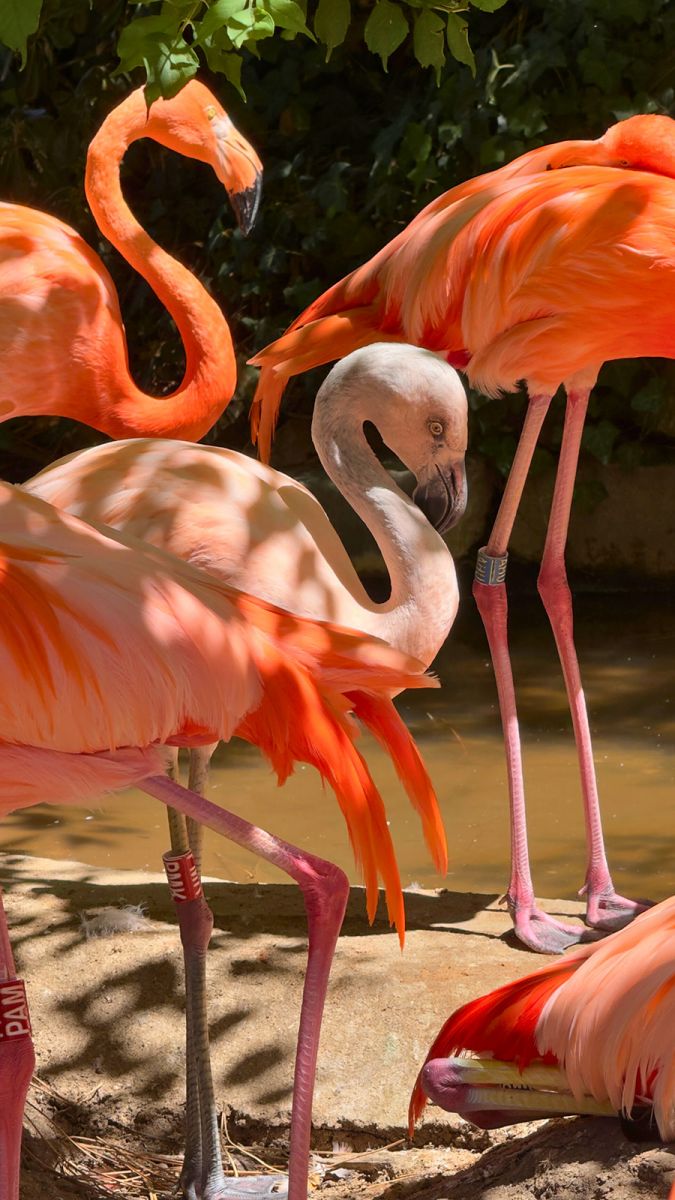
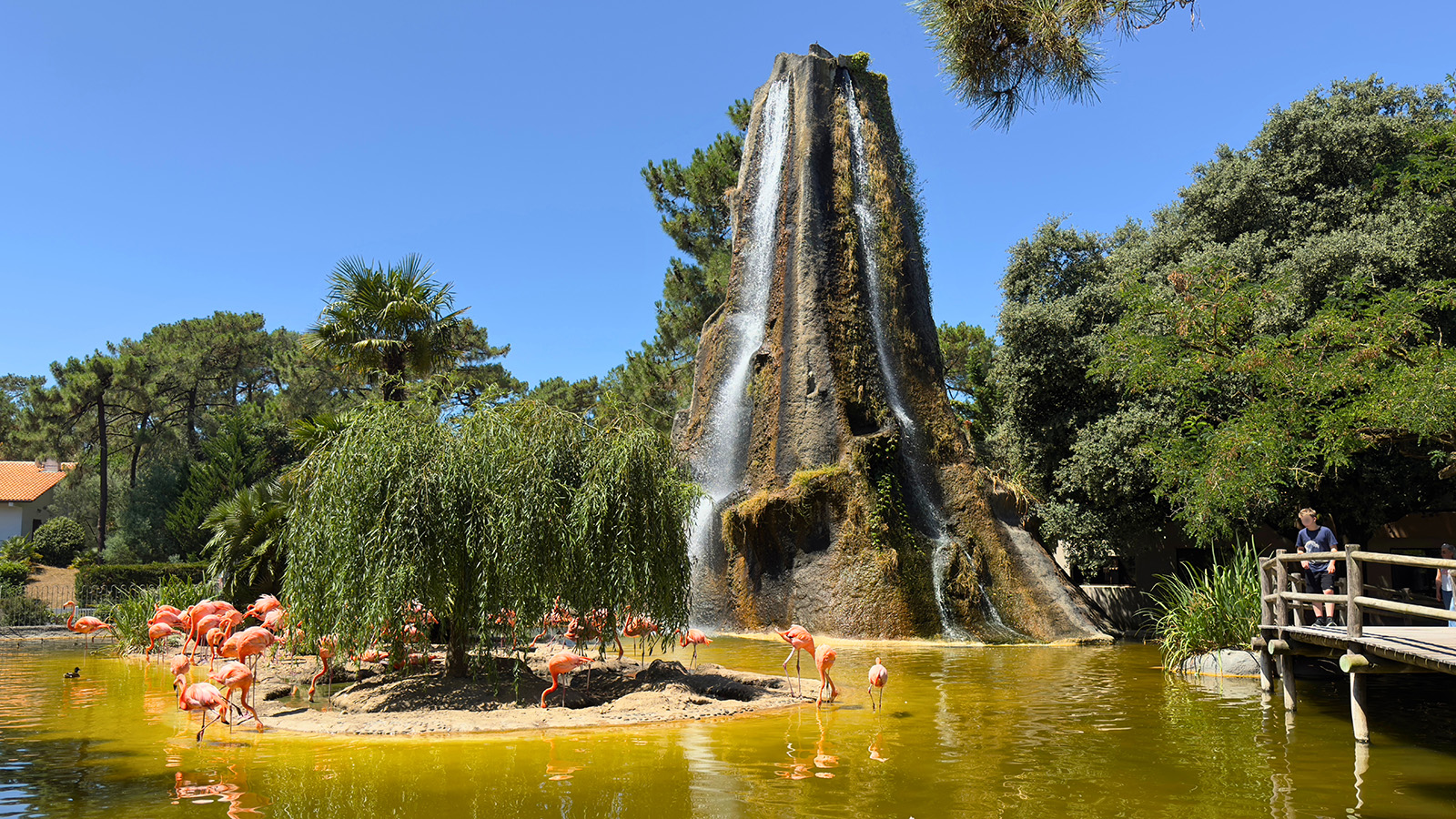
Remember the flamingos to the left of the zoo entrance? Well, here we are! At the foot of the waterfall, the magnificent flamingos dazzle us with their vibrant pink plumage.
The presence of the waterfall adds an enchanting sound and visual dimension. The gentle murmur of the flowing water helps create a calming and natural atmosphere, while the ambient humidity contributes to the well-being of these aquatic birds. It is a perfect setting for observing these unique birds.
The waterfall also marks the end of our wonderful visit to La Palmyre Zoo ! But stay a little longer; we've already enjoyed the park's shows.
Shows at the Palmyre Zoo
Beyond observing the animals, La Palmyre Zoo offers daily events that are real moments of sharing and discovery: the shows. These demonstrations, both entertaining and educational, allow you to appreciate the intelligence and agility of the animals in a different way, while raising awareness of their world.
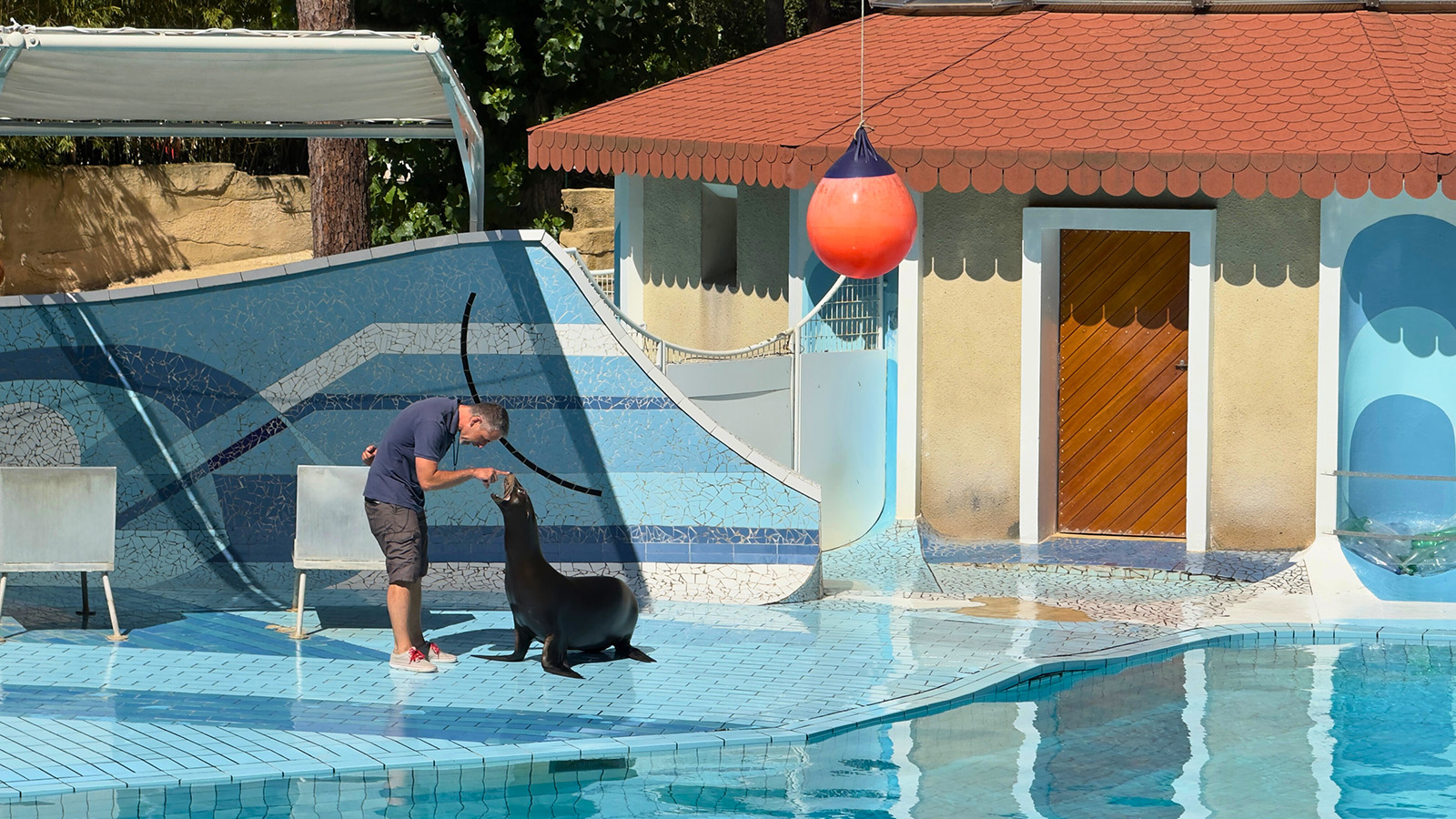
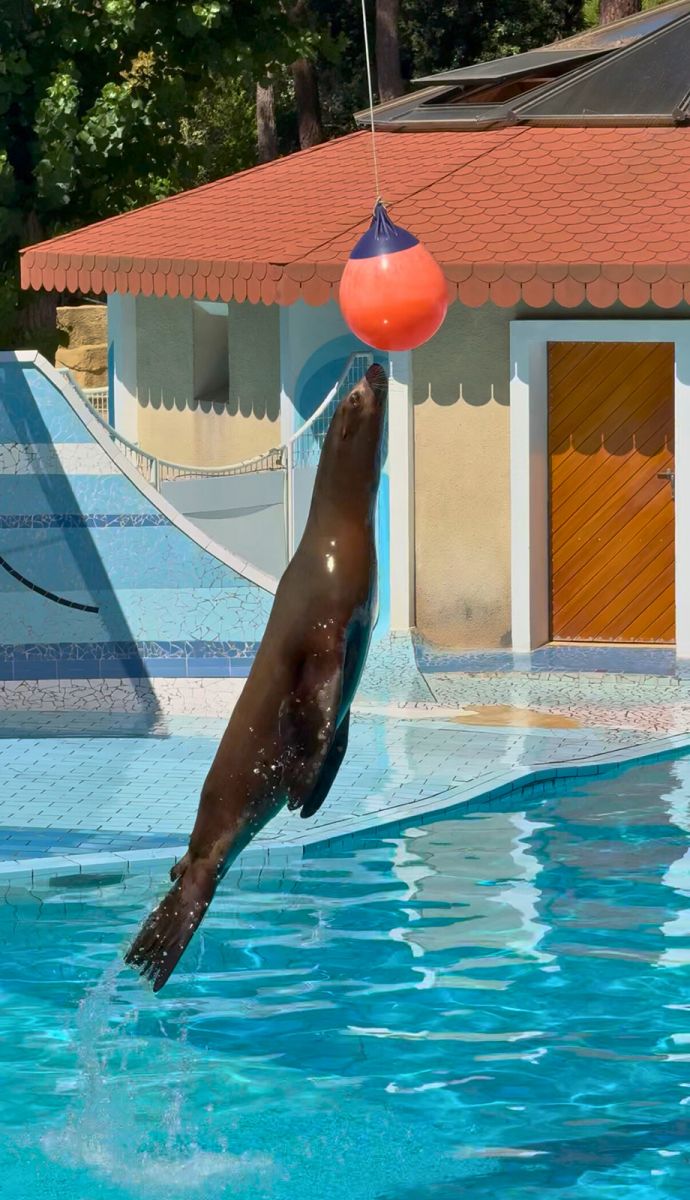
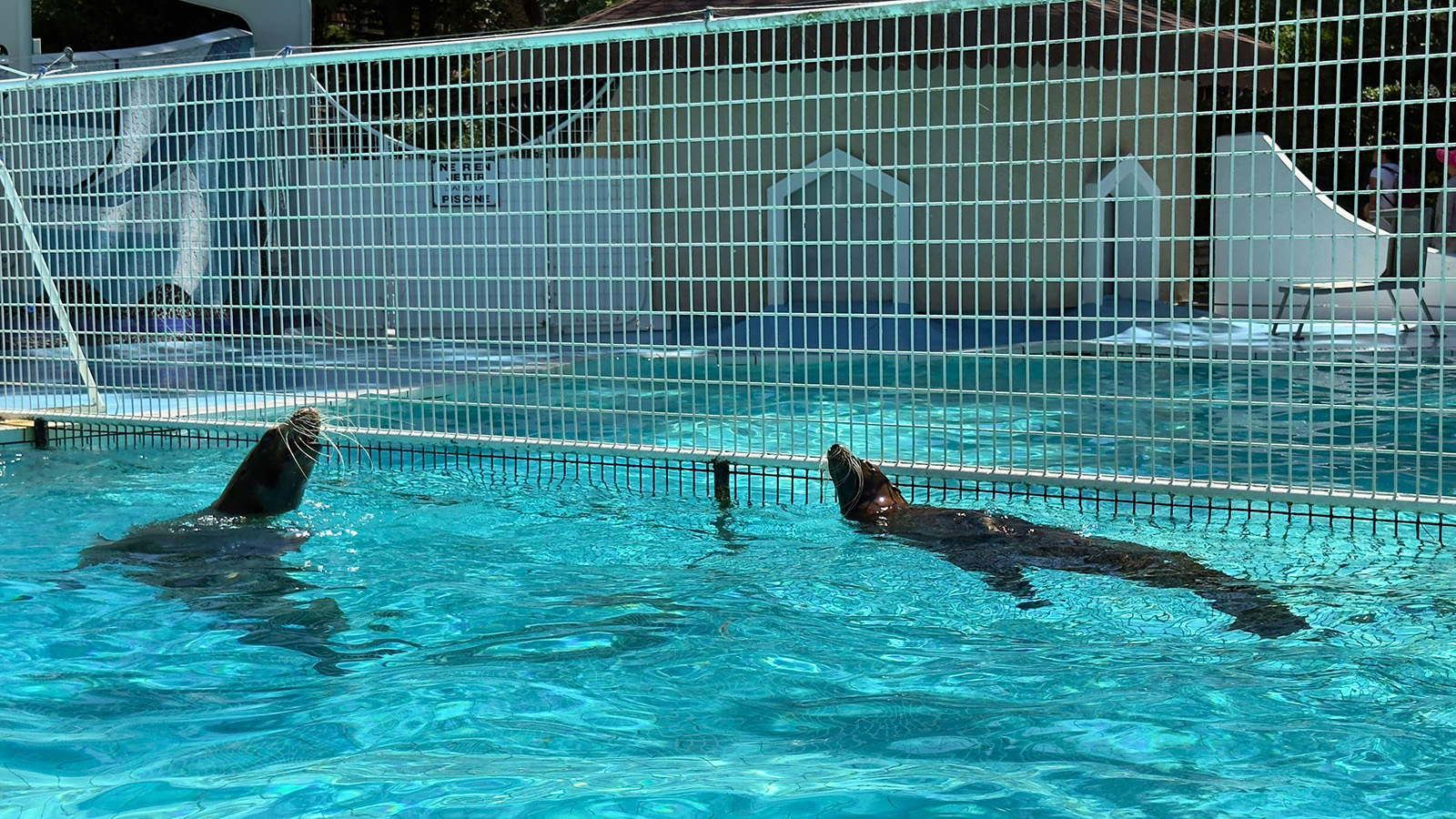
The Sea Lion Show
On a vast pool designed like a stage, these agile marine mammals offer a breathtaking aquatic and terrestrial ballet. Under the watchful eye of one of their keepers, the sea lions perform impressive feats of dexterity and jumps. They demonstrate their surprising balance. All with an obvious joie de vivre.
Beyond the applause, this show is an excellent opportunity to learn about the biology of these animals, their adaptation to the marine environment, as well as the threats that weigh on them in their natural environment, such as ocean pollution. It is a moment of laughter and wonder that highlights the incredible complicity between humans and animals.
The representation of birds
Immediately after the sea lion show, in a dedicated arena, birds take to the skies. Welcome to a breathtaking aerial spectacle !
These demonstrations reveal the grace and power of these masters of the air. Keepers explain the unique characteristics of each bird, their role, their hunting and communication techniques, and the conservation challenges they face. This immersive experience is a reminder of the freedom and fragility of wildlife.
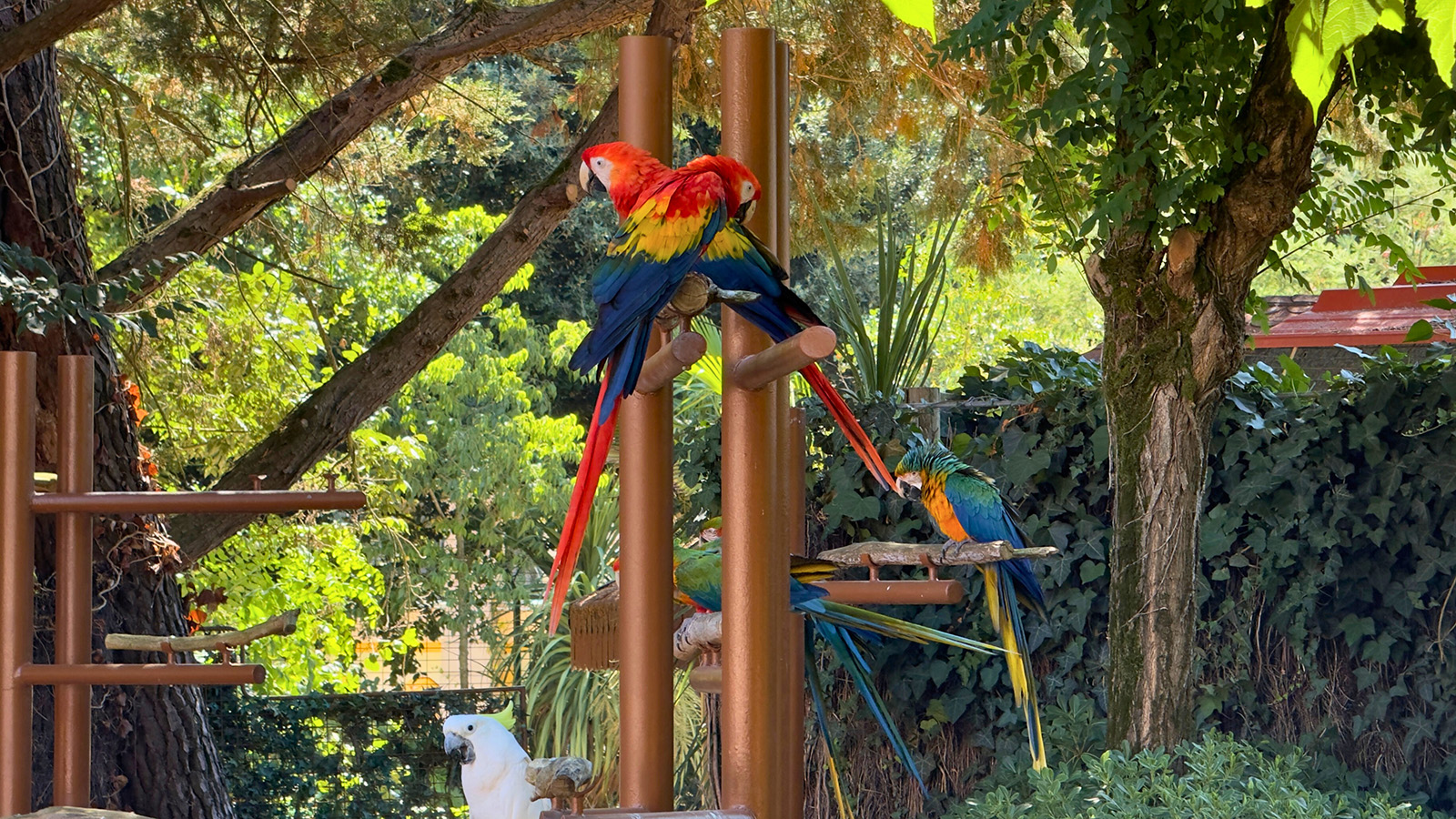
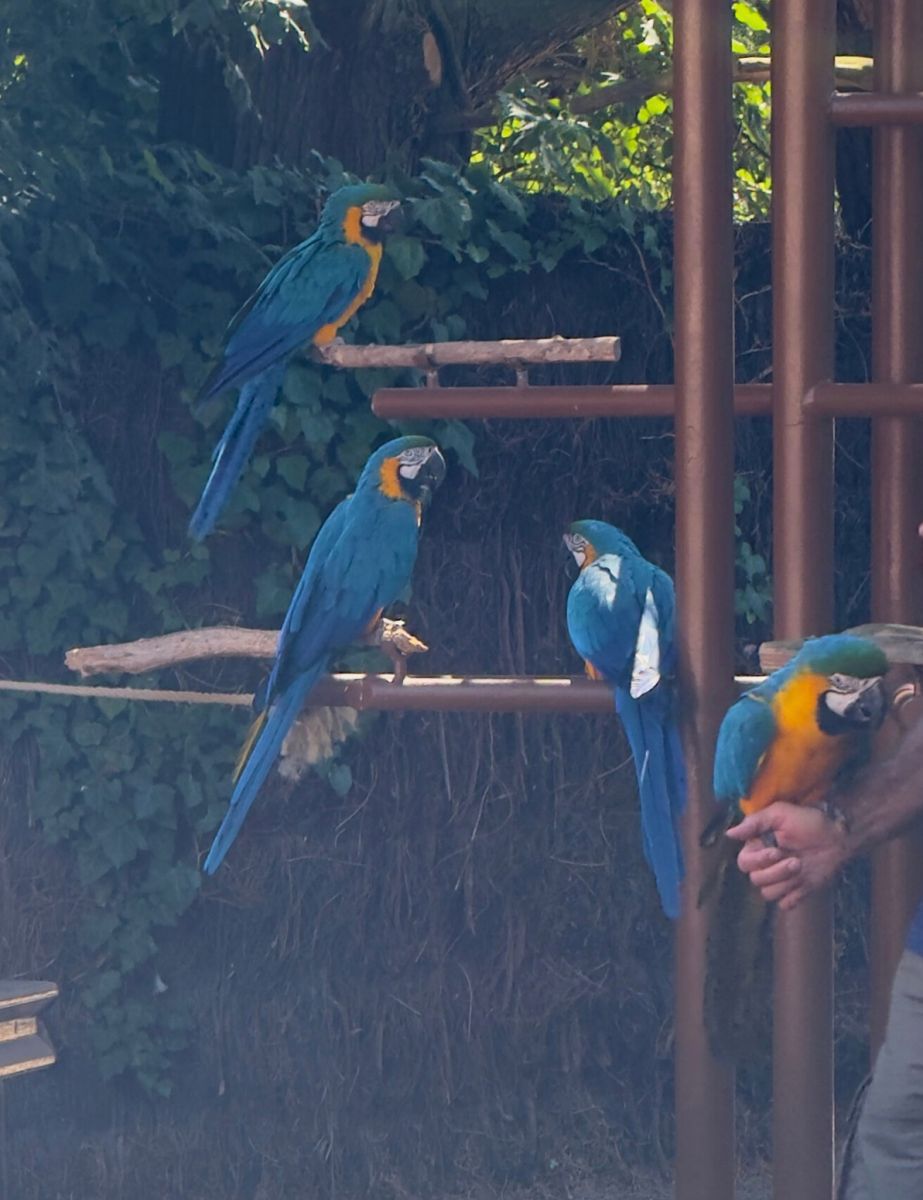
These two shows are windows onto the beauty of the animal kingdom and powerful awareness-raising tools. They also invite everyone to become an actor in the protection of biodiversity.
A commitment to conservation
More than just a zoo: a player in species protection
La Palmyre Zoo has established itself as a major and essential player in the conservation of biodiversity. Far from being a simple exhibition space, it is a true institution dedicated to the protection of endangered species, acting on several fronts to ensure a future for wildlife.
EEP – European Programmes for Endangered Species
Its role is crucial in the breeding programs for endangered species (EEP – European Endangered Species Programs). By welcoming individuals of endangered species, it ensures the creation of genetically viable conservation populations. It is thanks to these concerted efforts that animals can reproduce in a secure environment. The success of these programs, often crowned by births, is a concrete hope for species whose wild populations are dramatically declining. It is a long-term work that guarantees the genetic survival of these species for potential future reintroductions.
Conservation projects on the ground
La Palmyre Zoo funds around twenty conservation projects worldwide through its Palmyre Conservation endowment fund. This direct support provides concrete assistance to wild animal populations and helps combat the causes of their decline.
Public awareness
Finally, and this is a fundamental role, the zoo is a powerful tool for raising awareness and educating the public. Each visitor is invited to become an ambassador for biodiversity.
Through detailed information panels, interventions by keepers and direct observation of the animals, everyone can become aware of the threats to wildlife and the urgency of taking action. La Palmyre Zoo transforms wonder into commitment. It encourages young and old to adopt daily actions in favor of the planet and to support global conservation efforts.
Practical tips for a successful visit
To fully enjoy your immersion at La Palmyre Zoo and create unforgettable memories, good preparation is key.
Preparing for your day: Anticipation for increased pleasure
- To avoid the crowds and enjoy a more peaceful atmosphere, visit during the off-season (spring or early autumn) if possible, or arrive early in the morning when it opens, especially during the summer.
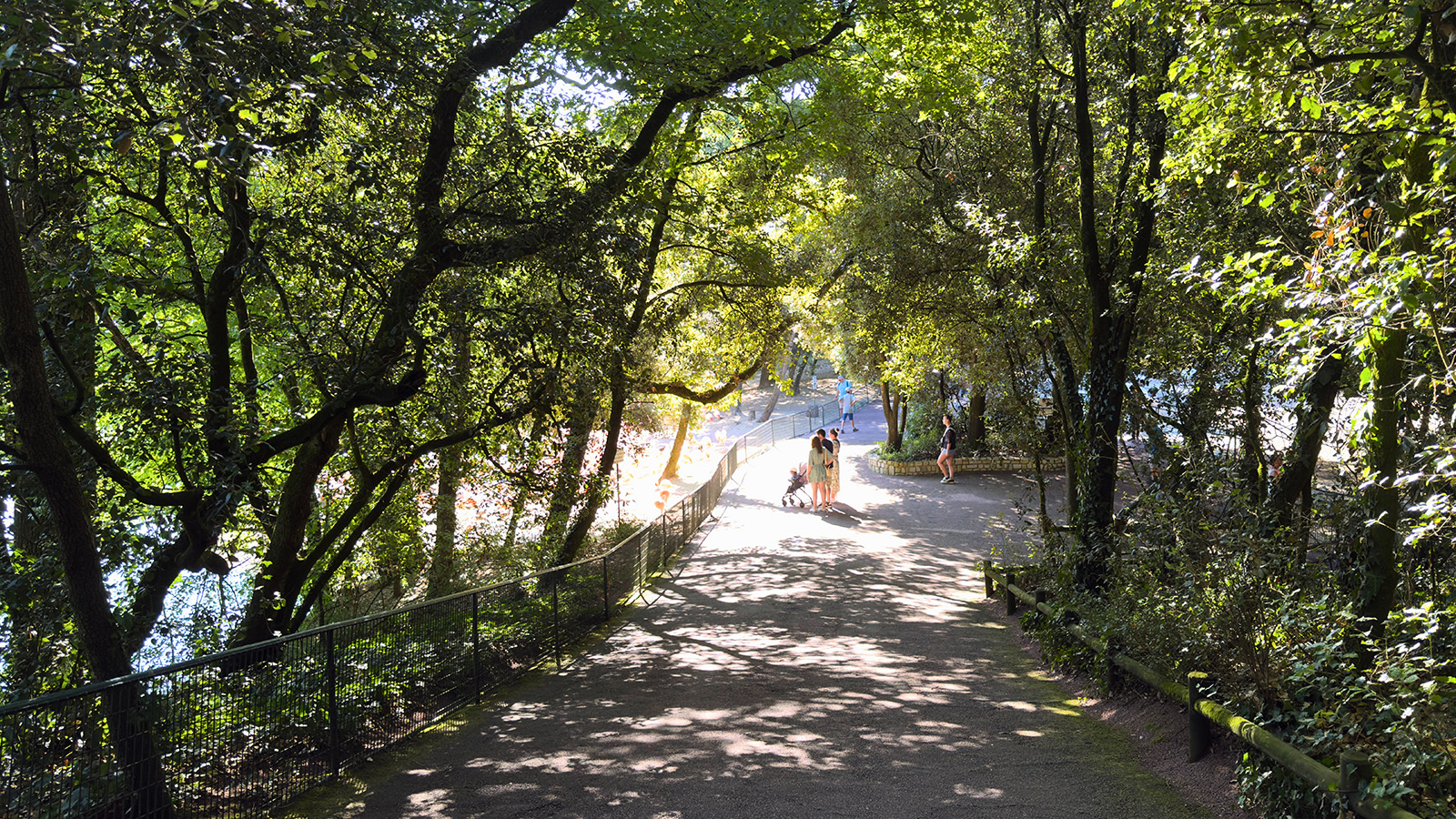
- The zoo is very large and walking is inevitable. Wear comfortable shoes : your feet will thank you!
- In summer, the sun can be intense even under the pine trees. Remember to bring plenty of water, sunscreen and a hat or cap.
- As for catering, the zoo offers several points of sale and restaurants for all tastes, but you also have the option of bringing your picnic for a gourmet break in the great outdoors in the dedicated areas.
Optimize the visit
As soon as you arrive, get a map of the zoo and carefully check the schedules of the sea lion and bird shows. This will allow you to plan your route so you don't miss any of the main events.
Feel free to take regular breaks in the many shaded rest areas scattered throughout the park. Restrooms are open throughout the trail.
For families with young children, a stroller or baby carrier is essential for covering the distances. The zoo is well-equipped with stroller-friendly paths, and play areas dot the route, providing welcome bursts of activity for younger visitors.
Take your time, observing animals requires patience and tranquility.
Bring a little magic home
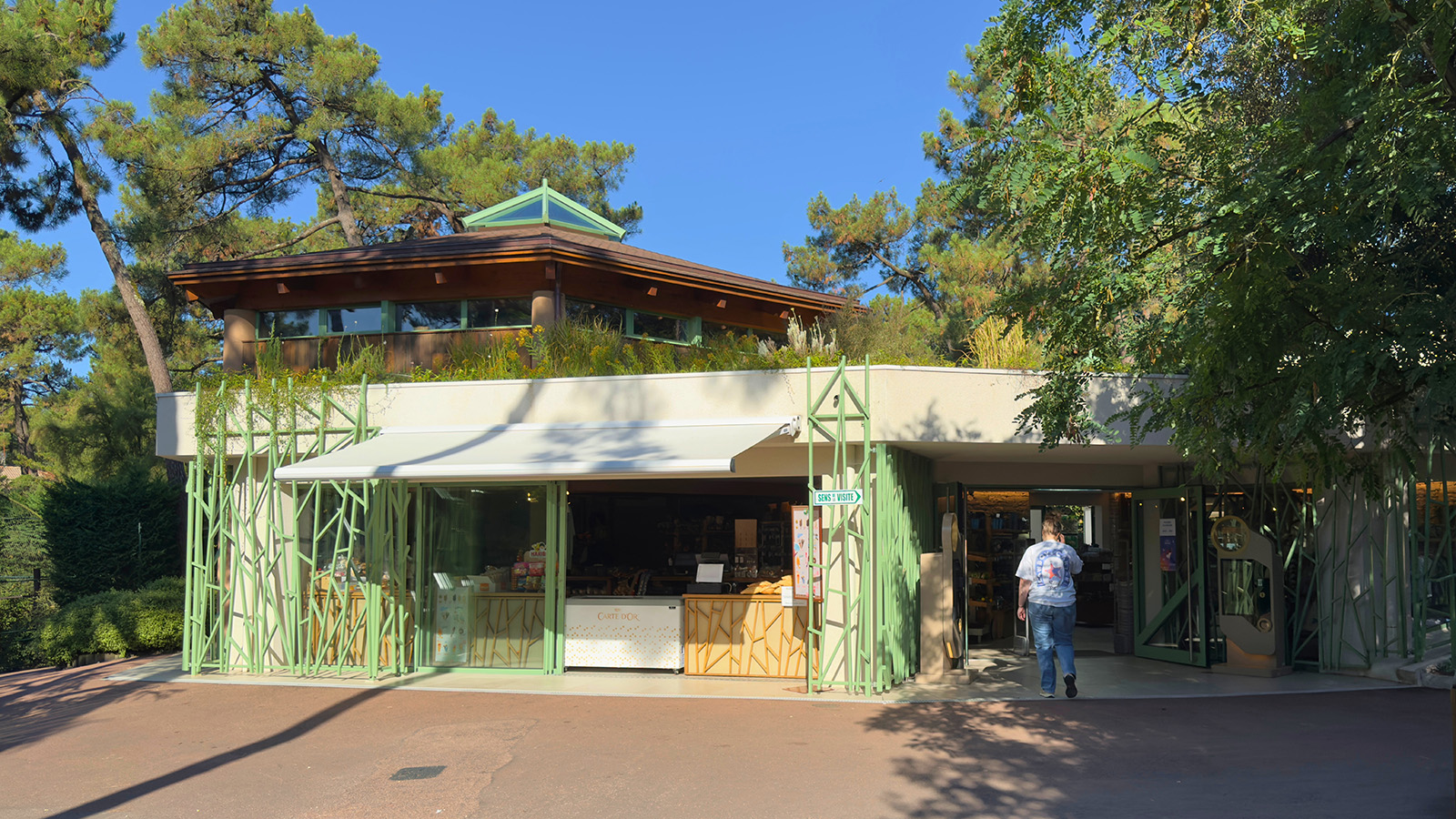
Before leaving this magical place, don't forget to stop by the souvenir shops. You'll find a multitude of items for all ages, from stuffed animals to educational books and decorative objects.
This is the opportunity to bring back a little something from La Palmyre Zoo.
Les Pins de La Coubre
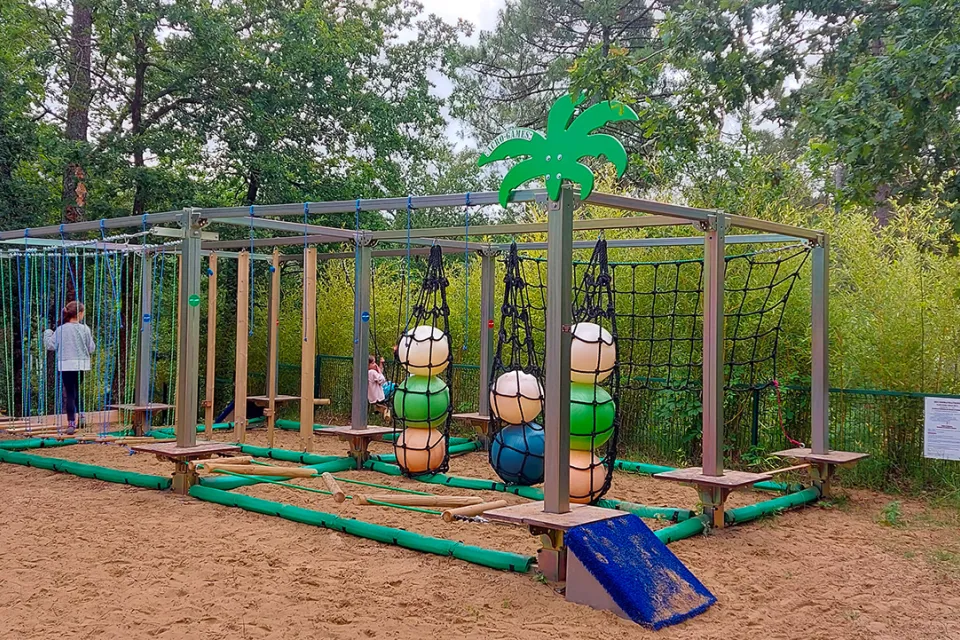
Leisure activities for children just a stone's throw from La Palmyre
2,1 km
Oasalis Parc Accrobranche
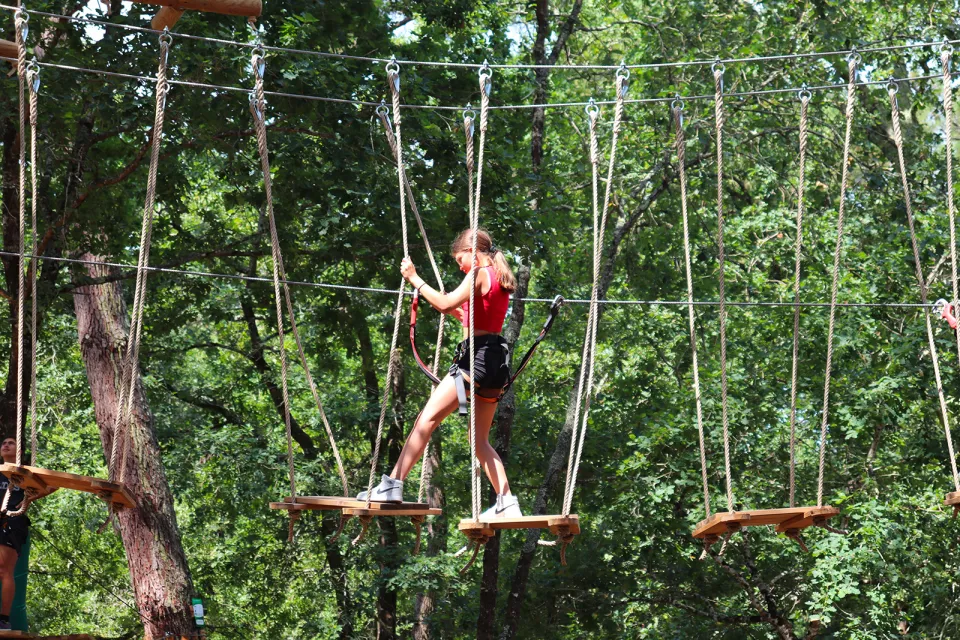
Adventure park in Charente-Maritime
6,6 km
Planet Exotica - Soigneur d'un jour
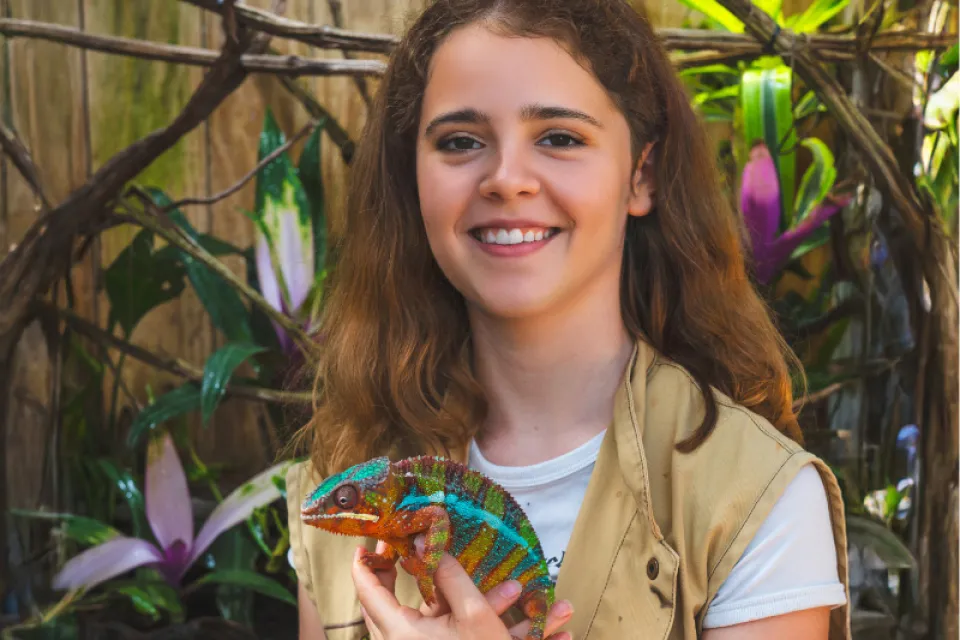
Introduction to the profession of animal caretaker in Royan
14,0 km
Did you enjoy our report? Find more on the Charente-Maritime Guide blog. Connect with the Charente Maritime Guide Facebook page to stay up to date with our latest news. We're also on Instagram @guidecharentemaritime
You will also like
The “Train des Mouettes”: the Seudre estuary aboard a time machine

6,0 km
5 natural sites to visit in Charente Maritime in autumn and winter
6,0 km
La Tremblade: between land, sea and estuary
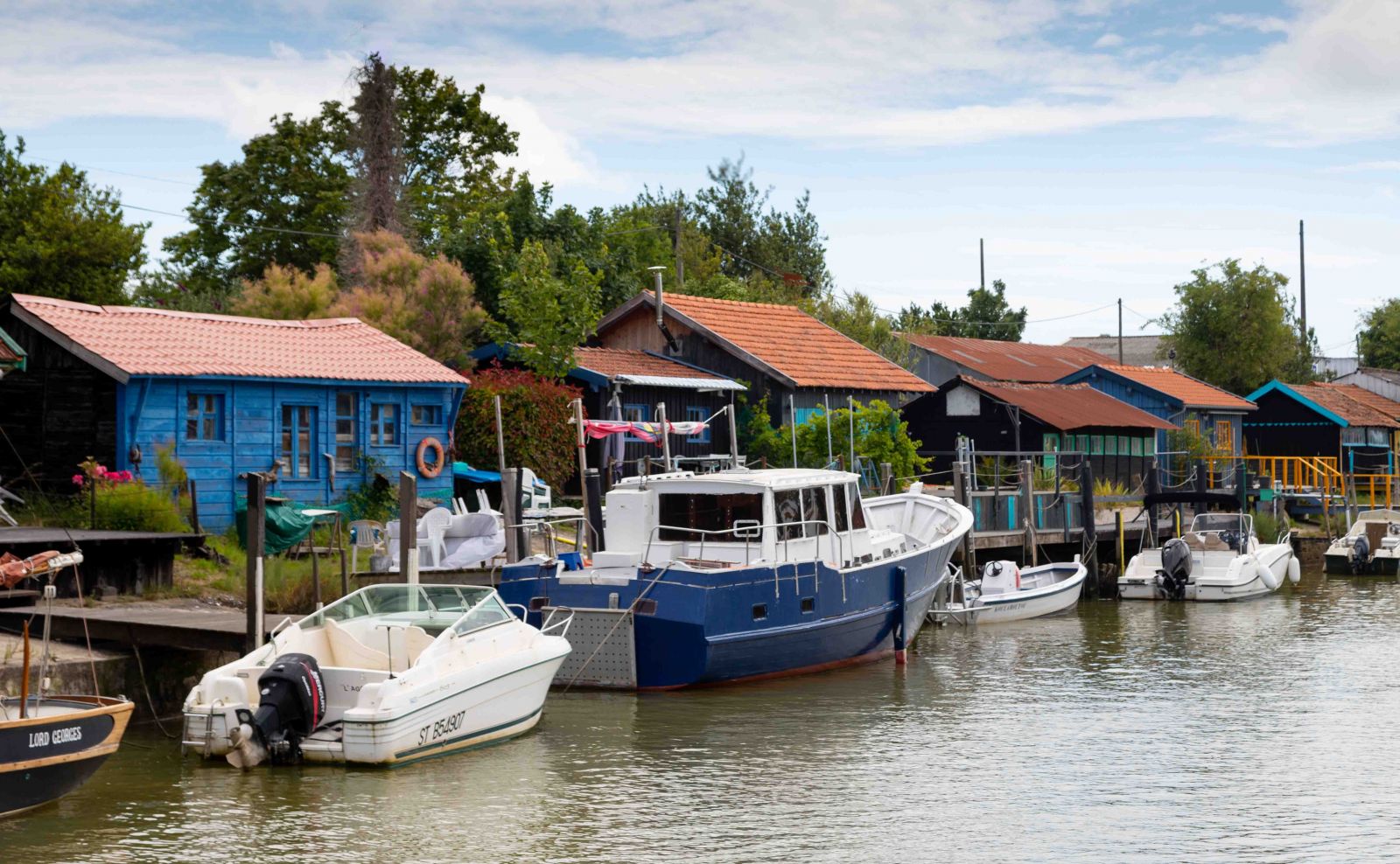
6,0 km
Mornac-sur-Seudre, an invitation to travel along the banks of the estuary
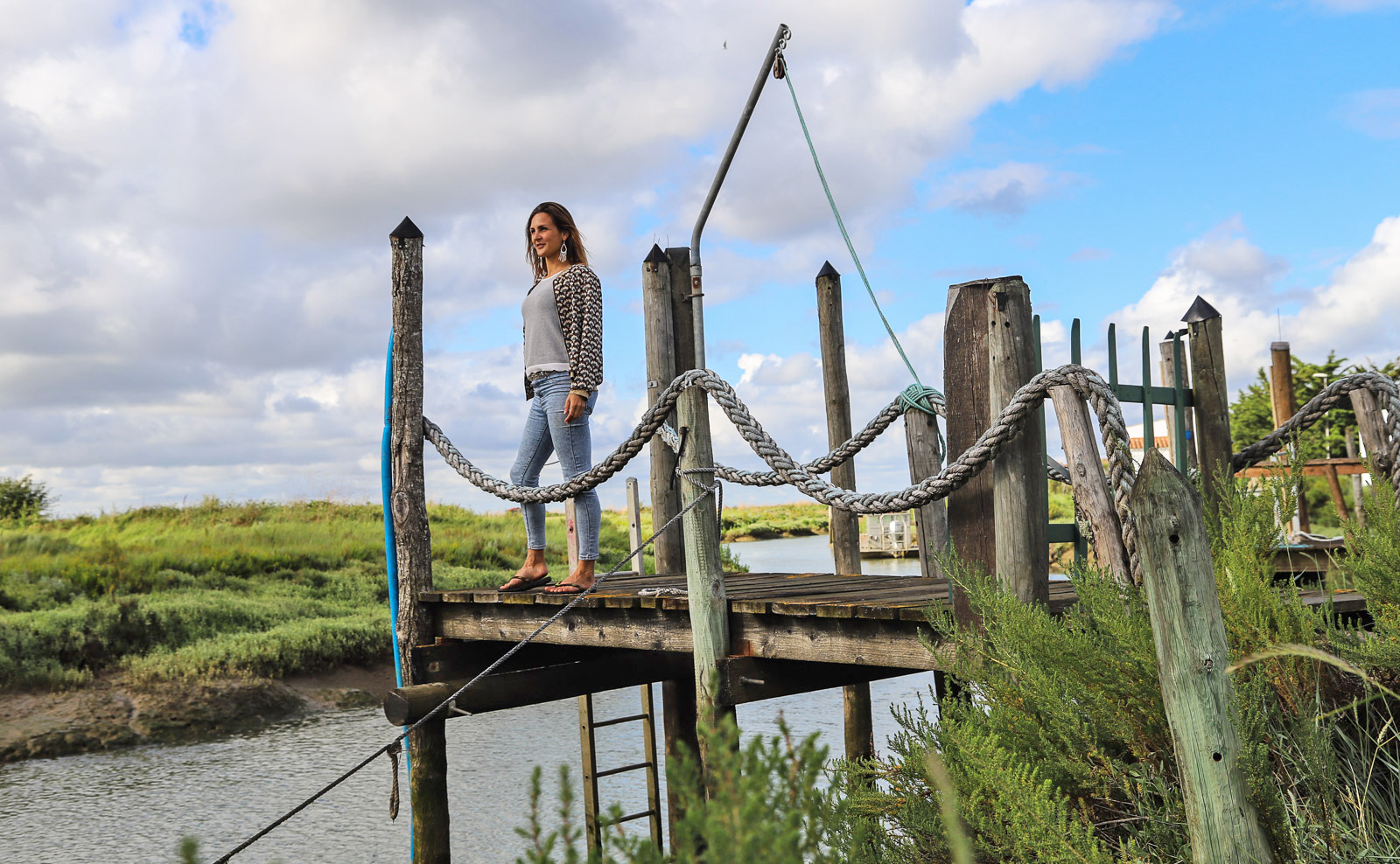
8,9 km
The customs trail from Vaux-sur-Mer to Saint-Palais
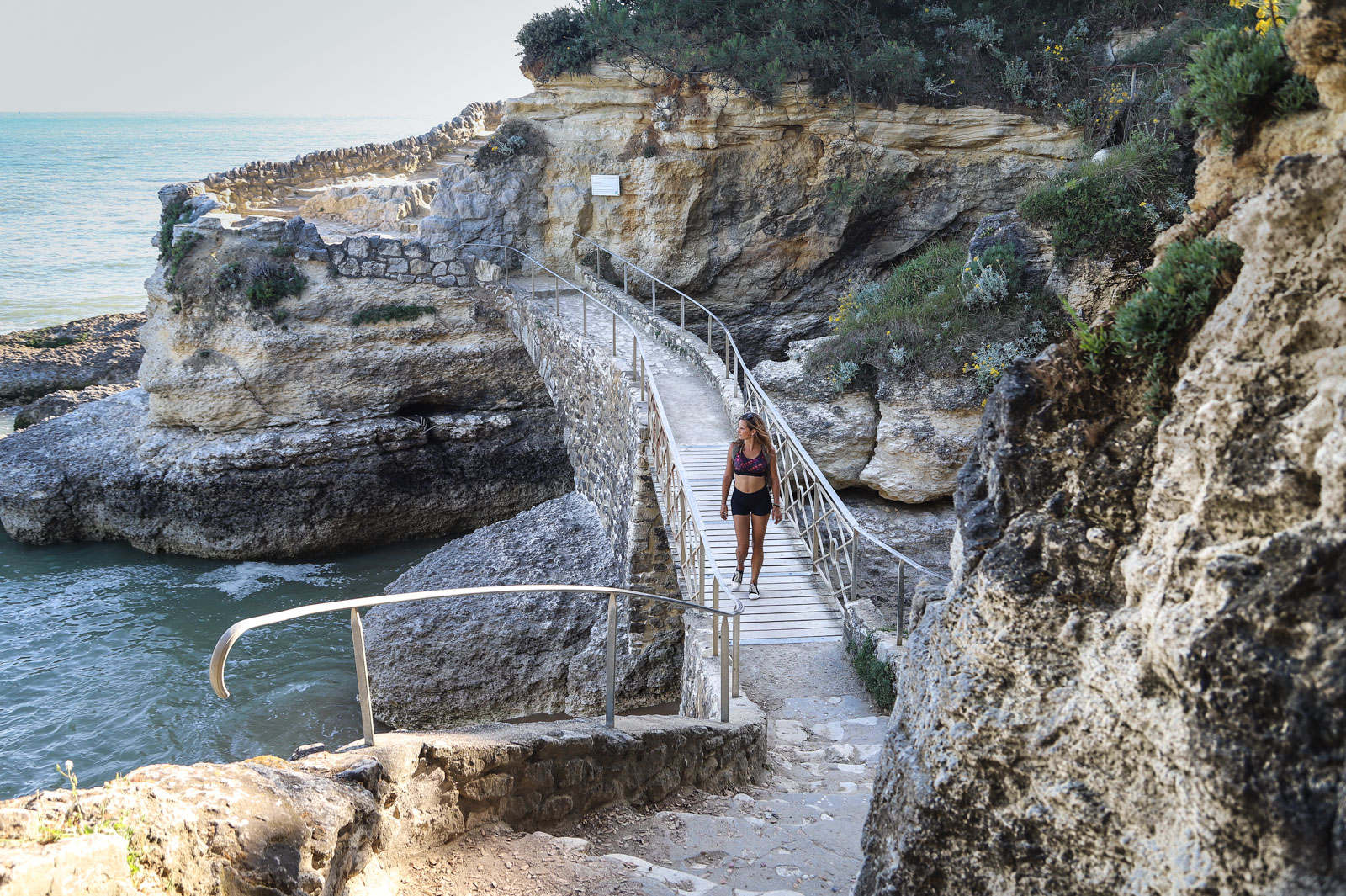
9,3 km
What to do in Charente Maritime in winter?

9,3 km
The Marennes Oléron oyster, the star of the end of the year celebrations!
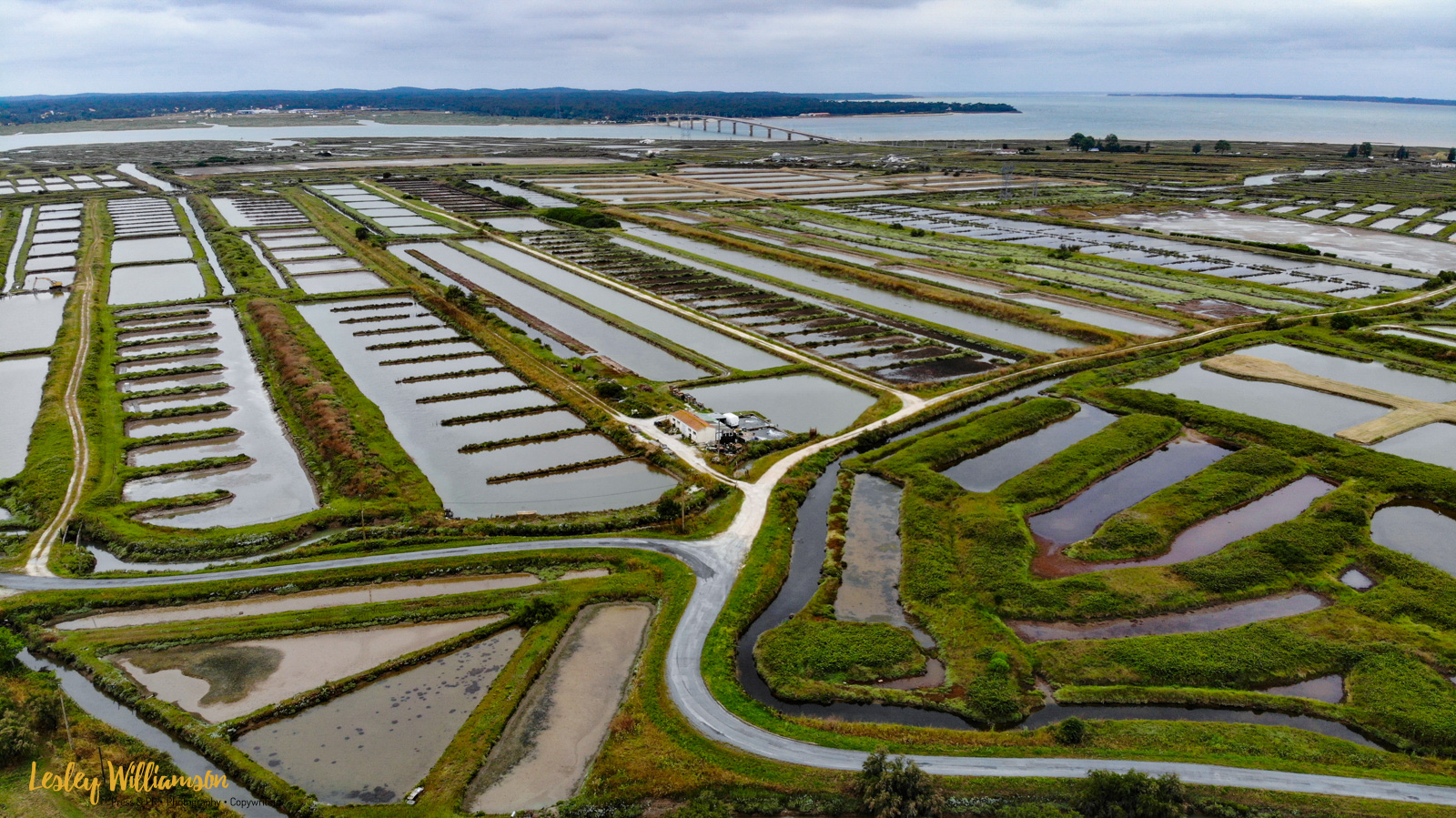
12,4 km
Visit the museums of Charente Maritime

12,4 km
You will like also

Ride around
Saint-Just-Luzac : au coeur du marais
Saint-Just-Luzac : au coeur du marais
12,6 km - Saint-Just-Luzac
le Grand-Village-Plage : les deux villages
le Grand-Village-Plage : les deux villages
17,7 km - Le Grand-Village-Plage