- Home page
- Top experiences
- Culture and Heritage
- Visit the Loix Salt Marsh Ecomuseum: an immersion into the heart of salt production on the Île de Ré
- Culture and Heritage
- Top experiences
Visit the Loix Salt Marsh Ecomuseum: an immersion into the heart of salt production on the Île de Ré
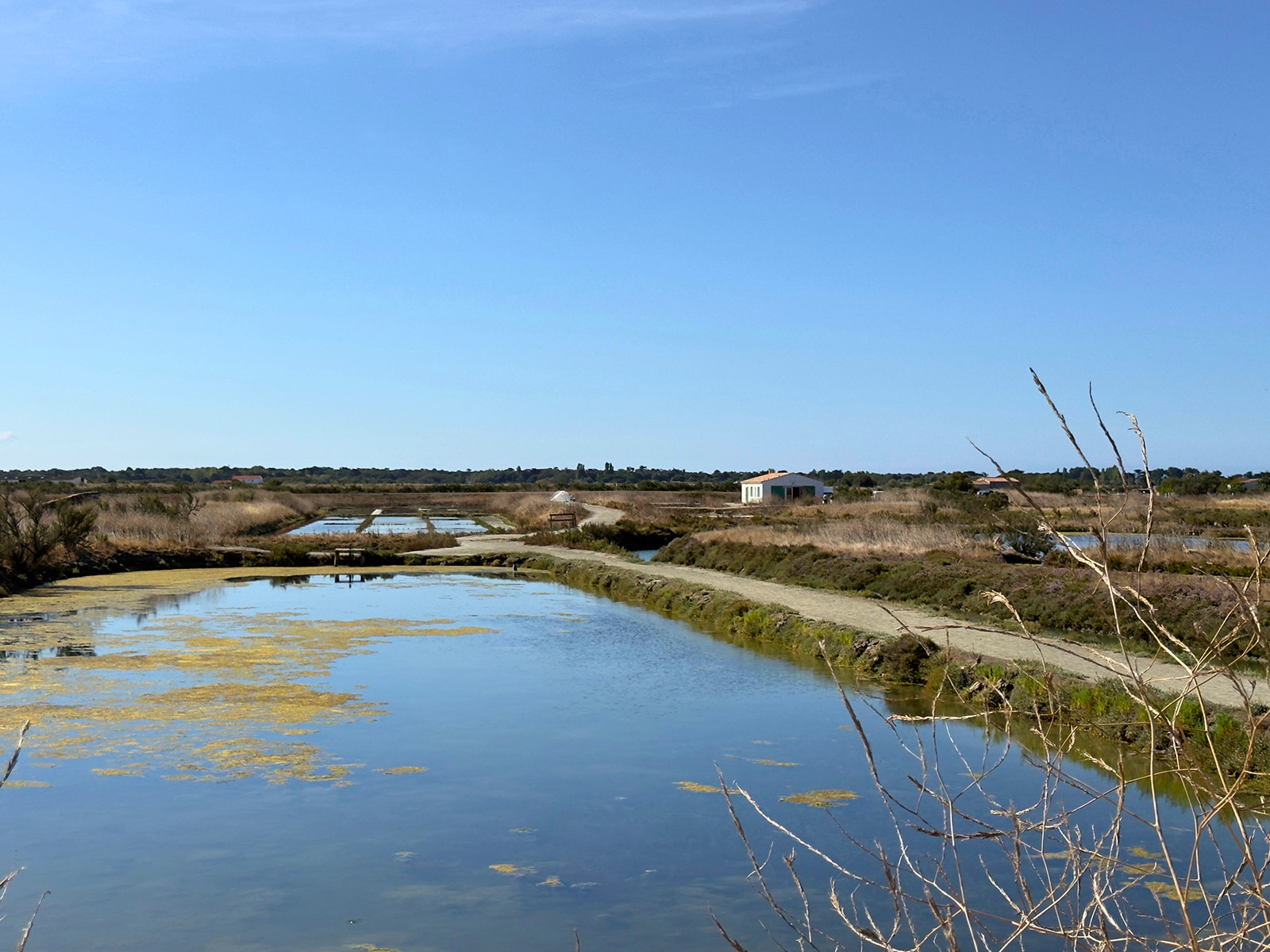
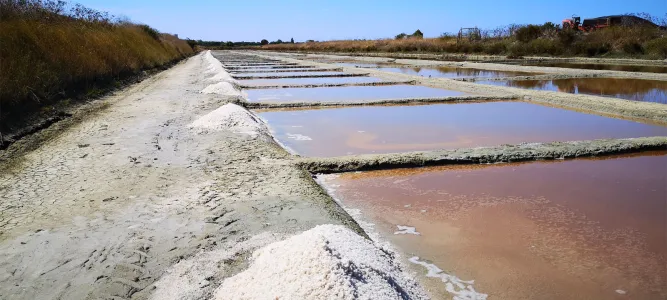
On the Île de Ré, a few kilometers before entering the village of Loix, a unique landscape unfolds on either side of the road: shallow pools, ochre clay paths, and wooden cabins nestled at the water's edge. It is here, on the banks of the Fier d'Ars, that the Salt Marsh Ecomuseum is located, an essential stop for anyone wanting to understand what has shaped the identity of the Île de Ré since the 12th century: salt.
Between educational exhibition and guided tour of an active salt marsh, this place offers a complete immersion in the world of salt production on the Île de Ré, between history, artisanal know-how and observation of nature.
Visiting the Loix salt marsh ecomuseum: what awaits you
For those planning a trip to Île de Ré, a visit to the Loix salt marsh ecomuseum offers a cultural, natural, and culinary escape, accessible to the whole family. The site combines an indoor exhibition with a guided walk through the heart of a salt marsh still in operation today, making it one of the most comprehensive activities for understanding the island beyond its beaches.
A site so precious for its fauna and flora
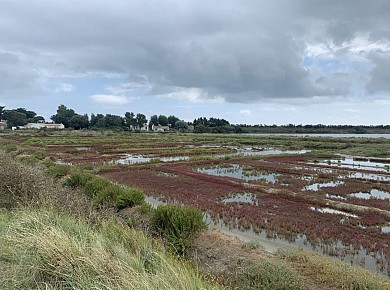
Beyond its heritage value, the Loix salt marsh constitutes a remarkable ecosystem. The area is home to specific flora adapted to saline soils, such as glasswort, and attracts numerous species of wading birds throughout the year, making it also a popular ornithological observation site : observation conditions vary greatly depending on the season and the water level in the basins.
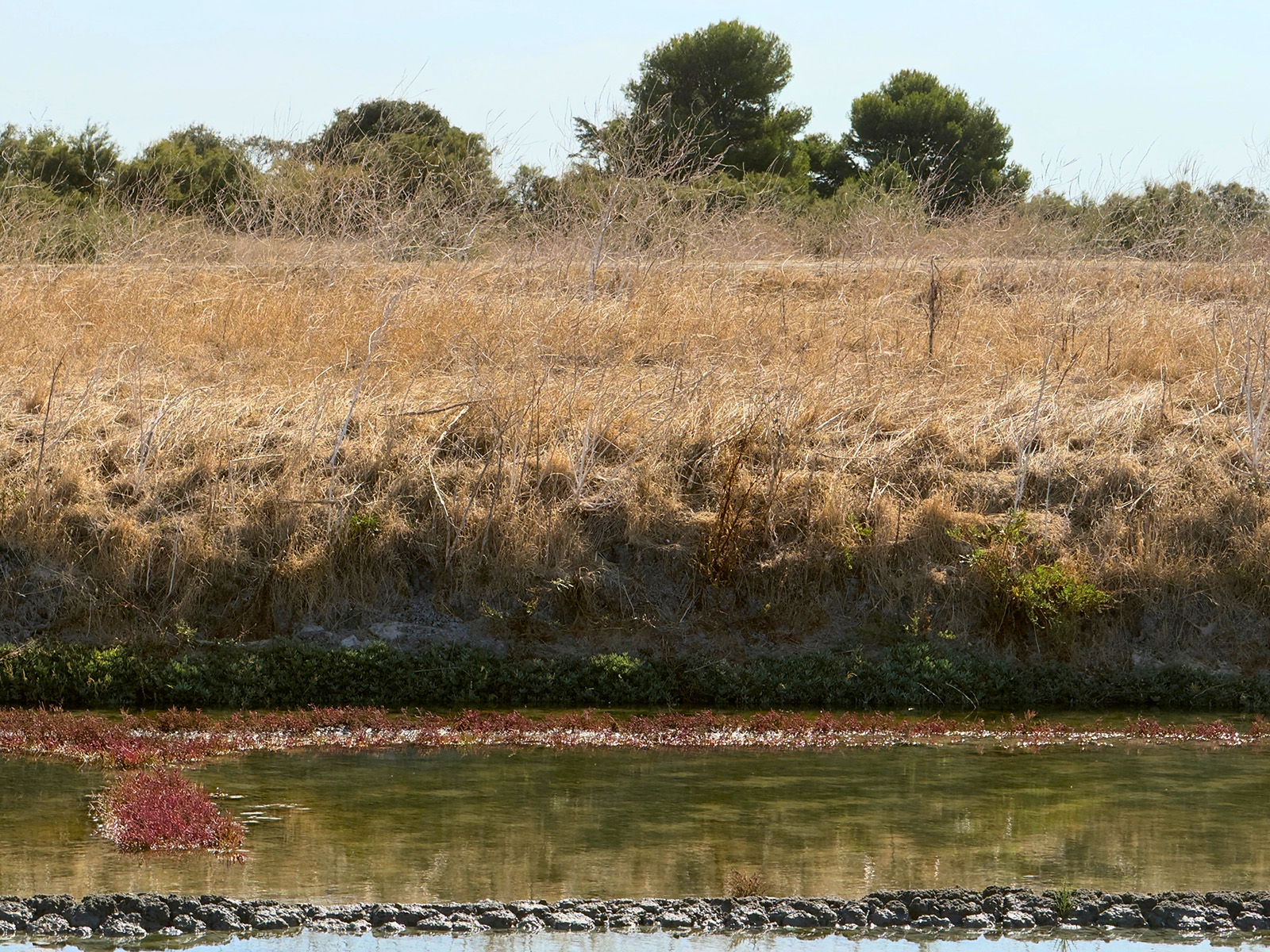
Samphire, in particular, is easily recognizable throughout the seasons: green and fleshy in spring and early summer, when it is most sought after for eating, it then takes on a red hue at the end of summer. A pretty touch of color in the marsh landscape, but one that also signals that the plant becomes more fibrous and much less pleasant to consume at this stage.
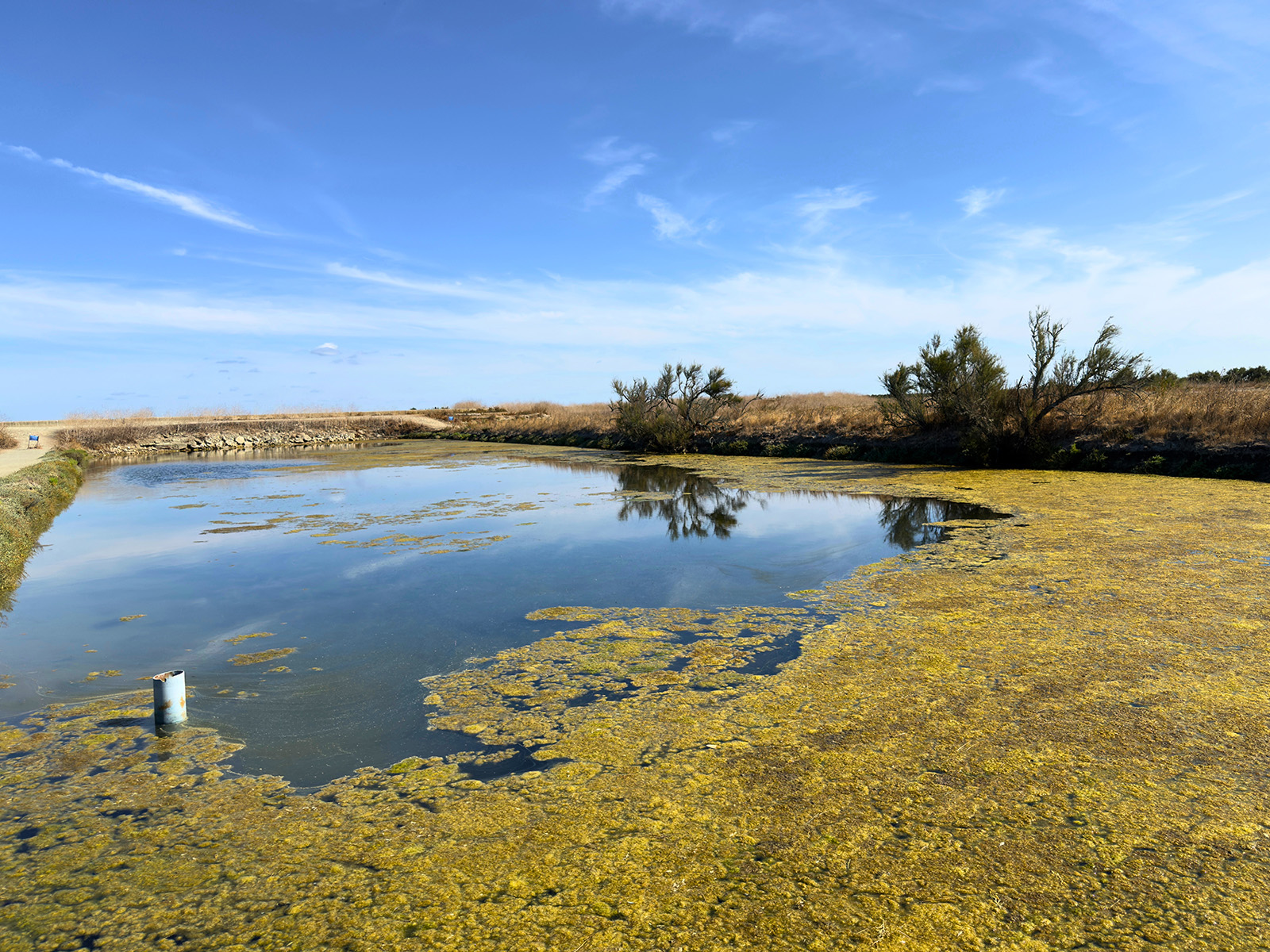
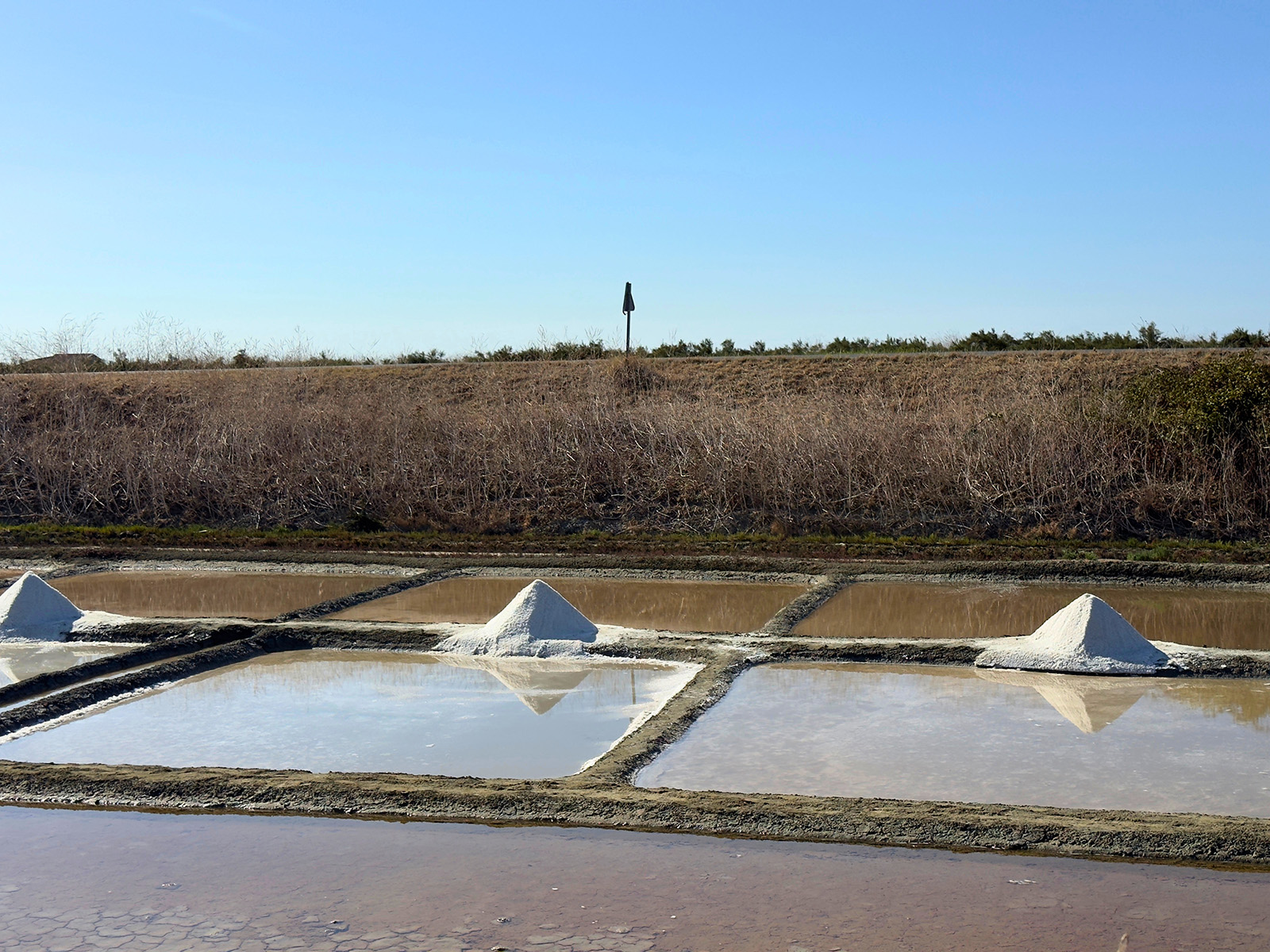
Depending on salinity and temperature conditions, some basins can also take on a pinkish hue, due to the growth of a microscopic algae that thrives in highly concentrated salt water. It's a lovely phenomenon to look out for during your visit, though don't expect a pink as intense as that of the salt marshes in the south of France, such as Aigues-Mortes or the Camargue: on the Île de Ré, the color remains more discreet, subtle, almost pastel, as the Atlantic climate doesn't offer the same salt concentration as the summers on the Mediterranean coast.
A guided tour in two parts: exhibition followed by a working marshland
The visit to the salt marsh ecomuseum takes place in two distinct moments, for a total duration of less than one hour.
- An initial indoor section, lasting about twenty minutes, allows visitors to discover the exhibition dedicated to the history and operation of salt production.
- Then comes the second part, outdoors, where the group follows a guide on the natural site of the marsh, for about twenty-five minutes, to observe concretely the work of salt and the ecosystem that surrounds it.
This two-part format is particularly well-conceived: the exhibition provides the necessary background information before the guided tour and walk through the marsh truly come to life. You never look at the ponds the same way again once you understand what's happening there.
The exhibition: understand the history of salt before seeing it in action
Before setting foot in the marsh, the ecomuseum's exhibition traces the history of salt production on the island of Ré and in Charente-Maritime, an activity that sustained the territory from the 12th century until its peak in the 19th century.
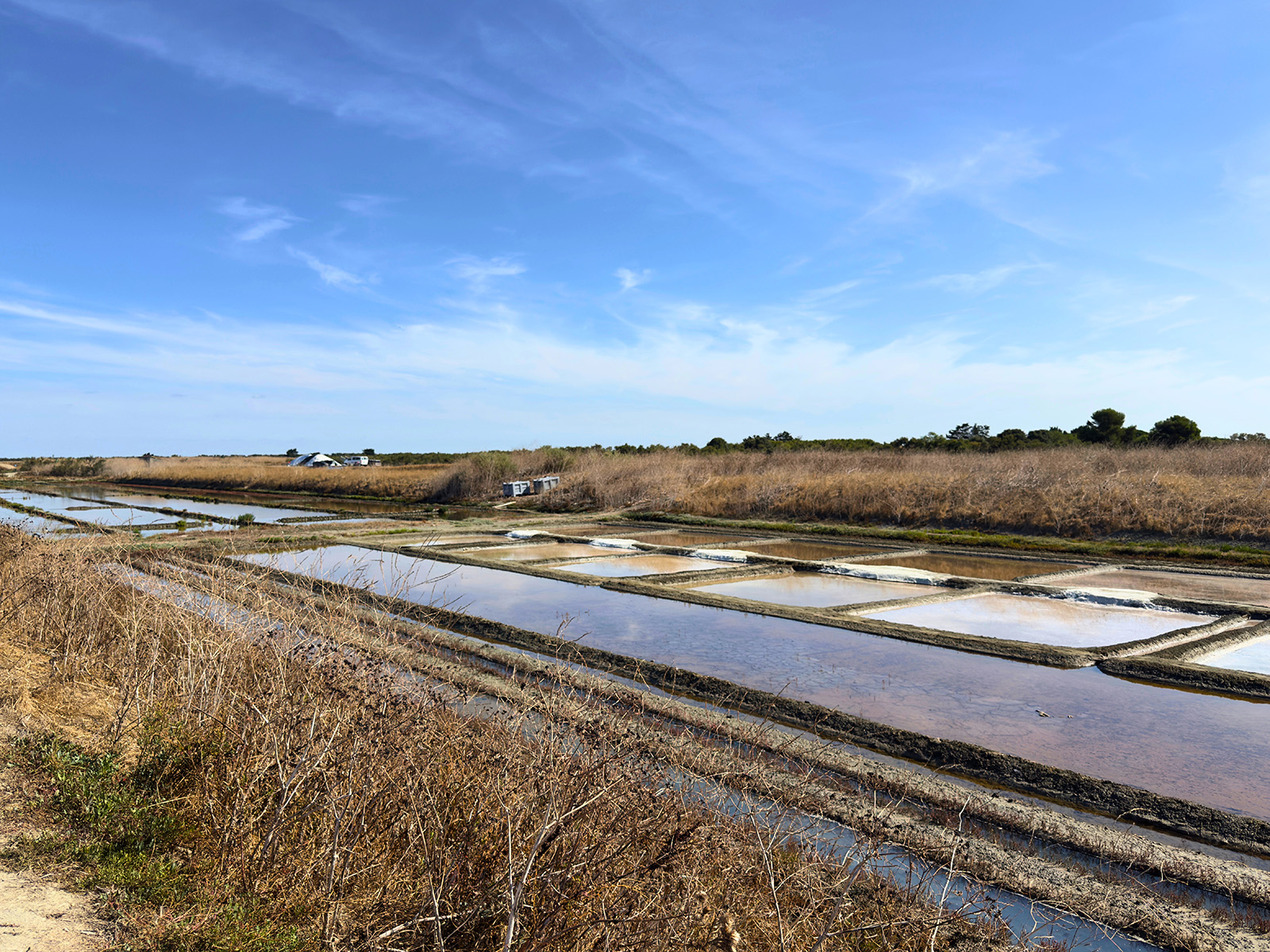
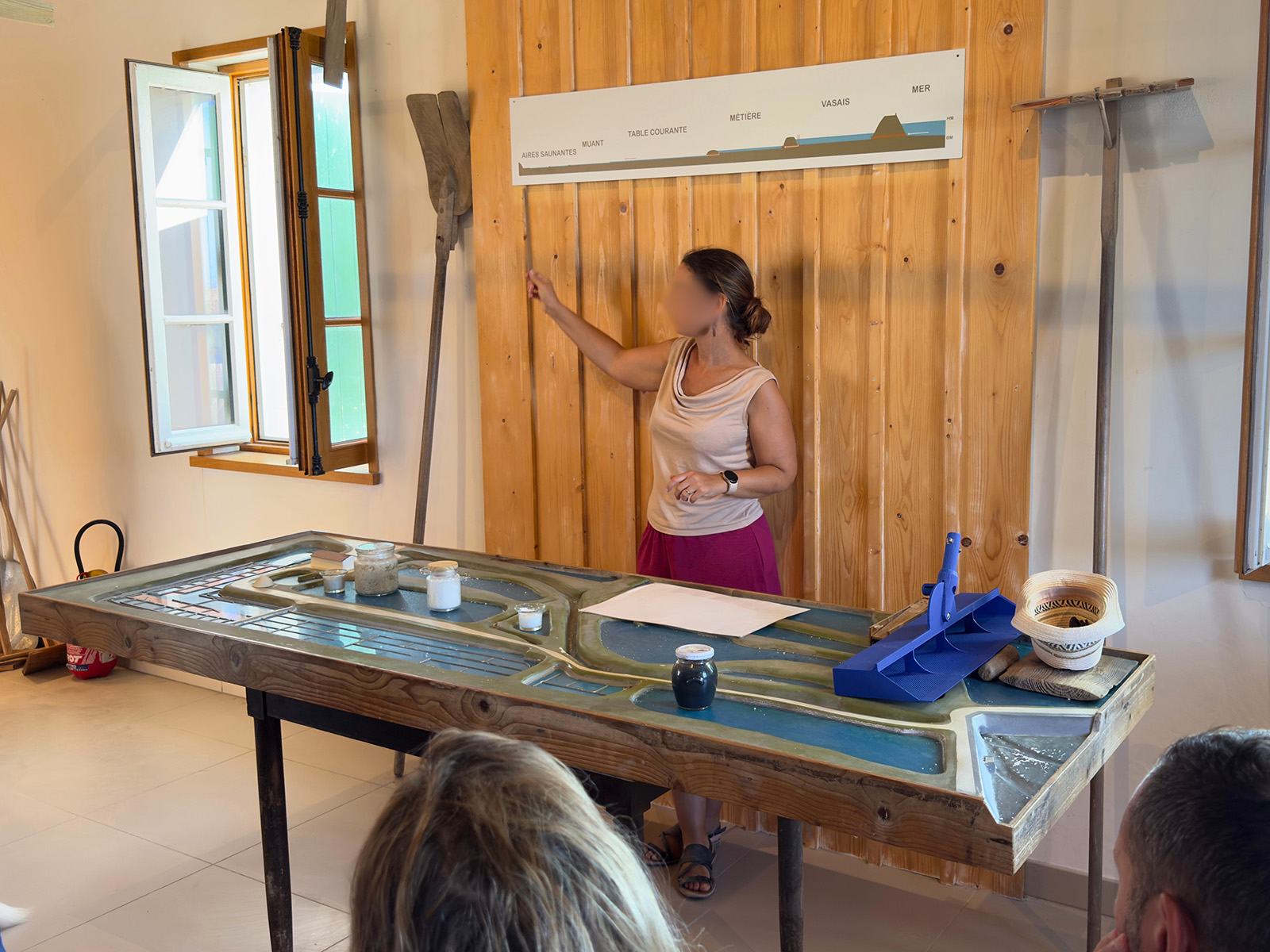
Explanatory panels, a model of the water circuit, traditional salt worker's tools : this museum introduction allows visitors to grasp the logic of an ingenious hydraulic system, where seawater travels through several successive basins before crystallizing into salt, solely through the natural evaporation of the sun and wind.
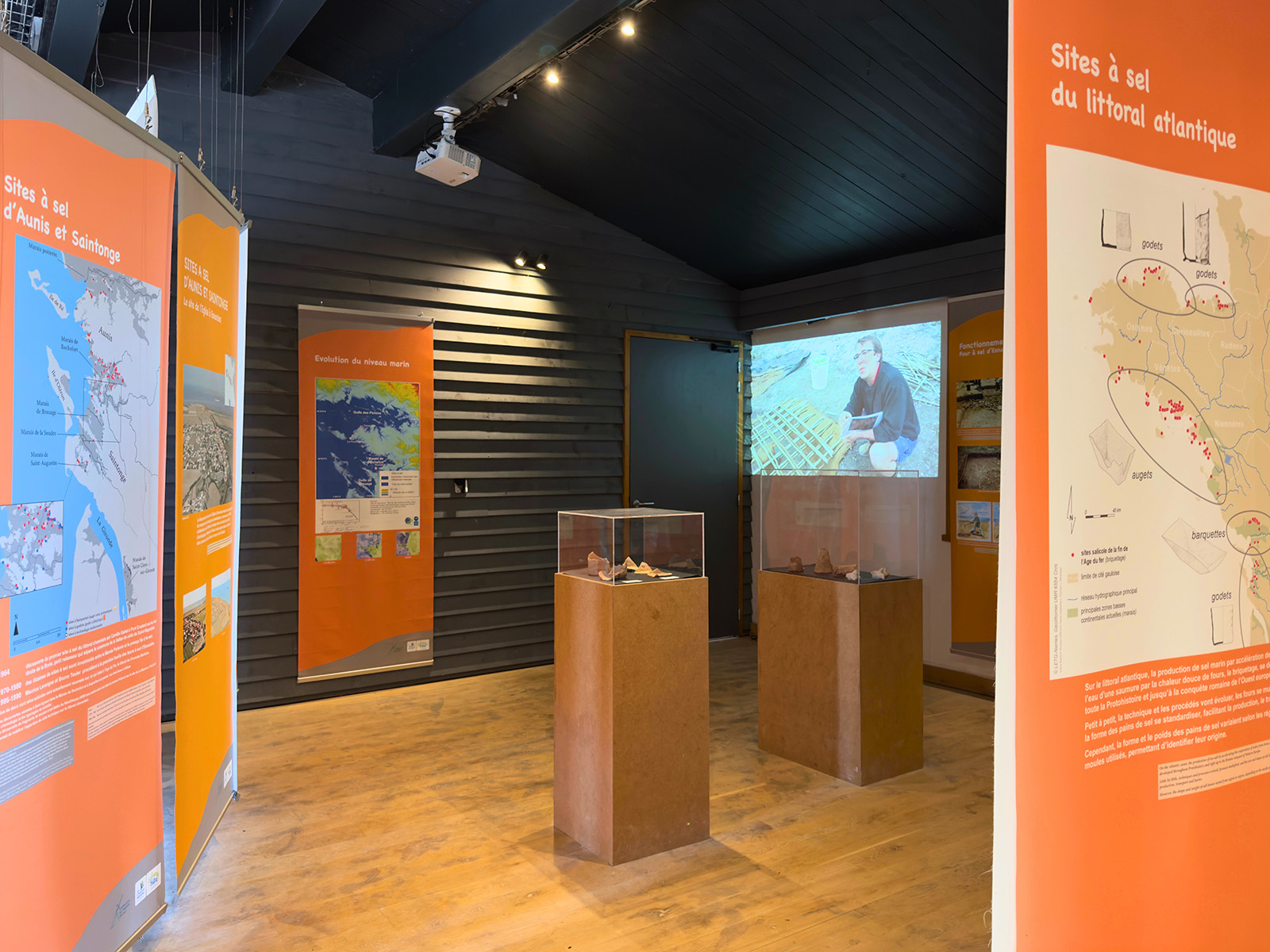
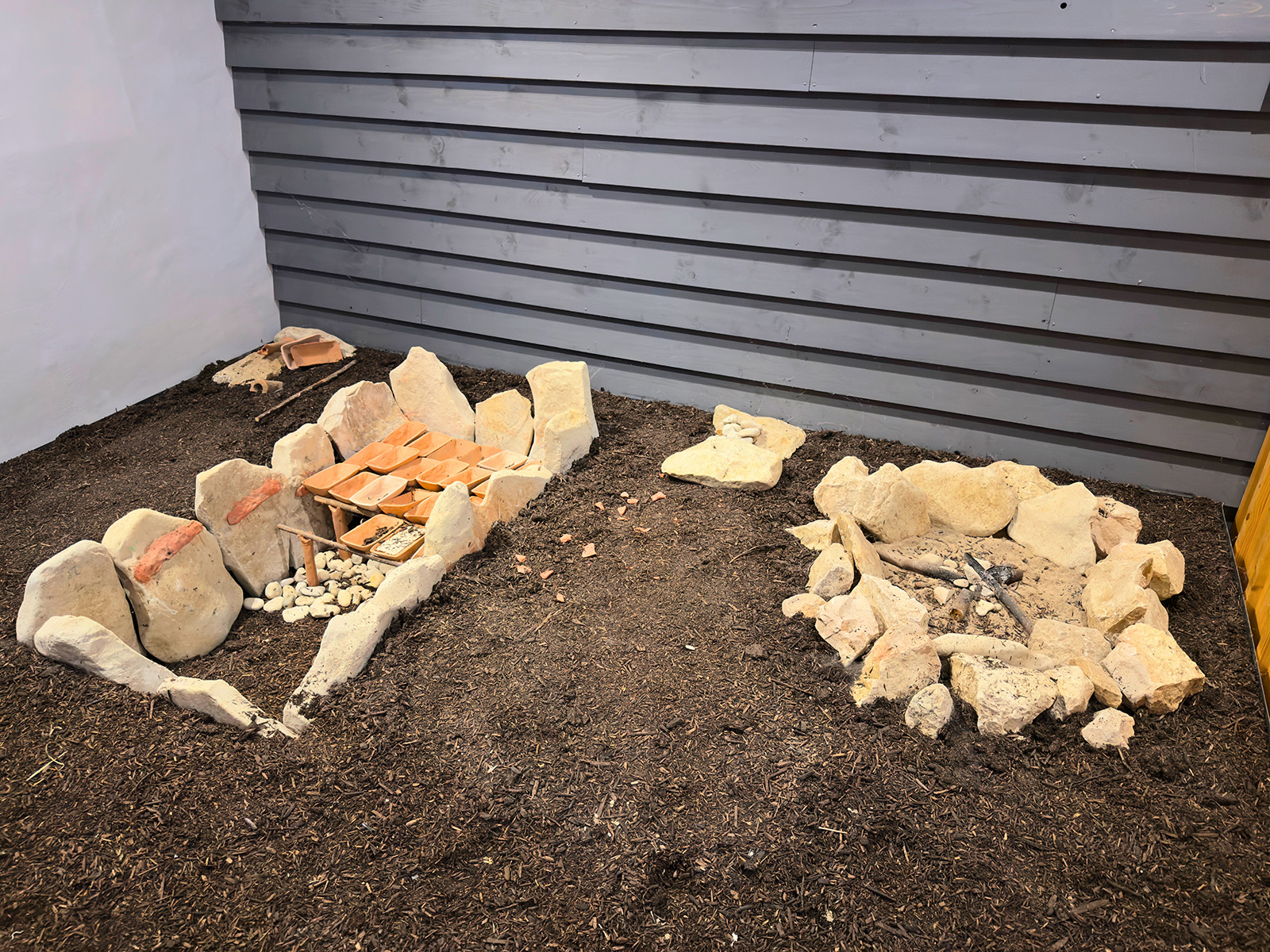
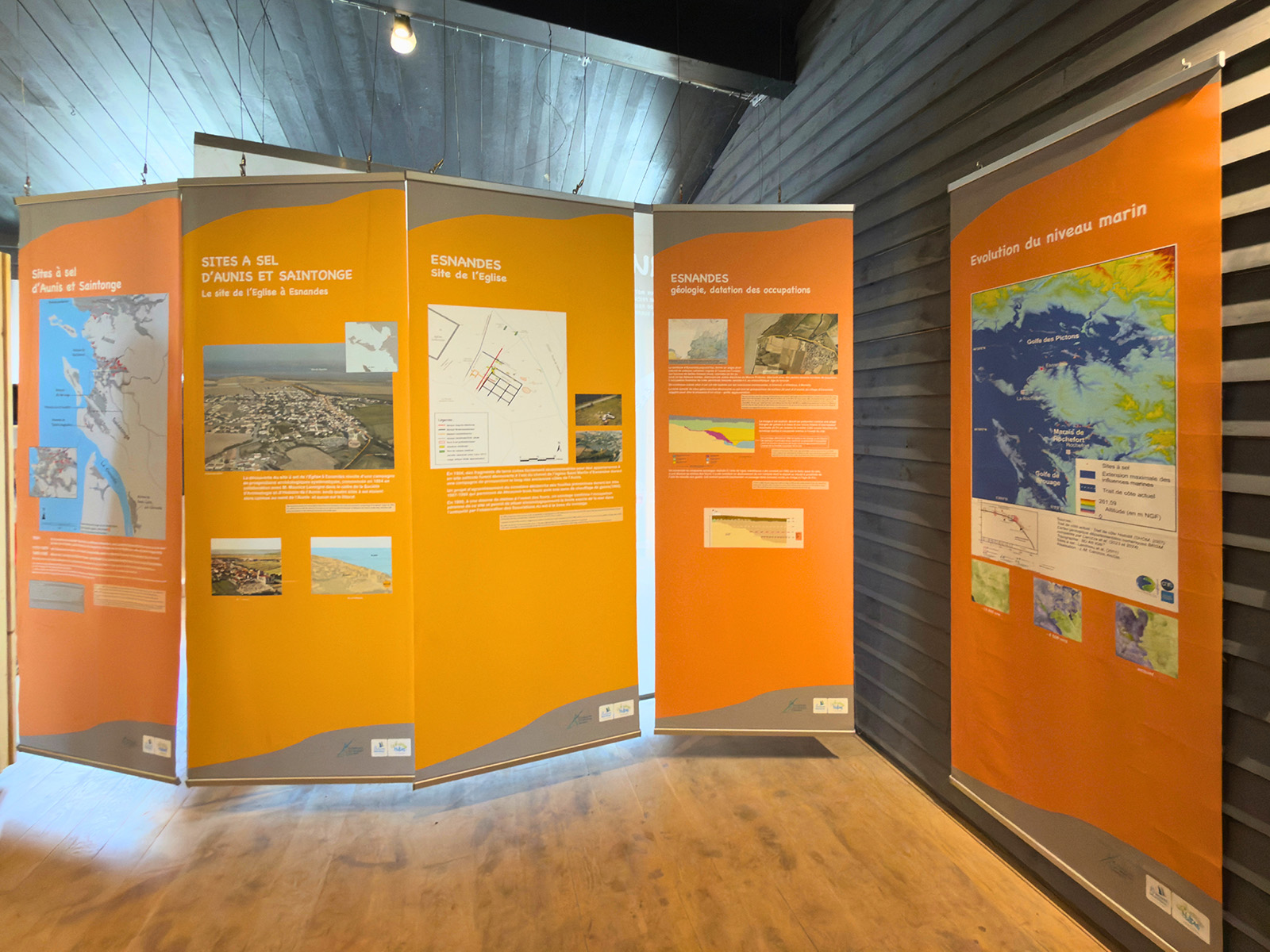
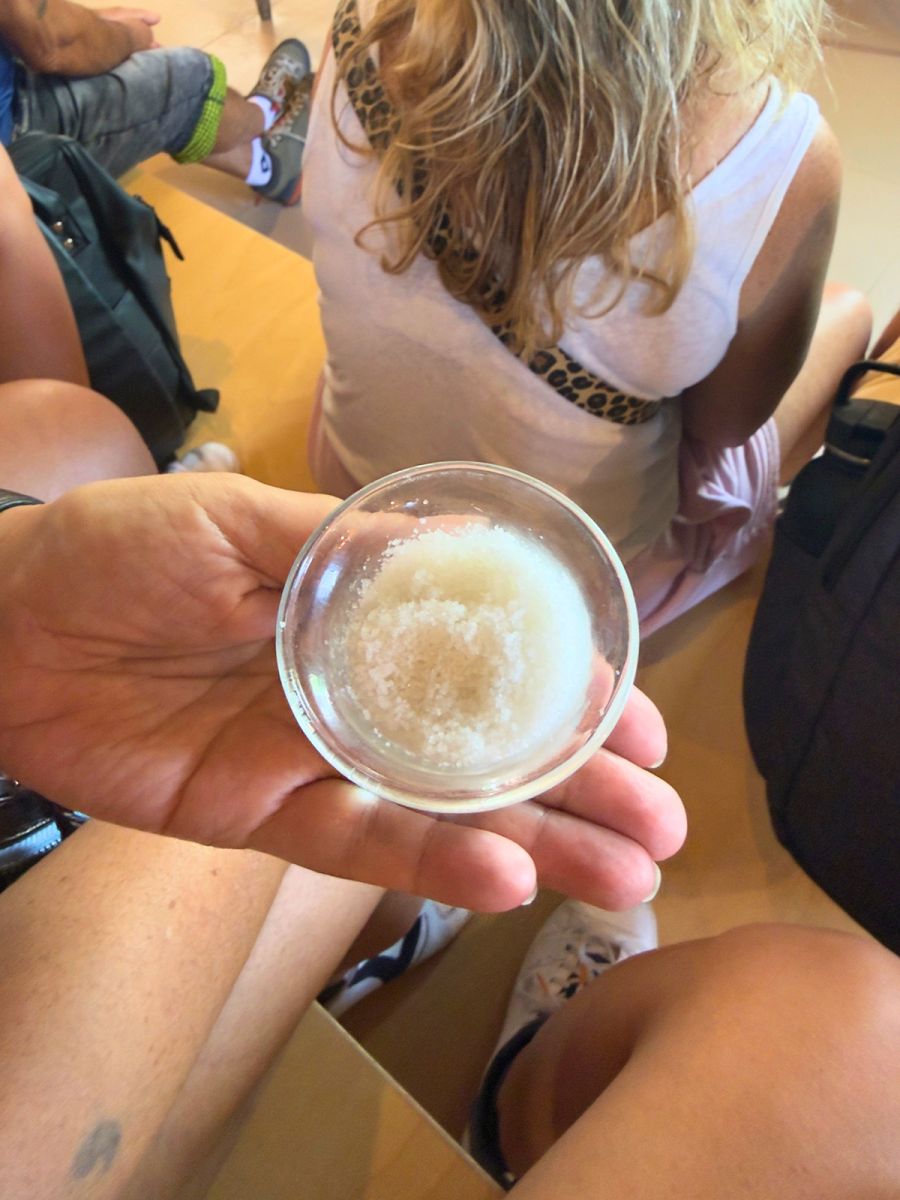
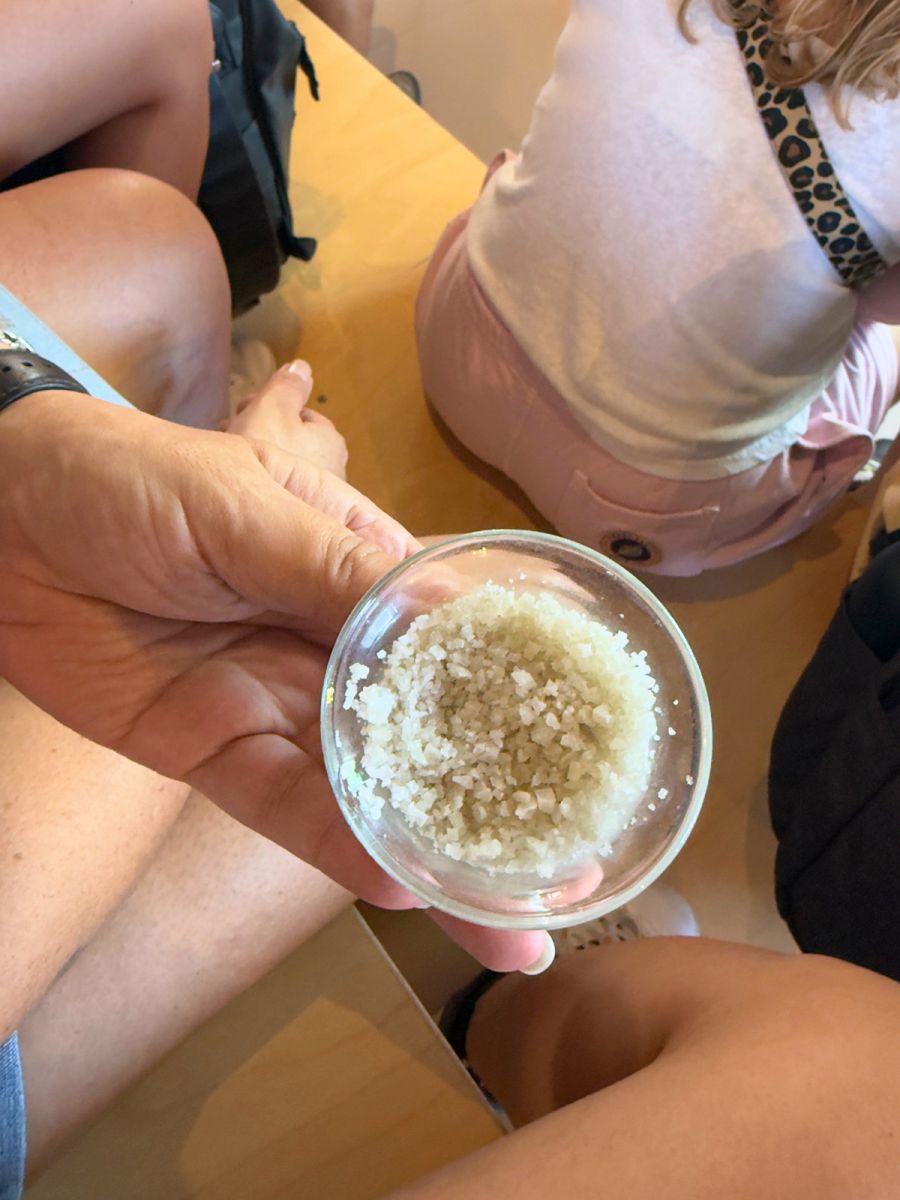
The visit then continues in a room where the whole group is invited to sit down. For about twenty minutes, the guide asks questions to assess and expand upon everyone's knowledge. Everything is simplified to make the children interested in salt and its production.
The exhibition and the guide's explanations are an invaluable foundation for the rest of the visit : without them, the salt marsh would remain just another landscape. With them, we understand that we are witnessing a genuine expertise inherited from past generations, crafted by hand for centuries.
On the ground, facing the work of the salt worker
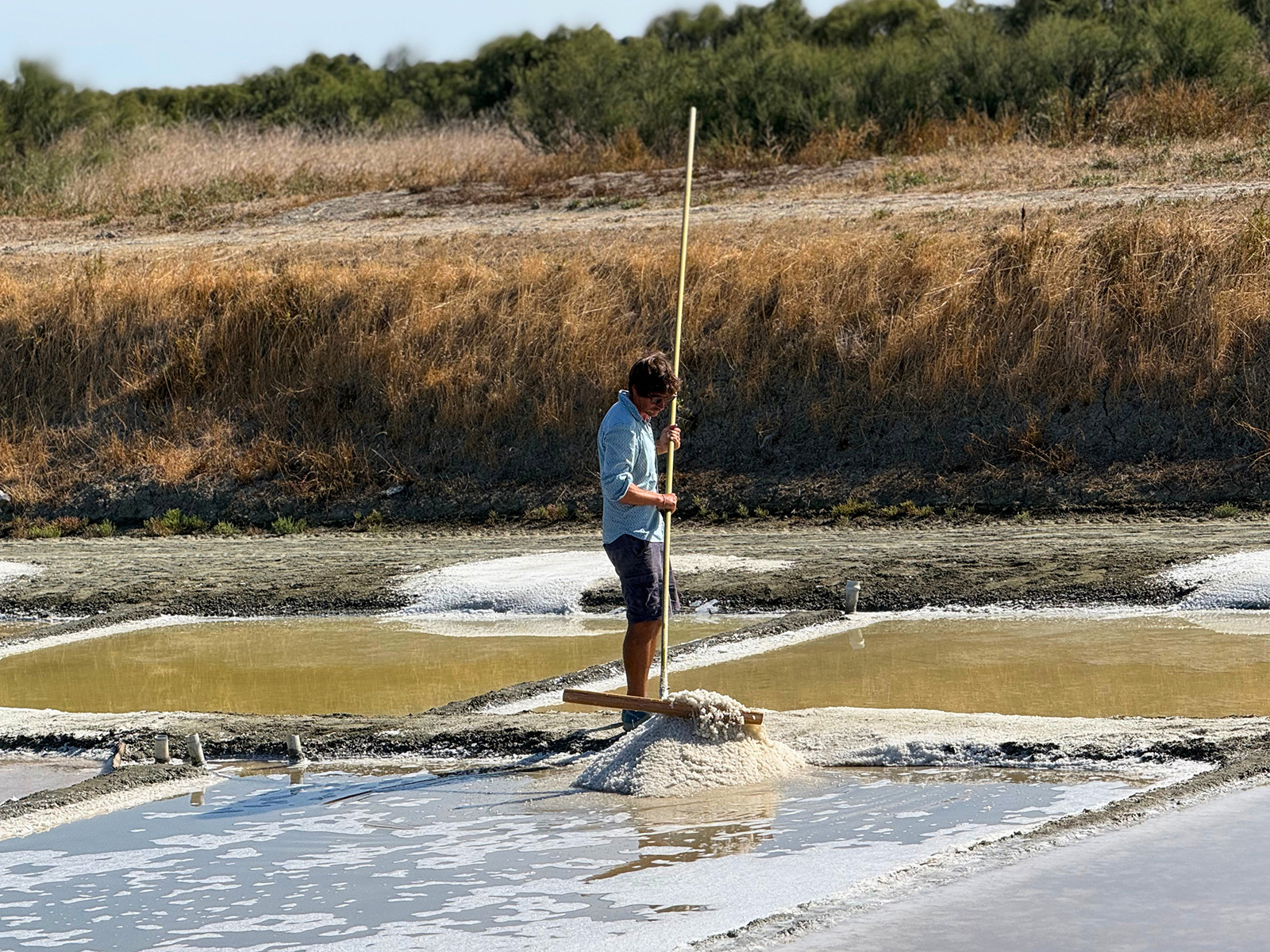
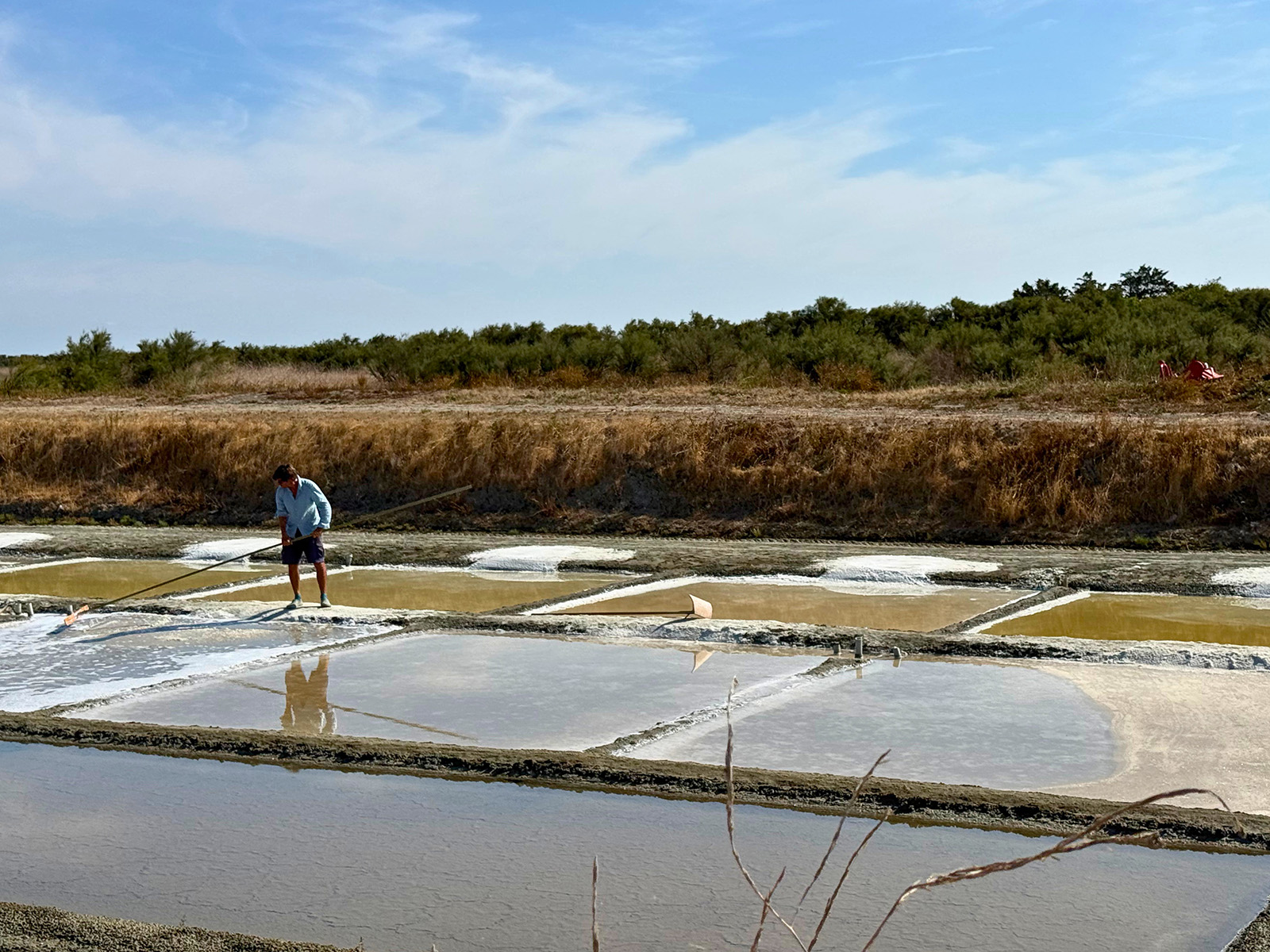
The second part of the guided tour leads directly to the natural salt marsh, where it is possible to observe a salt worker at work. Seeing this age-old technique firsthand—the salt being drawn from the surface of the water, gathered together, and then shaped into small mounds—gives a whole new dimension to what you have just learned in the classroom.
One of the most striking lessons of the visit is how entirely dependent salt production is on the weather. Rain means several days of harvesting lost while the water regains its salinity. Conversely, intense and prolonged heat can accelerate evaporation and also dry out the salt marsh faster than usual.
Another, lesser-known characteristic is that the salt workers of Île de Ré also engage in winemaking and/or farming. When the grape harvest and the salt harvest overlap, which can happen in some years depending on the weather, they must divide their time between the two activities, whereas they usually follow one another sequentially throughout the seasons. This serves as a reminder that the salt worker's life, even today, remains governed more by the elements than by a fixed calendar.
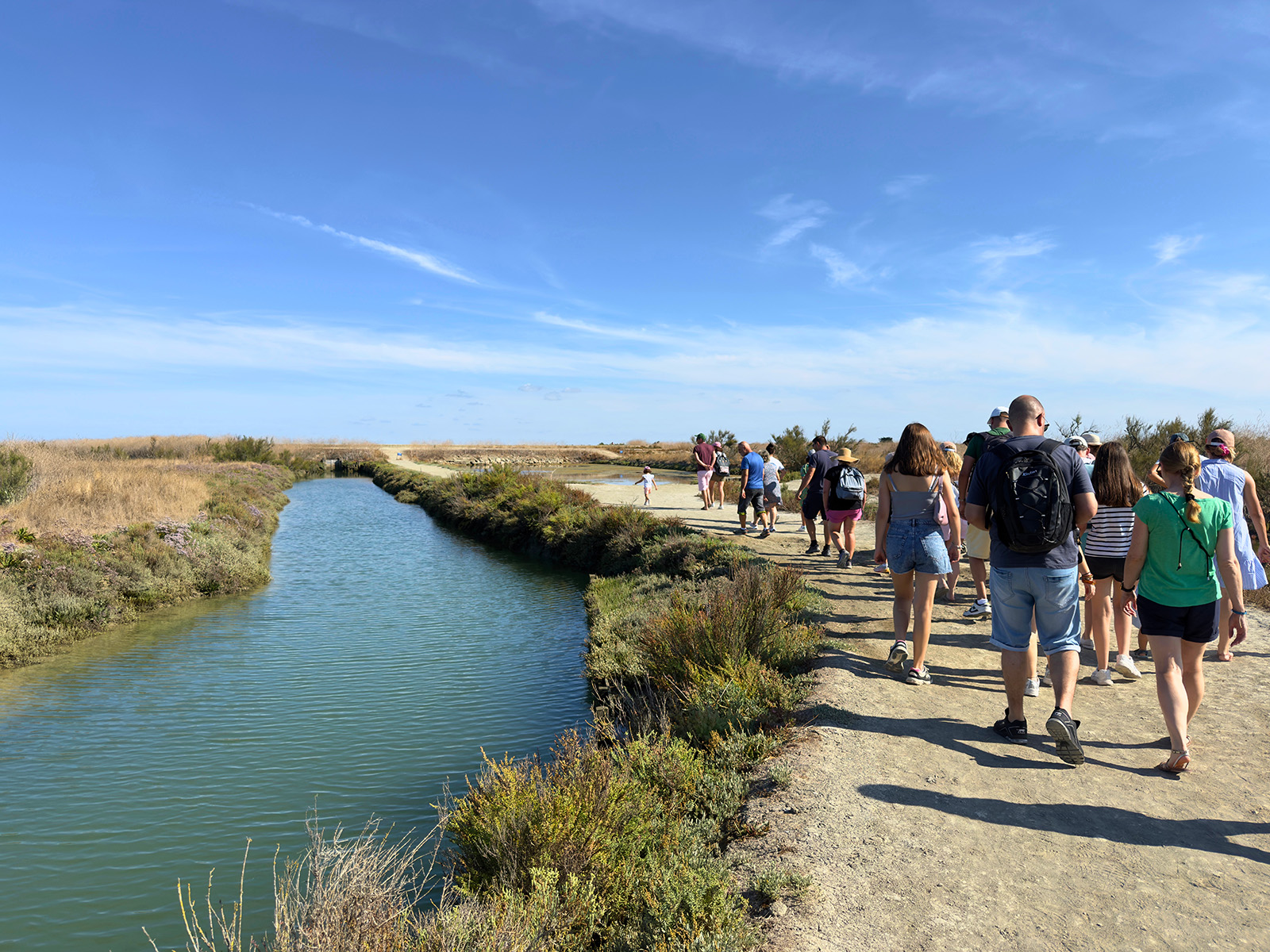
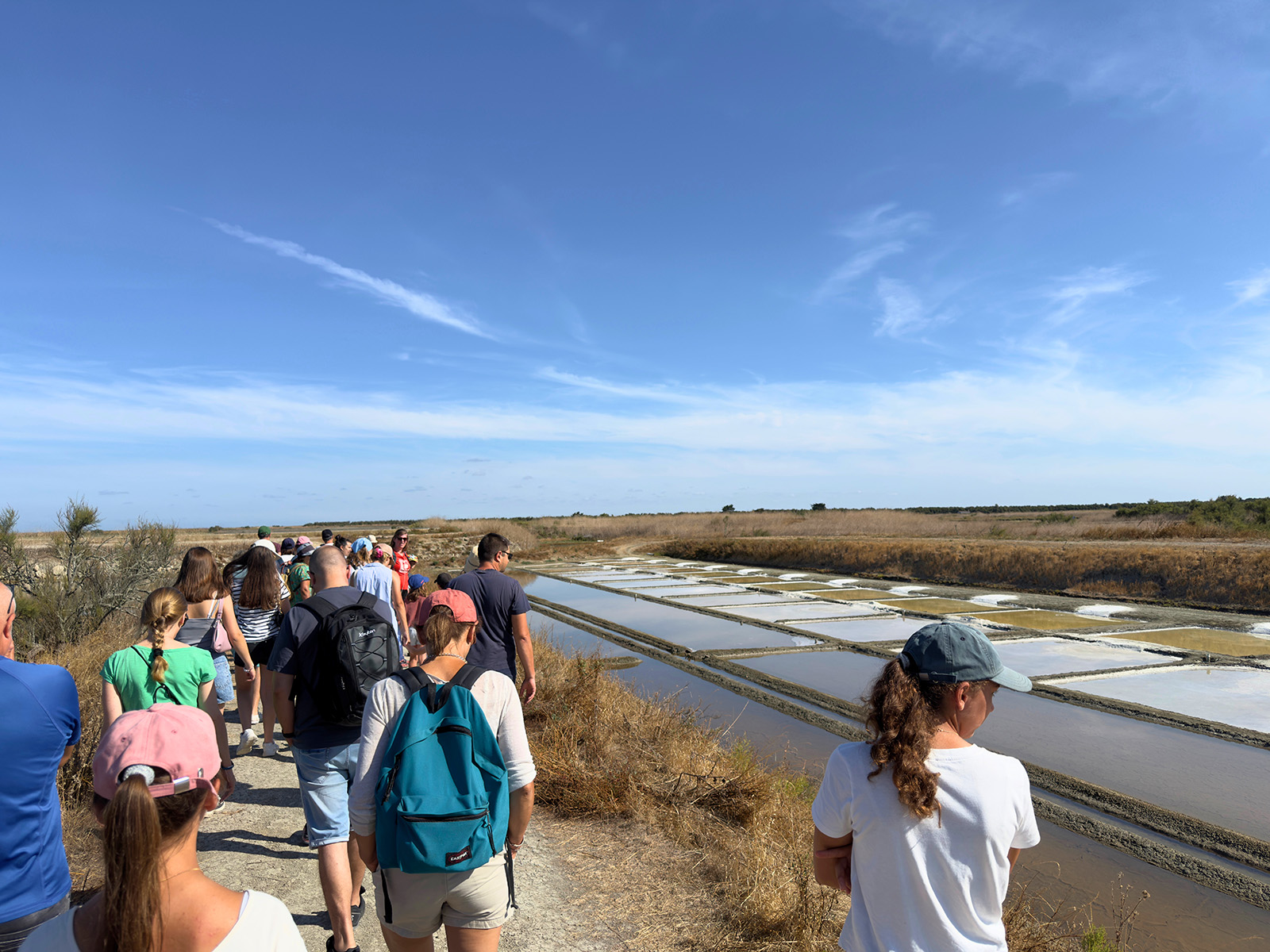
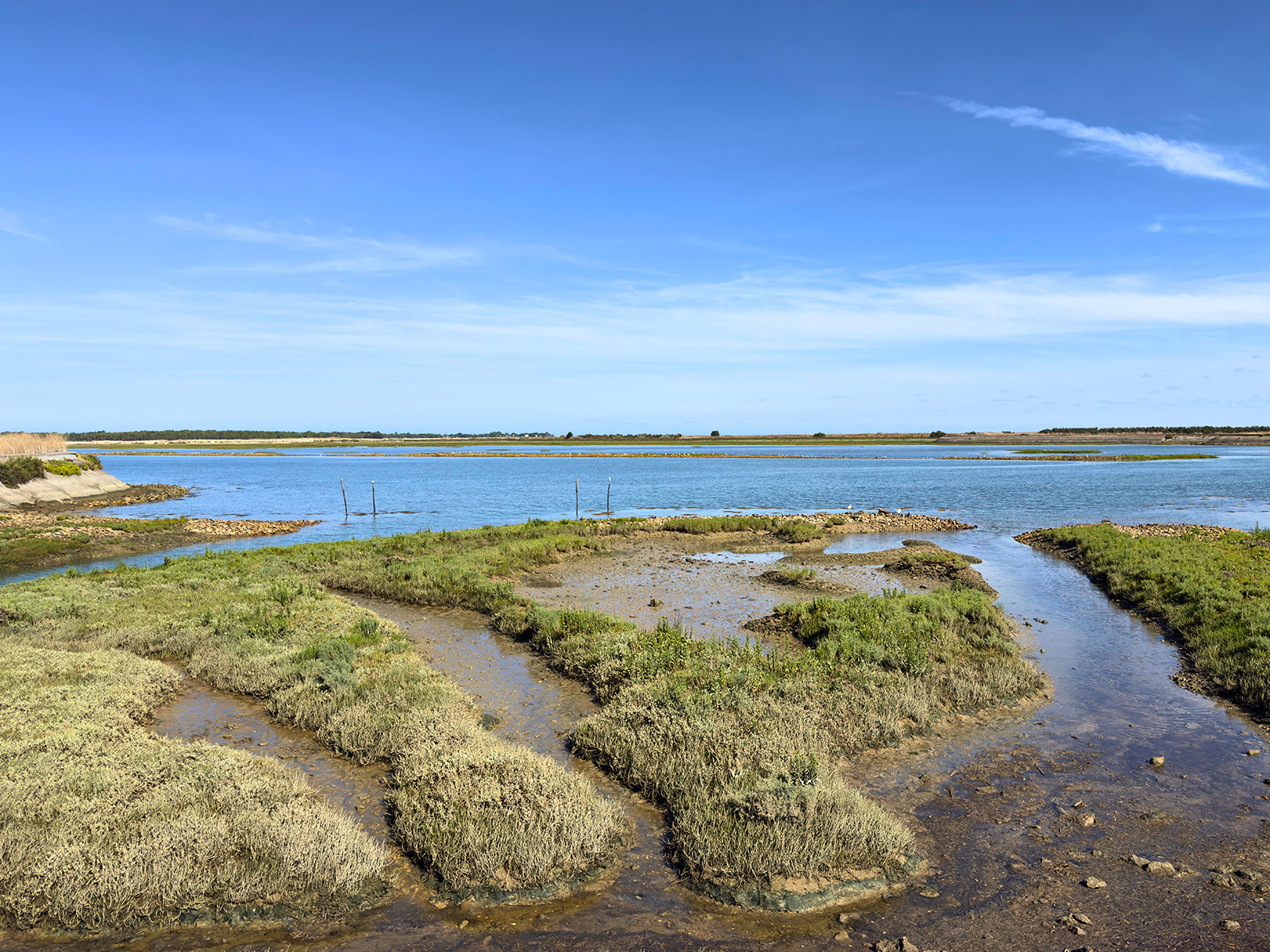
The shop is ideal for taking some salt from the marsh home with you.
The visit concludes with a stop at the ecomuseum's shop, where you can find salt harvested directly on site: coarse salt, fleur de sel, as well as samphire and other local products. Prices remain very reasonable, allowing you to leave with a delicious and authentic souvenir, straight from the salt marsh you've just explored – undoubtedly one of the best value-for-money options on the island for a 100% local and traditional product.
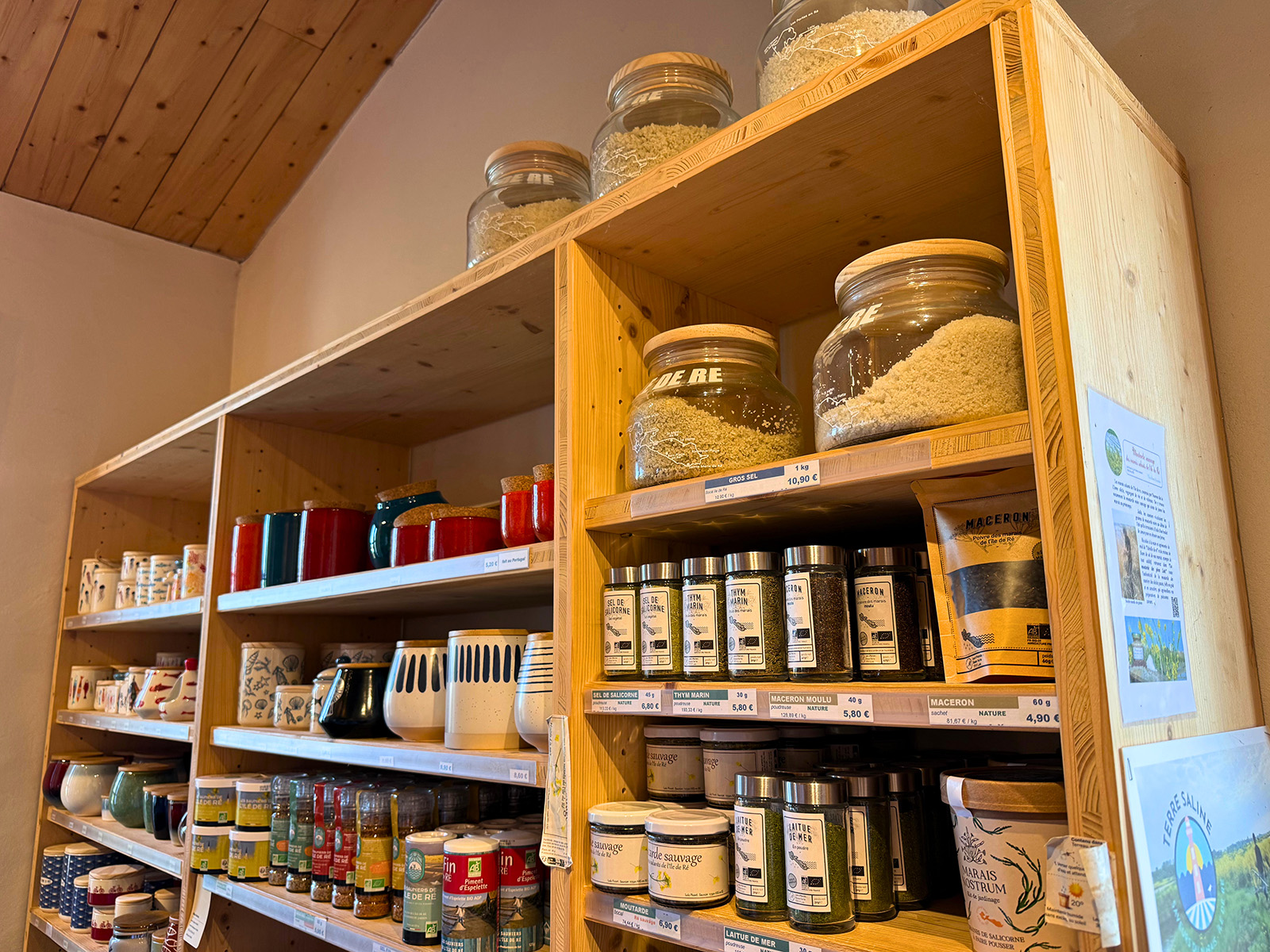
Practical information to help you plan your visit to the Loix Ecomuseum
The Salt Marsh Ecomuseum is located on the Route de la Passe in Loix, on the only road leading to the village, at a place called La Passe on the road to Ars. The site is open from mid-March to early November, with guided tours offered at regular intervals throughout the day.
Some tips to fully enjoy your visit:
- Bring good closed shoes for the outdoor section, as the marsh ground can be uneven.
- Bring a hat and water in summer, as the visit takes place largely outdoors, without shade.
- Allow approximately one hour for the entire guided tour (exhibition + marsh).
- Dogs are allowed on leashes, and the site remains partially accessible to people with reduced mobility.
Why include the ecomuseum in your stay on the Île de Ré?
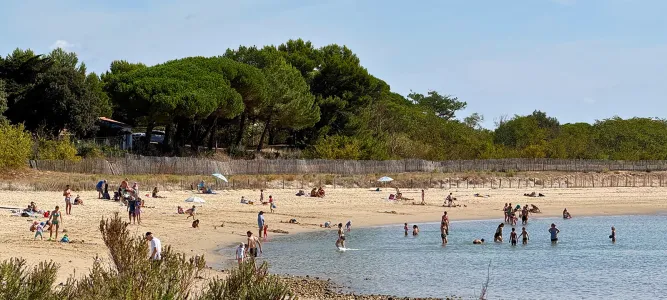
Visiting the Loix salt marsh ecomuseum is much more than a family outing or a backup activity in case of inclement weather: it's an essential gateway to understanding the identity of Île de Ré, a blend of agricultural heritage, ancestral know-how, and natural riches. The site lends itself easily to a stopover on a larger tour of the island's north, complementing a stroll through the village of Loix, a visit to Plage du Grouin, or a more in-depth exploration of the surrounding salt marshes.
Whether you come as a family, as a heritage enthusiast or as a nature lover, the guided tour of the ecomuseum offers an accessible and lively interpretation of a landscape that can be seen everywhere on the island of Ré, but which is rarely understood as well as after having set foot in it.
Le BEEZZ'
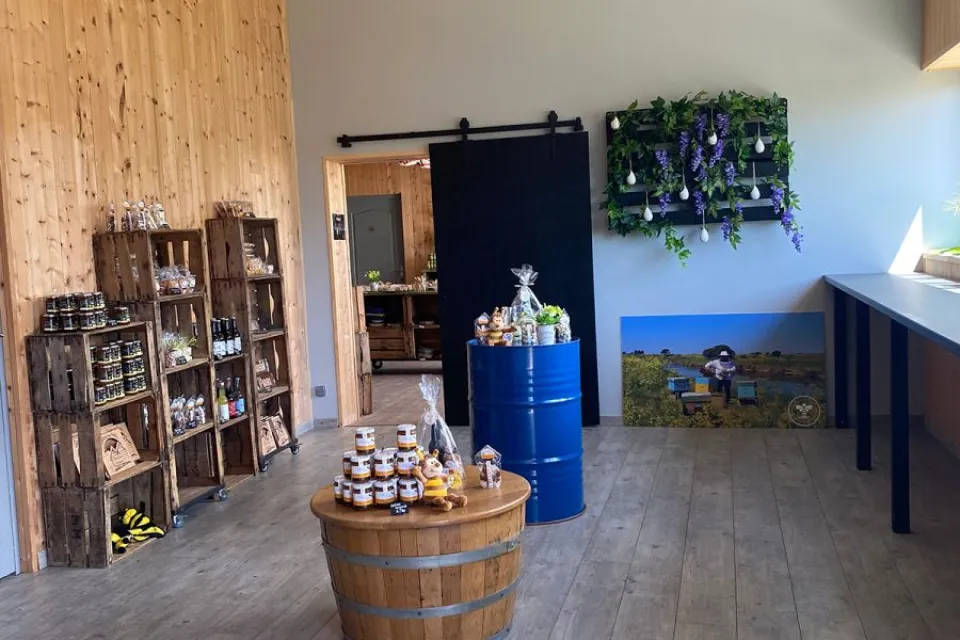
A gourmet break on the Île de Ré
916 m
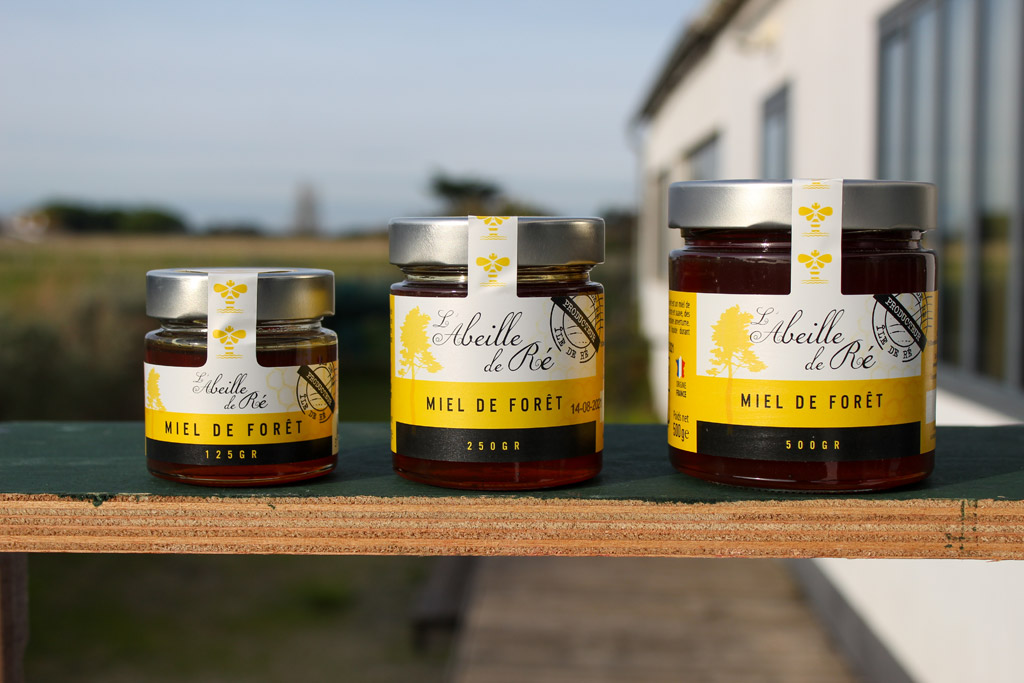
L'Abeille de Ré
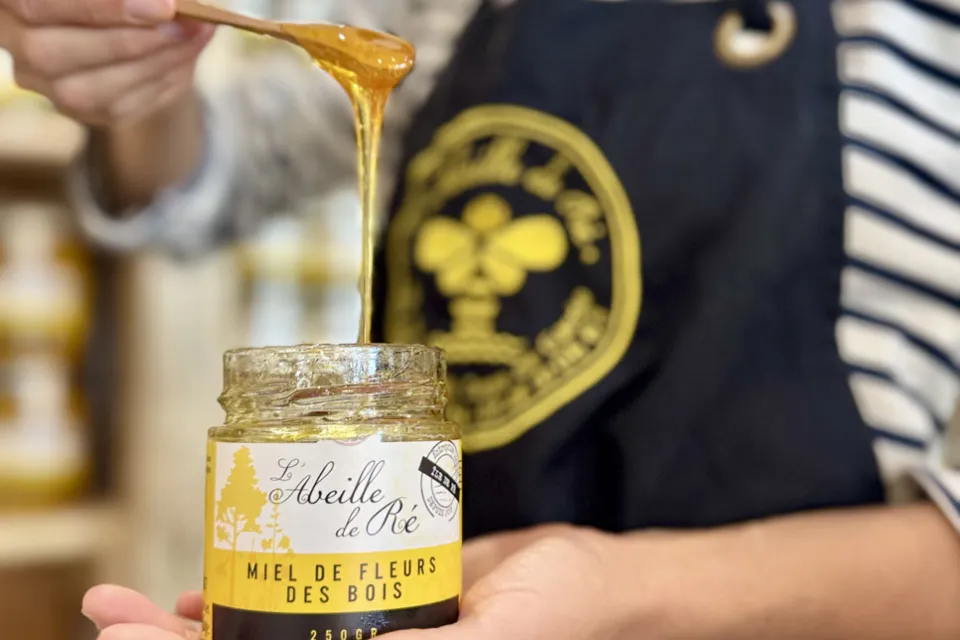
A range of honeys to discover in Loix
918 m
The Saunier Oyster
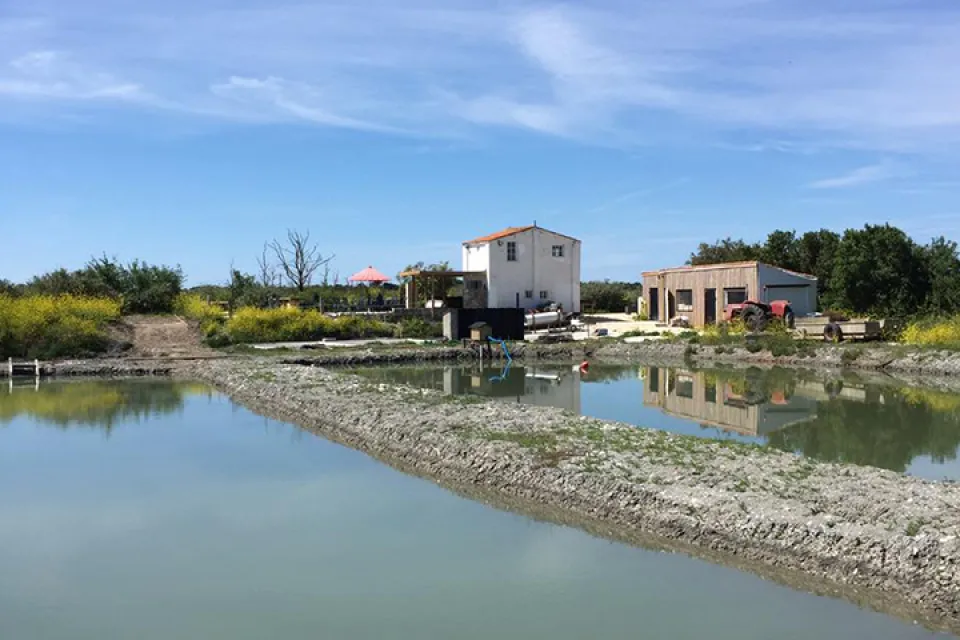
Production & tasting of shellfish and crustaceans in the heart of the salt marshes
1,5 km
Did you enjoy our report? Find more in the Top Experiences section.
Connect to the Charente Maritime Guide Facebook page to stay up-to-date on our latest news. We're also on Instagram @guidecharentemaritime
You will also like
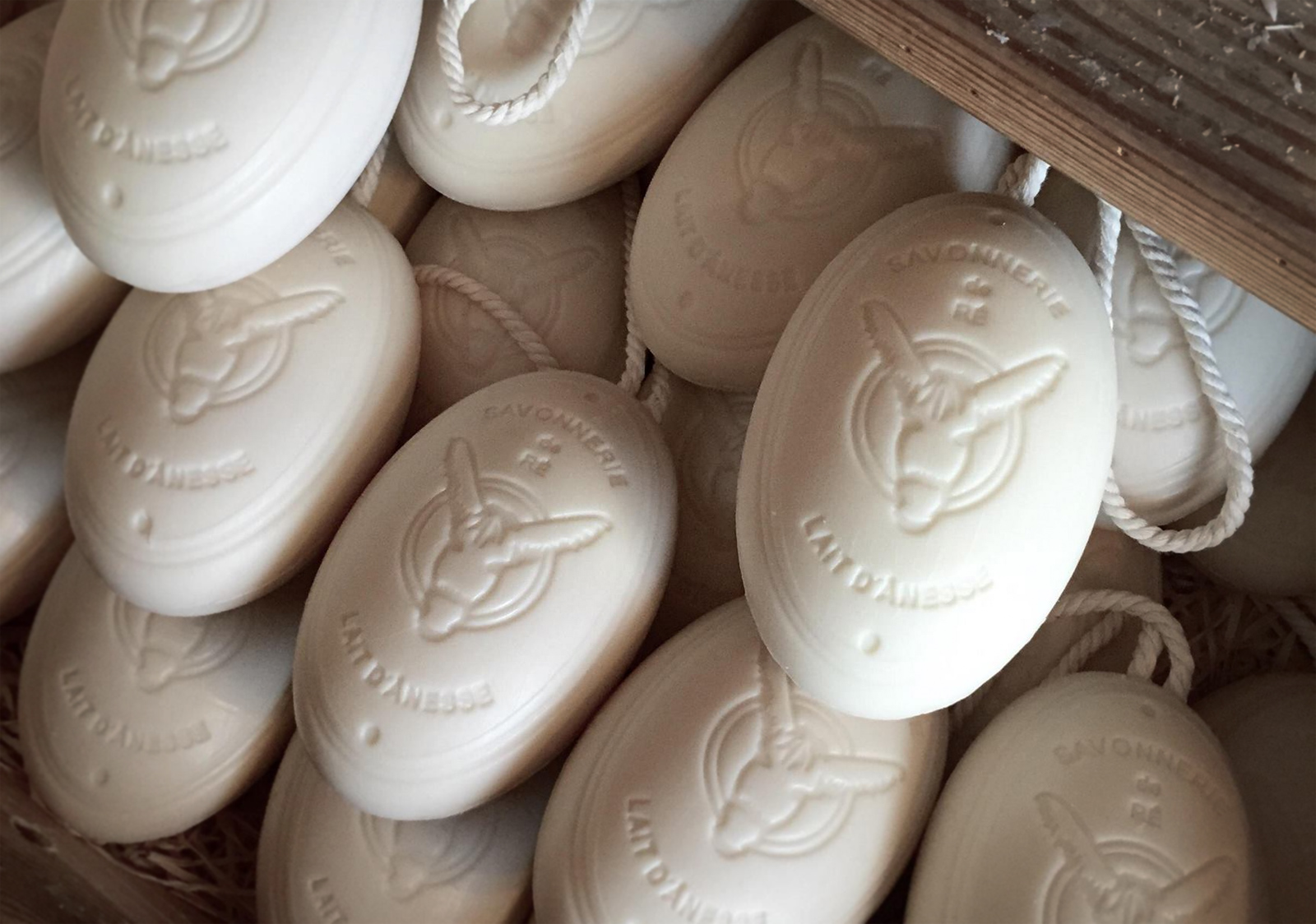
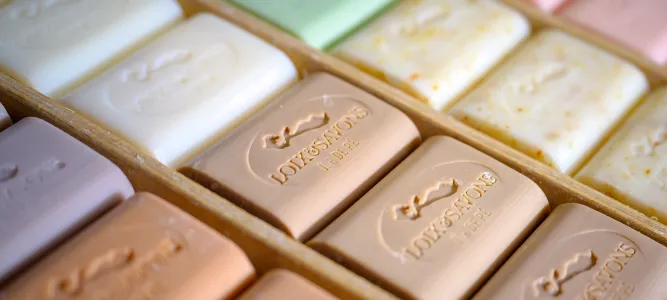
Loix & Savons - La Savonnerie Artisanale de Ré
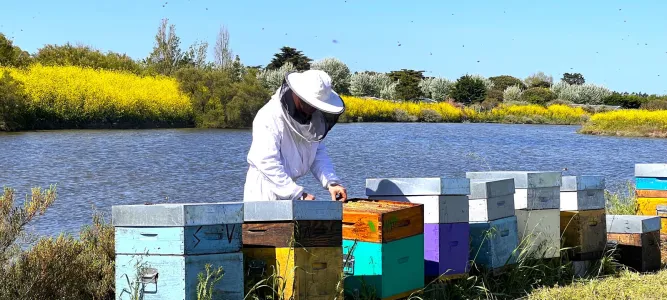
Abeille de Ré: artisanal honey production, beehive products shop on the Ile de Ré
The best bike rides on the île de Ré
5,0 km
What to do in Les Portes-en-Ré?
5,4 km
A walk in the Lilleau des Niges Nature Reserve on the Île de Ré
5,4 km
Eat local with the Ré-Unis producers' farm!
5,5 km
Winter's trip for girls in Saint-Martin-de Ré
6,0 km
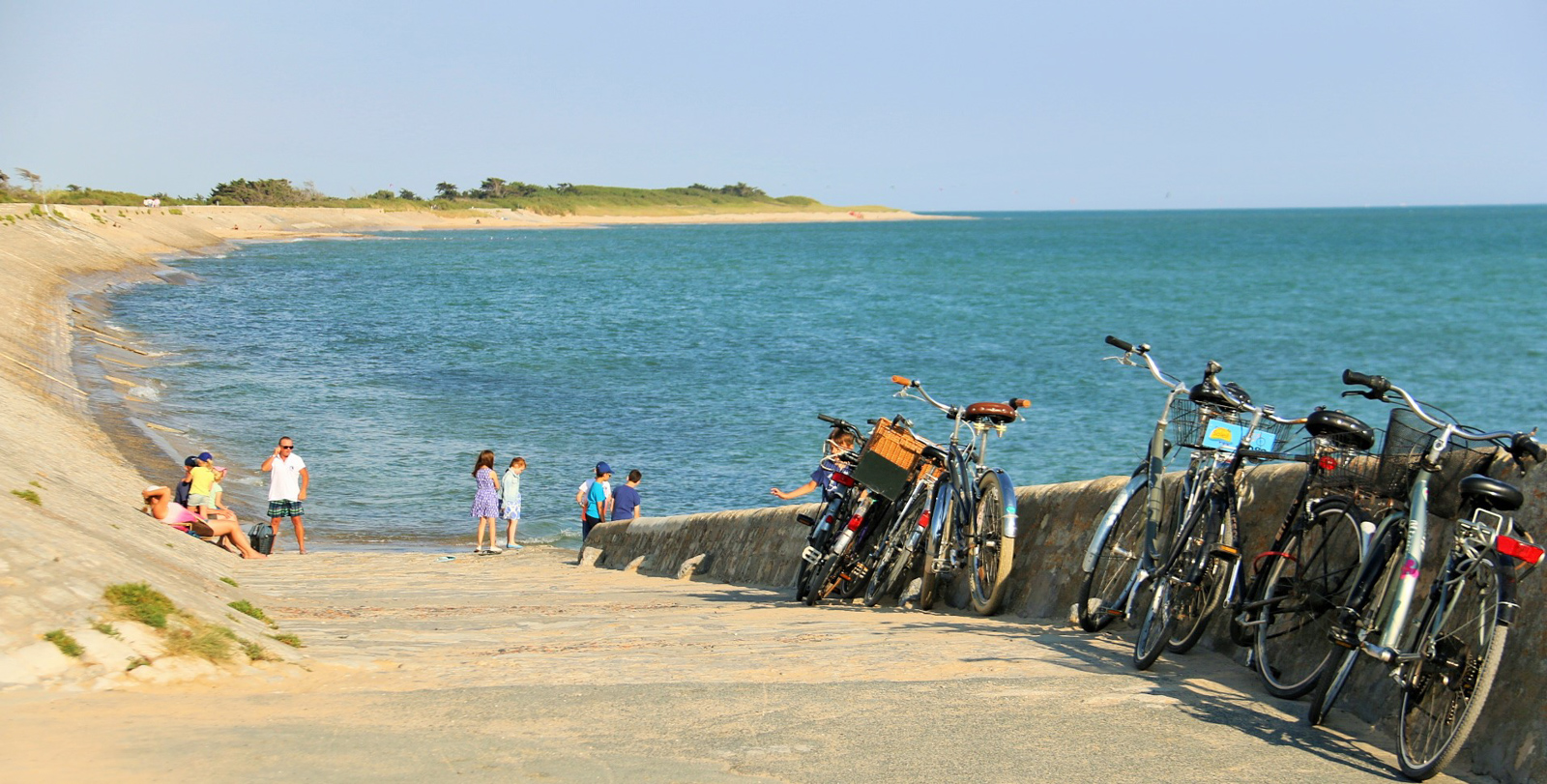
The 10 must-sees of Ars-en-Ré, one of the "Most Beautiful Villages of France" in Charente-Maritime
6,1 km
You will like also


Ride around
Balade aux abords de la Réserve Naturelle Nationale Lilleau des Niges
Balade aux abords de la Réserve Naturelle Nationale Lilleau des Niges
5,3 km - Les Portes-en-Ré
Sentier d'interprétation le long de la Réserve Naturelle Nationale Lilleau des Niges
Sentier d'interprétation le long de la Réserve Naturelle Nationale Lilleau des Niges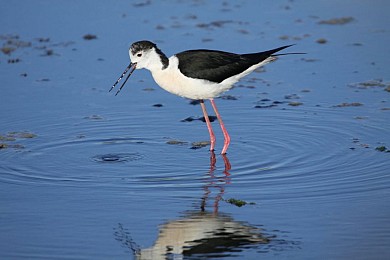
5,3 km - Les Portes-en-Ré
Balade nature autour de la Réserve Naturelle Nationale Lilleau des Niges
Balade nature autour de la Réserve Naturelle Nationale Lilleau des Niges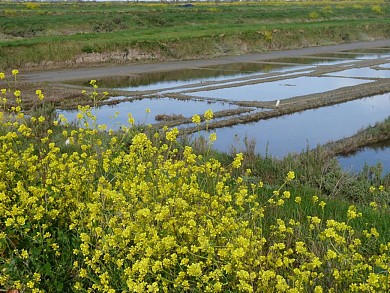
5,3 km - Les Portes-en-Ré
La Flotte en Ré : l'abbaye des Châteliers
La Flotte en Ré : l'abbaye des Châteliers
10,2 km - La Flotte